IMF cuts Cambodia’s 2026 growth forecast to 3%
IMF cuts Cambodia’s 2026 growth forecast to 3%
The revised IMF growth projection still demonstrates the Kingdom’s economic resilience amid growing headwinds, an expert says
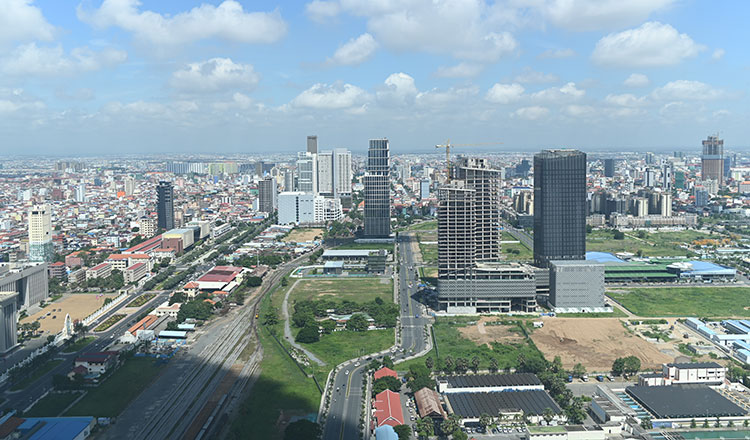
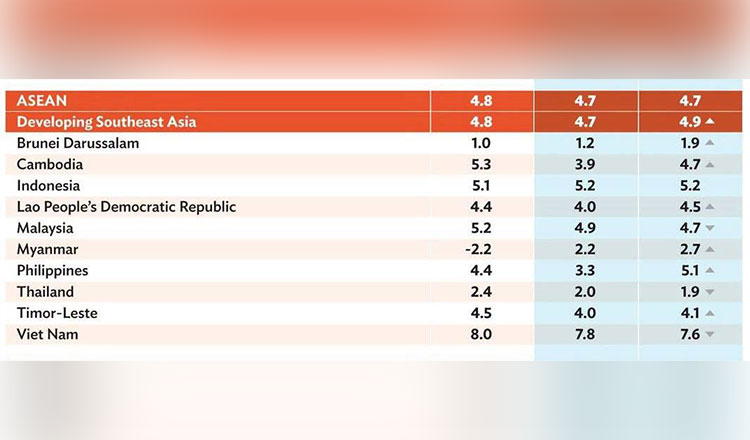
Cambodia’s economic growth is projected to slow sharply to 3% in 2026 from 5.3% last year, as higher energy costs, weaker tourism and remittances, slowing garment exports, subdued domestic demand and tighter financial conditions weigh on economic activity, the International Monetary Fund (IMF) said.
According to the IMF press release yesterday, growth could recover to 4% in 2027 as some of the current pressures ease. However, inflation is expected to remain elevated, averaging 5.6% in 2026 before moderating as energy prices normalise.
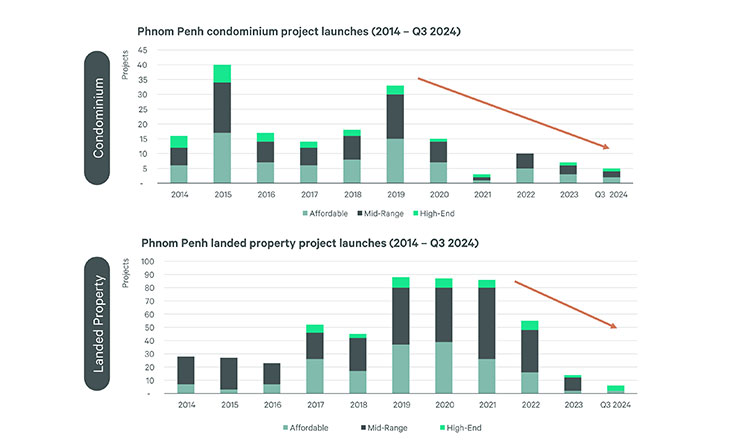
“Cambodia’s economy remained resilient in 2025, supported by strong manufacturing exports, foreign direct investment (FDI) and infrastructure projects. However, growth slowed to 5.3% as domestic demand remained subdued amid a prolonged correction in the real estate sector,” the IMF said.
It added that border tensions with Thailand also affected land-based tourism and remittances and contributed to the return of nearly one million migrant workers.
Inflation increased sharply in early 2026, initially driven by higher energy prices before becoming more broad-based. At the same time, financial conditions tightened, with slower credit and deposit growth and increasing pressure on asset quality.
The IMF expects Cambodia’s current account deficit to widen significantly in 2026, although resilient FDI and adequate foreign exchange reserves are expected to provide important buffers.
The international lender warned that risks to economic growth remain tilted to the downside. Potential renewed energy and trade disruptions, continued weakness in the real estate market, persistent scam activities and financial vulnerabilities could further weigh on investment, exports and tourism.
A sharper correction in the real estate sector could also increase financial-sector pressures because of banks’ exposure to property-related lending, developer financing and borrowers facing weaker repayment capacity.
The IMF noted, however, that planned fiscal stimulus by the Cambodian authorities could support economic activity and help cushion the slowdown. Stability in global commodity markets could also ease inflationary pressures.
To strengthen economic resilience, the IMF recommended targeted fiscal support, agile monetary policy, decisive action to repair financial-sector balance sheets and stronger financial integrity and structural reforms.
It called for fiscal measures to focus on vulnerable households while maintaining debt sustainability. The IMF also recommended gradually phasing out broad fuel-related support as price pressures ease and strengthening domestic revenue mobilisation to finance development priorities.
For the financial sector, the IMF said authorities should strengthen non-performing loan resolution, improve provisioning and capital planning, and tighten oversight of real estate, large-borrower, developer and related-party exposures.
The IMF also stressed the importance of stronger financial-integrity measures, including addressing potential links between criminal activities and financial institutions, strengthening licensing frameworks and developing an effective regulatory framework for the virtual-asset sector.
On structural reforms, the IMF said Cambodia should focus on attracting higher-quality FDI, strengthening domestic investment, deepening links between local suppliers and larger firms, upgrading workforce skills and promoting technology transfer.
It also highlighted the importance of improving governance, the rule of law and predictability of enforcement, while investing in energy security and climate resilience to strengthen Cambodia’s competitiveness and economic resilience.
It may be recalled that the IMF Executive Board completed the 2026 Article IV Consultation for Cambodia on September 22 and endorsed the staff appraisal through a lapse-of-time procedure.
The Cambodian authorities consented to the publication of the accompanying Staff Report.
Speaking with Khmer Times, economist and academic Darin Duch said that the IMF’s lower growth projection still underscores Cambodia’s underlying economic resilience amid mounting pressures.
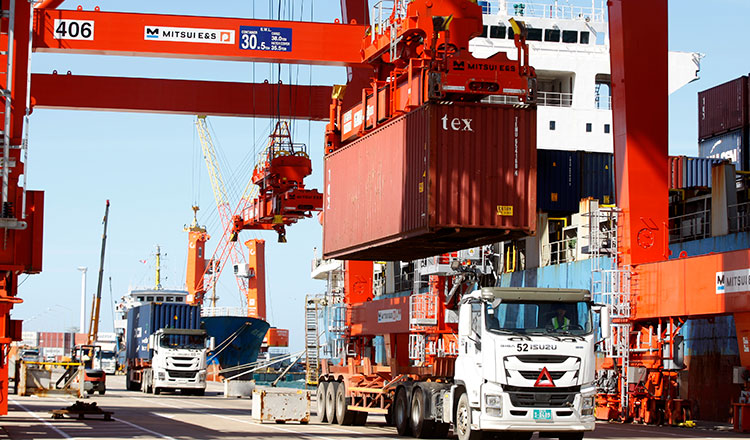
The main factors supporting this resilient growth include FDI and exports, he said, adding that, in fact, from January to August 2026, Cambodia’s total trade volume reached approximately $50.6 billion, an increase of 20.2%, while exports accounted for around $24.1 billion, up by roughly 19.7%.
Cambodia continues to attract new investments. As of August 7, there were 214 new investment projects with a total investment capital of approximately $4 billion, which are expected to create about 140,000 jobs.
“Therefore, these figures show that despite the uncertainties in the global economic environment, Cambodia continues to maintain economic activities and investments that support national economic growth,” Darin added.
- 08:14 30/09/2026