Cambodia, China post 22.3% trade growth, reaching $15.53B
Cambodia, China post 22.3% trade growth, reaching $15.53B
Rising trade figures reflect a resilient bilateral alliance and showcase the concrete rewards of mutual development initiatives.
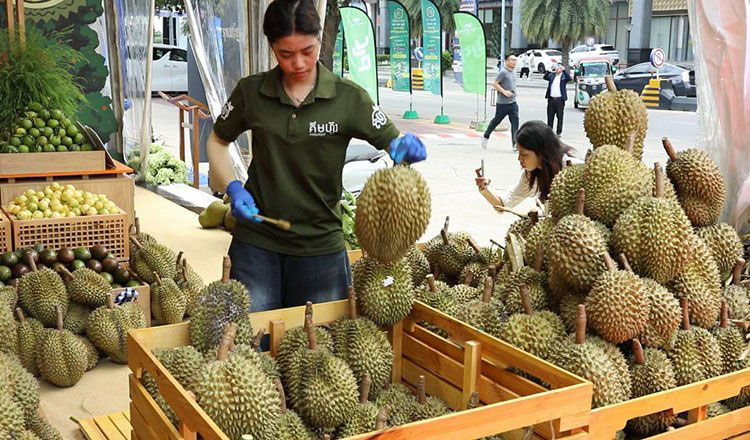
Bilateral trade between Cambodia and China reached $15.53 billion in the first eight months of 2026, marking a year-on-year increase of 22.3 percent, according to a report from the Ministry of Commerce released yesterday.
From January to August, Cambodia’s exports to China rose 23.4 percent year on year to $1.3 billion, while imports from China increased 22 percent to $14.2 billion, read the report.
According to the latest data from the General Department of Customs and Excise, the robust trade volume reflects deepening economic integration, supported by the Regional Comprehensive Economic Partnership (RCEP) and the Cambodia-China Free Trade Agreement (CCFTA).
“The steady growth in trade demonstrates the resilience of the bilateral partnership and the tangible benefits of joint development initiatives,” said Penn Sovicheat, Secretary of State and spokesman for the Ministry of Commerce.
Speaking to Khmer Times, Sovicheat said, “The strong momentum has been largely attributed to the implementation of the Cambodia-China Free Trade Agreement and the Regional Comprehensive Economic Partnership.”
Although Cambodia continues to run a significant trade deficit with China, bilateral trade has contributed to economic growth and job creation while helping promote Cambodian agricultural exports.
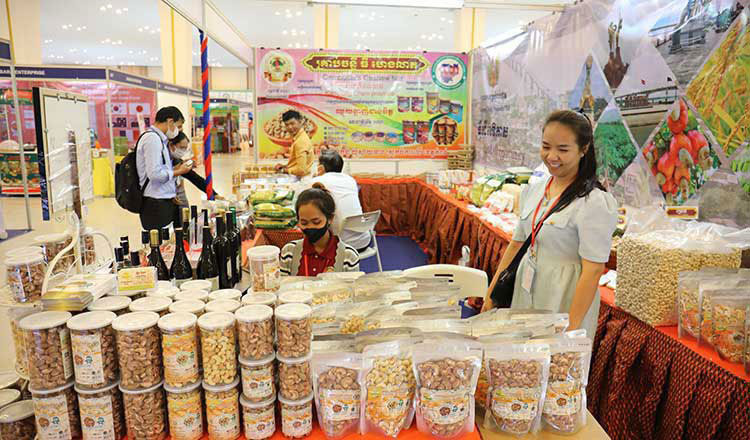
Cambodia’s exports to the Chinese market have continued to grow in 2026, in line with the implementation of the CCFTA and efforts by both countries to promote agricultural trade.
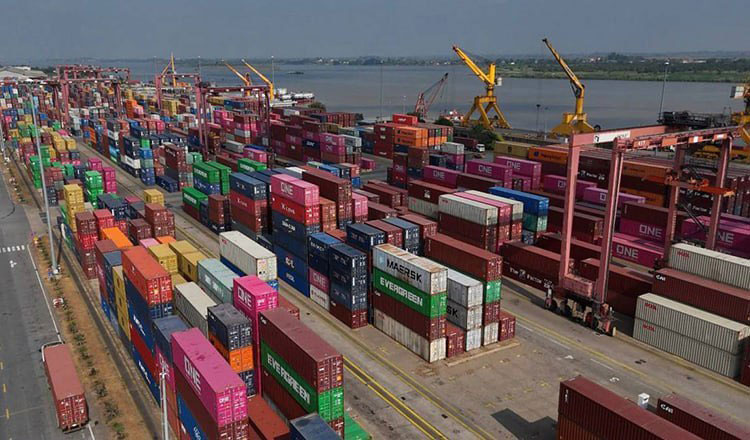
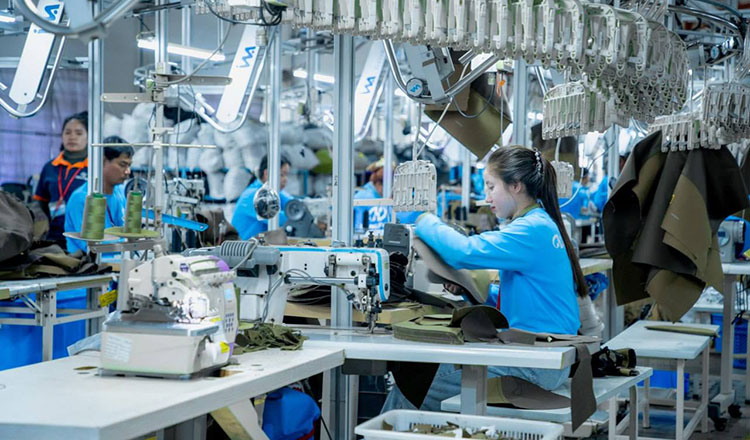
Key Cambodian exports to China include rice, fresh bananas, cassava, rubber and fresh longan. Meanwhile, while the country’s imports from China consist mainly of textiles, steel, vehicles and spare parts.
During the first eight months of 2026, Cambodia’s total international trade reached more than $50 billion, an increase of nearly 20 percent. Trade with China accounted for 29.8 percent of the Kingdom’s total trade.
Vice-President of the Cambodia Chamber of Commerce Lim Heng said the longstanding friendship between Cambodia and China had strengthened Chinese investors’ confidence in the Kingdom.
“The frameworks have opened direct channels for Chinese and Cambodian investors and businesses to establish partnerships. The private sector and the business community remain fully committed to leveraging these initiatives for long-term growth,” Heng told Khmer Times.
The CCFTA and RCEP were introduced to establish frameworks for comprehensive economic cooperation and now serve as key pillars of the “Diamond Hexagon” strategic cooperation framework between Phnom Penh and Beijing.
Both countries continue to streamline customs procedures, invest in logistics and encourage joint ventures to help trade and investment reach new milestones in the coming years.
Cambodia possesses immense development potential and broad prospects, Chinese Ambassador to Cambodia Wang Wentian said at a reception in Phnom Penh on Monday marking the 77th anniversary of the founding of the People’s Republic of China.
“We stand ready to work with Cambodia to implement the strategic consensus reached by the leaders of both countries, continuously enrich the ‘Diamond Hexagon’ cooperation framework, and steadily advance the development of the ‘Fish and Rice Corridor’ and the ‘Industrial Corridor’,” Wang said.
“We will work to build China-Cambodia relations into a model and an exemplar of a community with a shared future for mankind, while working hand in hand to realise the great rejuvenation of both the Chinese and Khmer nations,” he added.
China remains a trusted partner supporting Cambodia’s self-determined development path, noting that bilateral cooperation has expanded significantly following high-level visits by leaders of both nations, he added.
The Royal Government’s Pentagonal Strategy – Phase I places strong emphasis on economic diversification, with the aim of moving beyond garments into agro-processing, electronics assembly and higher-value manufacturing. It also focuses on developing the digital and logistics infrastructure needed to support these sectors.
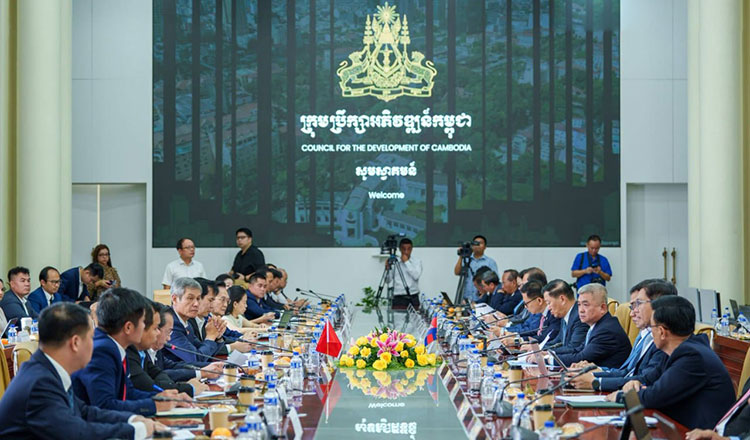
Deputy Prime Minister and First Vice-Chairman of the Council for the Development of Cambodia Sun Chanthol recently described China as an indispensable strategic partner, citing cooperation in manufacturing, agriculture, energy, tourism and infrastructure.
He said the CCFTA and RCEP had opened wider markets, facilitated trade and strengthened supply chains.
While the garment, footwear and travel goods industries remain vital to Cambodia’s economy, the country is actively seeking investment in high-value industries and advanced technologies, including electronics manufacturing, automotive assembly, clean energy, high-value agro-processing and modern logistics systems, he said.
In 2025, bilateral trade totalled $19.73 billion. Cambodian exports to China fell 3.6 percent to $1.68 billion, while imports from China surged 34.3 percent to $18 billion.
China remained Cambodia’s largest foreign investor in 2025, committing more than $5.4 billion and accounting for over 54 percent of the country’s total approved investment capital.
- 07:58 23/09/2026