ADB reduces Cambodia growth forecast to 3.9% amid external shocks
ADB reduces Cambodia growth forecast to 3.9% amid external shocks
The 2026 growth downgrade stems from two major blows: geopolitical tensions and a border closure that paralysed tourism-dependent sectors, while persistent online scam headlines severely dented traveller confidence and deterred foreign arrivals.
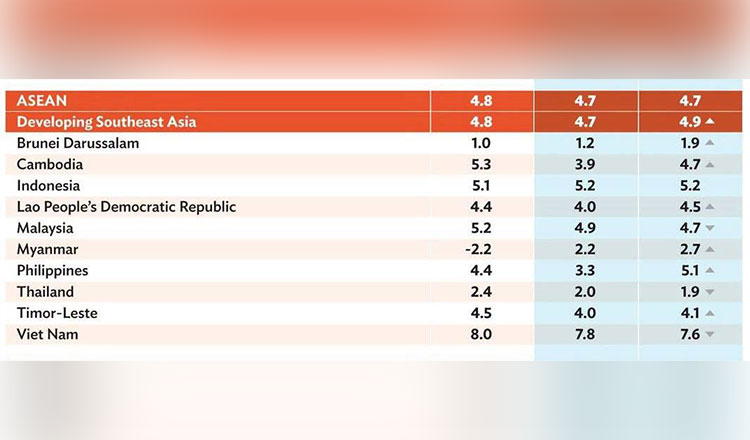
The Asian Development Bank (ADB) has lowered its forecast for Cambodia’s economic growth to 3.9 percent this year, down from 4.1 percent projected in July and 4.5 percent in April, citing weaker-than-expected activity in tourism and related services.
According to the ‘Asian Development Outlook (ADO) September 2026’ published yesterday by ADB, the 2026 forecast is 0.2 percentage points lower than the July projection and 0.6 percentage points below the 4.5 percent forecast issued in April.
The 2027 projection remained unchanged from July at 4.7 percent, but is 0.3 percentage points lower than the 5.0 percent forecast from the April ADO, supported by resilient manufacturing, export diversification, and continued foreign direct investment.
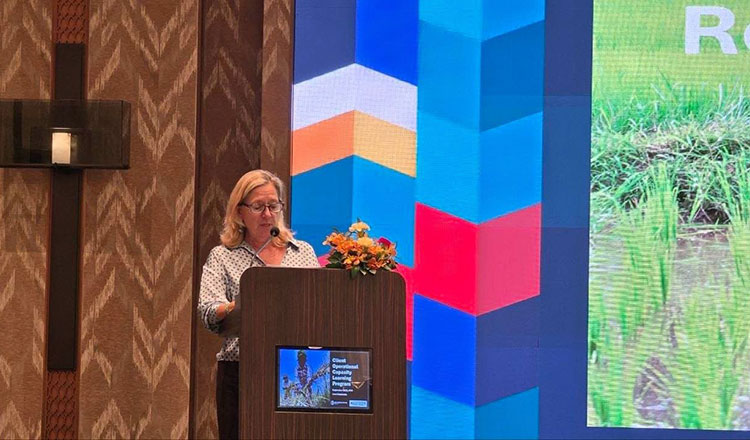
ADB Country Director for Cambodia Yasmin Siddiqi said, “Cambodia’s economy continues to demonstrate resilience. Strong manufacturing exports and buoyant investment inflows are helping offset tourism sector challenges.”
“Continued efforts to diversify the economy, enhance competitiveness, support vulnerable households, and strengthen resilience will be important for sustaining inclusive growth,” she added.
According to ADB Cambodia Resident Mission, the downward revision for this year reflected weaker-than-expected activity in tourism and related services.
Inflation forecasts have been revised upward, demonstrating higher global oil prices and rising import costs. Inflation rose from 2.6 percent year on year in February to 7.2 percent in May before easing to 5.5 percent in July.
ADB projected inflation at 4.7 percent in 2026 and 2.8 percent in 2027, as fuel tax relief measures and a broadly stable riel currency help moderate price pressures.
Fiscal policy is expected to remain supportive, with infrastructure, human capital, and social protection investments bolstering economic activity through the Comprehensive Intervention Program (CIP).
Based on the Cambodia chapter in the ADB’s flagship economic report, after narrowing to an estimated 1.0 percent of gross domestic product (GDP) in 2025, the fiscal deficit is expected to widen to 4.9 percent of GDP in 2026, driven by higher infrastructure and social spending, particularly tax relief for fuel.
Public debt remained manageable, and Cambodia continues to be assessed at low risk of debt distress. The current account deficit is expected to widen this year due to higher import costs and weaker tourism revenue.
Rising import costs, together with weakened tourism receipts and secondary income inflows, are projected to push the deficit to 11.5 percent of GDP in 2026 before easing in 2027.
However, strong foreign direct investment is expected to continue supporting international reserves, which currently stand at about seven months of import cover.
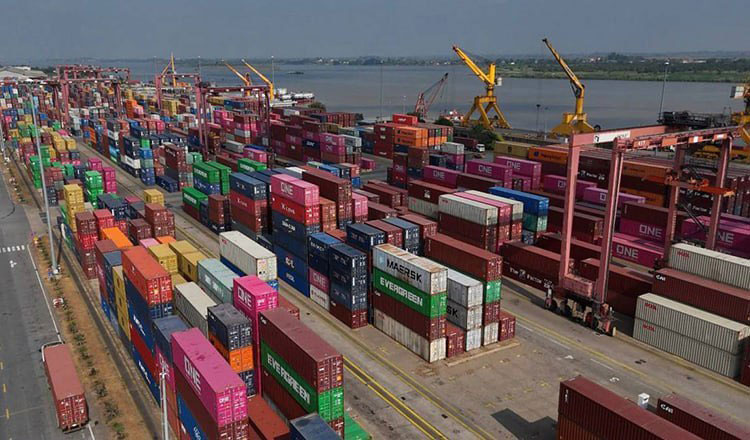
Industry remained the main driver of growth. Non-garment manufactured exports expanded by 38.4 percent year on year in the first half of 2026 to $6.7 billion, reflecting increasing diversification into higher-value products, including electrical components, vehicle parts, tyres, and wooden goods.
Garment exports rose 6.3 percent to $8.0 billion, while construction and real estate remained subdued. The United States and Europe continued to take the largest shares of exports.
Growth in services is expected to be weaker than previously expected as tourism activity declined. International visitor arrivals fell 47.9 percent year on year to 1.8 million in the first six months of 2026, or just over half of pre-pandemic levels.
Ongoing geopolitical tensions and the closure of the Cambodia-Thailand land border weighed on tourism-related activity, including transport, hospitality and trade. Concerns related to the transnational scam industry also contributed to the drop in arrivals.
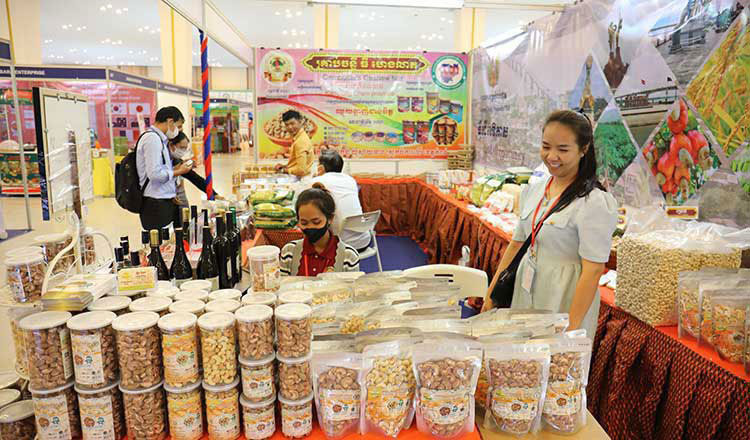
Agriculture is expected to make a modest contribution to growth, supported by demand for exports of cashews, cassava, and milled rice. Despite higher input costs from the conflict in the Middle East, agricultural export value grew by 23.6 percent year on year in the first half of 2026.
Parts of the Royal Government’s CIP, approved in July 2026, will support rural households. Weather conditions warrant continued monitoring given forecasts of a very strong El Niño and associated extreme weather.
Risks to the outlook remain tilted to the downside. Weaker growth among major trading partners, prolonged geopolitical tensions, higher commodity prices, and continued weakness in tourism could dampen growth and increase inflation.
Domestically, rising non-performing loans could further constrain credit growth and weaken economic activity. Uneven rainfall, including potential El Niño-related weather disruptions in late 2026 and early 2027, could disrupt rice production, livestock and fisheries, and rural livelihoods, particularly among smallholder farmers.
For Cambodia, the latest forecast indicated that growth is expected to remain below the pace recorded last year, when the economy expanded by 5.3 percent, before recovering to 4.7 percent in 2027.
The successive revisions also showed how the Kingdom’s growth outlook has changed during 2026, with ADB cutting its 2026 projection from 4.1 percent in July to 3.9 percent in September.
- 07:57 24/09/2026