Senate leader urges students to develop local brands, calls for district-level competition
Senate leader urges students to develop local brands, calls for district-level competition
Agricultural economics expert encourages young minds to turn agricultural prototypes into market-ready products, while also urging local authorities to foster a pro-business environment that promotes tourism, investment and homegrown production.
A Senate leader and agricultural economics expert has urged students to work with their universities to embark on the development of local products, calling it as a wise career path in an agriculture-based economy like Cambodia.
Senate Second Vice-President Thun Vathana also called on local authorities to create favourable conditions through effective public services that enable students’ products to grow and thrive.
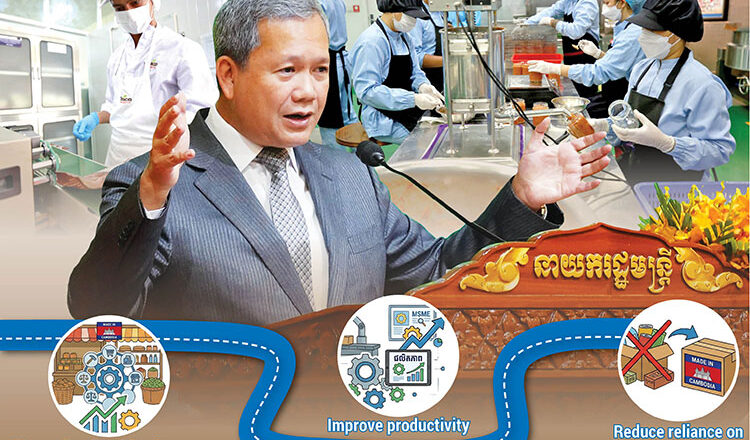
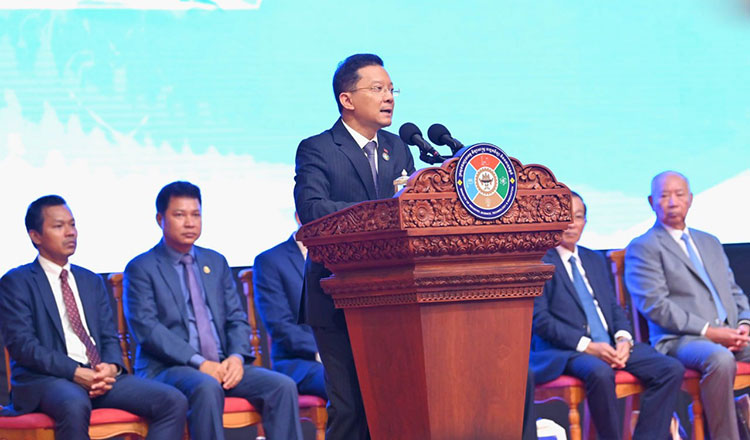
Vathana was delivering a guest lecture on Friday on the theme “Path to Creation of a Production Brand” at the National University of Cheasim Kamchaymear in Prey Veng province. The event drew nearly 300 teachers and students, mostly majoring in agriculture and marketing.
With a doctorate in agricultural economics from Nagoya University in Japan and as the former director of the Prek Leap National Institute of Agriculture, Vathana spoke about the potential of the agricultural and food-processing sector in Cambodia, despite the Kingdom’s lower comparative advantage in the region.
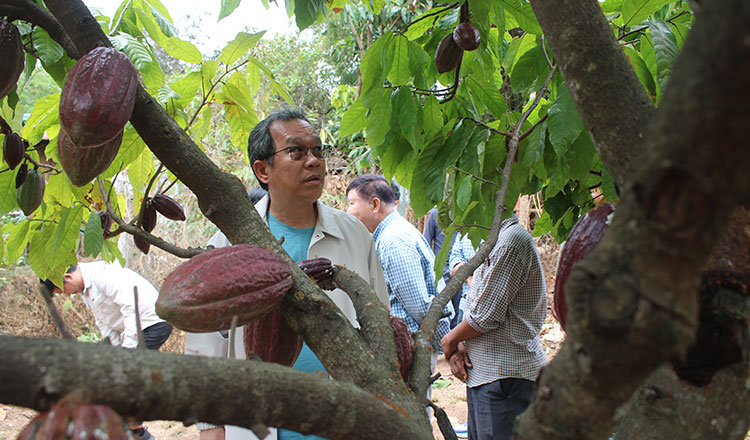
“The agricultural sector not only sustains farmers and rural communities but also strengthens national resilience amid global market volatility,” he said. “Potential crops with high added value include coffee beans, cashews, and cacao and so on.”
Vathana said Cambodia should not produce the same goods in which neighbouring countries, such as Vietnam, already enjoy a comparative advantage. However, he said the ongoing boycott of Thai products as a result of a border dispute has created a golden opportunity for manufacturers of local products.
“I believe that the food-processing sector, which is based on homegrown raw materials, will be a strong backbone for Cambodia’s economy.”
To polish the “rough diamond,” one must start as early as possible, ideally at higher education institutions where students are being prepared for professional careers, he said.
“In universities today, students are not only learning theories and principles but are also involved in real practices with their assignments,” he said, referring to students learning food sciences and manufacturing-related majors.
“Through experimentation and testing, these students are creating prototypes. With hard work and proper guidance, they can bring these prototypes beyond the university gates into the marketplace.”
Vathana called on universities to support student initiatives, stressing that “even if only 10 out of 100 projects enter the real-life business world, it is worth it.”
He also stressed that while the Cambodian government has been endorsing entrepreneurship through capacity building, policy support and financial networks, it depends on the personal efforts of the students to determine the success of their projects.
“Before seeking help from others, you must maximise your own potential,” he said. “Have the courage to start, and work hard to make it happen.”
Vathana also urged students to improve their language skills, especially in English, which will allow them to explore the areas of their interests from other countries and conduct their own experiments.
In a separate meeting, Vathana told local authorities, who work closely with the people, to create favourable conditions for local businesses, especially SMEs, to thrive.
“It is true that peace is crucial for businesses to succeed, but there are also other conditions that we need to improve in order to create the ideal atmosphere for businesspeople to grow their ventures,” he said while addressing 80 commune council members from Chbar Ampov district on Thursday.
While enhancing the quality of public services and ensuring strong security is essential, he also encouraged districts across the capital to compete with one another to attract tourists and investors and promote local production.
“District and commune authorities need to continue facilitating investors, particularly in the tourism sector, and support local business operators,” he said. “Meanwhile, strengthening public order while maintaining cleanliness and aesthetic standards along roads remains a key priority to build confidence among visitors and encourage more tourists to explore Cambodia.”
- 08:14 02/03/2026