Bicycle exports surge in January, reach $63.57M
Bicycle exports surge in January, reach $63.57M
Strong results in the first month of the year suggest that Cambodia’s bicycle industry has entered 2026 on a solid footing, bolstered by improved market access, regional supply integration, and a competitive manufacturing base poised for further expansion.

Cambodia’s bicycle exports surged sharply in January 2026, reaching $63.57 million, up 68.51 percent from $37.72 million in January 2025, according to the Ministry of Commerce. The strong year-on-year growth signals continued momentum in one of the Kingdom’s fastest-expanding manufacturing subsectors.
The latest figures build on an impressive performance in 2025, when Cambodia exported bicycles worth $609.33 million, a 42.73 percent increase from $426.91 million recorded in 2024. Industry observers say the sustained expansion reflects improving market access, supply chain integration, and rising global demand for affordable and mid-range bicycles.
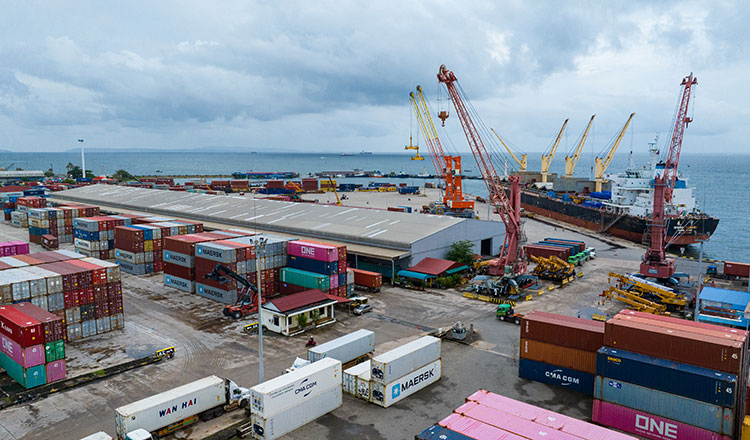
The United States remains Cambodia’s largest export destination, followed by Germany, Belgium, the United Kingdom, and the Netherlands. These markets have consistently driven demand for Cambodian-assembled bicycles, particularly as consumers in Europe and North America continue to favour cycling for both recreation and urban mobility.
A key development supporting the sector’s growth is the European Union’s recent authorisation allowing Cambodia to use bicycle components and raw materials sourced from Vietnam for production and export to the EU market. The approval simplifies sourcing requirements and reduces logistical and compliance hurdles for Cambodian manufacturers, enabling them to tap into nearby supply chains while maintaining preferential access to Europe.
The EU’s decision is particularly significant given the bloc’s status as one of Cambodia’s most important trading partners. Under the EU’s trade arrangements, Cambodian goods benefit from preferential tariff treatment, making the country an attractive manufacturing base for export-oriented industries such as bicycles, garments, and travel goods.
Industry representatives say the ability to source components from neighbouring Vietnam enhances flexibility and cost efficiency. Previously, stricter rules of origin requirements limited the range of inputs that could qualify for preferential export status. With the new authorisation, manufacturers can more easily integrate regional supply chains, lowering production costs and improving competitiveness.
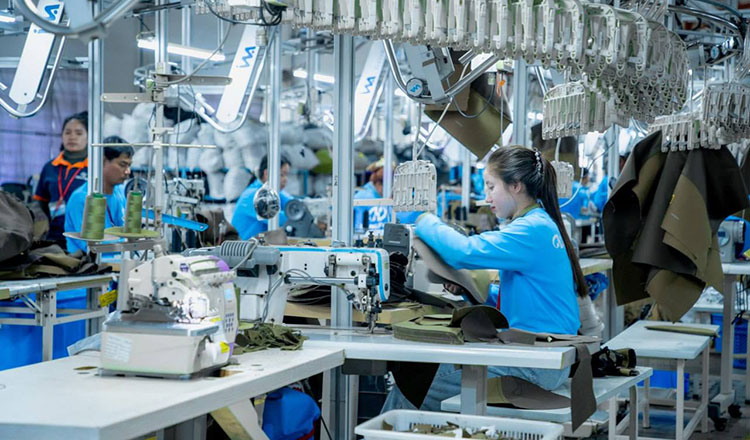
Cambodia’s bicycle manufacturing industry is concentrated in the Bavet Special Economic Zones (SEZs) in Svay Rieng province near the Vietnamese border. Five assembly factories currently operate in the area __ A and J Co., Ltd., Speedtech Industrial Co., Ltd., Smrat Tech Co., Ltd., XDS Bicycle Co., Ltd., and Evergrand Bicycle Co., Ltd. The proximity to Vietnam facilitates cross-border supply flows and efficient logistics.
Bicycles have become one of Cambodia’s main export products, alongside garments, shoes, travel goods, car tyres, and potential agricultural commodities such as rice, rubber, cashew nuts, yellow bananas, mangoes, and longans.
The rise of the bicycle sector forms part of Cambodia’s broader strategy to diversify its export base beyond garments and footwear. Over the past decade, the government has promoted special economic zones, streamlined investment procedures, and strengthened trade agreements to attract foreign direct investment in light manufacturing.
Global trends have also played a role. Demand for bicycles surged during the COVID-19 pandemic as consumers sought socially distanced transportation and outdoor exercise. While some markets experienced normalization afterward, sustained interest in green mobility, urban cycling infrastructure, and health-conscious lifestyles has continued to support steady demand.
Trade figures from the General Department of Customs and Excise (GDCE) earlier showed that Cambodia’s total international trade crossed $6 billion in January 2026, marking a 19.1 percent increase compared with the same month last year. Exports rose sharply by 26.6 percent to $2.91 billion, while imports climbed 12.8 percent to $3.1 billion, reflecting sustained economic momentum and growing commercial activity.
Analysts caution that external factors — including inflationary pressures in key markets and shifting trade policies — could affect export performance in the coming months. However, the strong January results suggest that Cambodia’s bicycle industry has entered 2026 on a solid footing, bolstered by improved market access, regional supply integration, and a competitive manufacturing base poised for further expansion.
- 08:11 02/03/2026