Industrial investment tops $25 billion despite dip in output value
Industrial investment tops $25 billion despite dip in output value
The figures mirror Cambodia’s ongoing industrial expansion, driven by new factory openings and rising capital inflows, even as weaker global demand conditions placed pressure on production output during the year.
Cambodia’s industrial sector attracted more than $25 billion in investment capital in 2025, despite a decline in total output value, highlighting sustained investor confidence amid a softer global demand environment, according to a report released on Monday by the Ministry of Industry, Science, Technology & Innovation.
The report showed total industrial investment reached approximately $25.16 billion last year, an increase of $4.71 billion, or 23.03 percent, compared with 2024. Domestic investment contributed more than $3.90 billion, accounting for 15.52 percent of the total capital inflows, reflecting growing local participation alongside foreign investment.
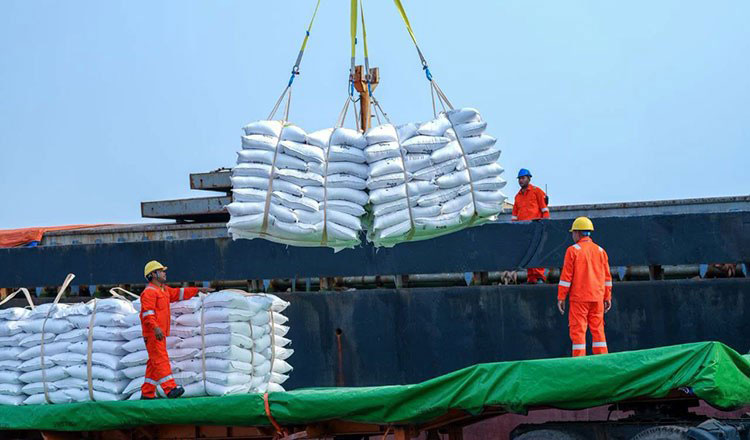
However, the total value of industrial products in 2025 fell to about $13.58 billion, representing a decline of more than $1.56 billion, or 10.34 percent, year-on-year. Of this amount, goods produced for the domestic market were valued at approximately $3.65 billion, while exports accounted for around $9.92 billion.
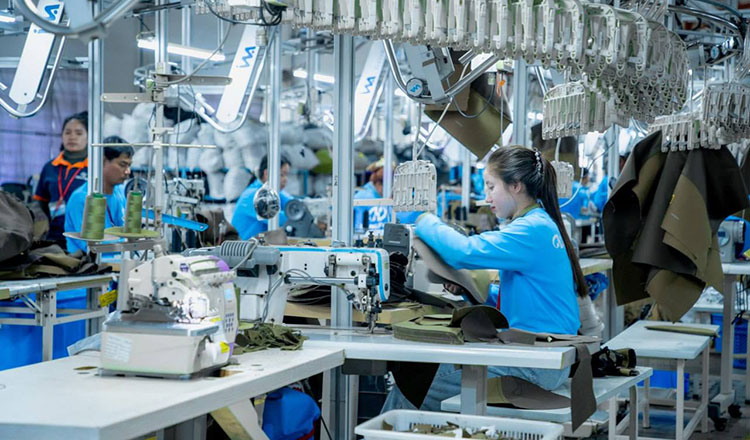
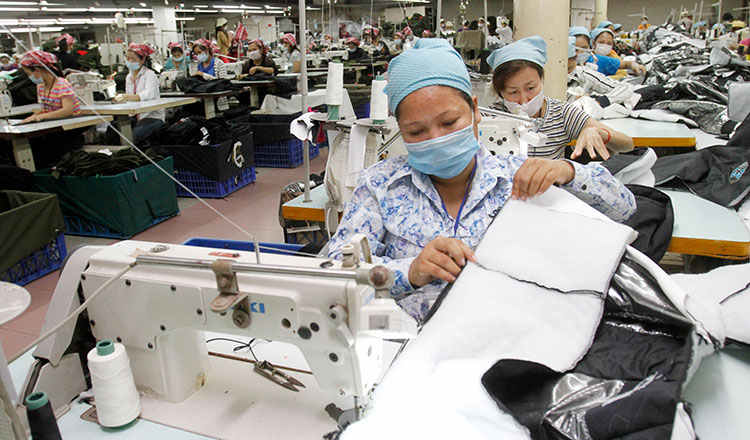
Despite the drop in output value, Cambodia’s industrial base continued to expand significantly. The number of large factories operating nationwide rose to 3,083 across 25 capital cities and provinces, an increase of 658 factories, or 27.13 percent, compared with the previous year. During 2025 alone, 700 new large factories commenced operations across 19 locations — more than double the figure recorded in 2024 — while 42 factories ceased operations.
Employment in the industrial sector also recorded steady growth. The workforce reached 1,268,953 people, including 903,991 women, who accounted for 71.24 percent of total employment. This represented an increase of 108,772 workers, or 9.38 percent, compared with 2024, underscoring the sector’s continued role as a major source of jobs.
Industrial infrastructure development showed moderate progress. Special Economic Zones hosted 34 operating factories across 11 provinces, while industrial parks accommodated 23 factories in six provinces, both reflecting gradual expansion compared with the previous year. Investment sources remained diversified, with 32 domestic and foreign sources recorded, unchanged from 2024.
The ministry noted that the figures demonstrate Cambodia’s ongoing industrial expansion, driven by new factory openings and rising capital inflows, even as weaker global demand conditions placed pressure on production output during the year.
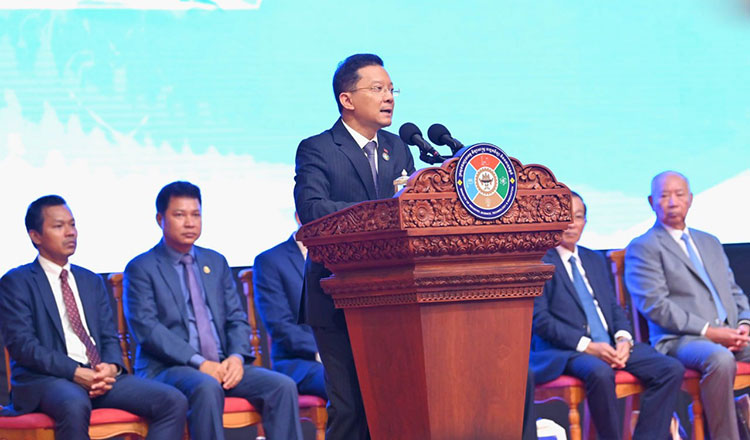
The data was presented as the ministry opened its 2025 Review and 2026 Planning Conference, aimed at setting strategic priorities to strengthen Cambodia’s competitiveness beyond its traditional low-cost manufacturing advantage while enhancing institutional capacity.
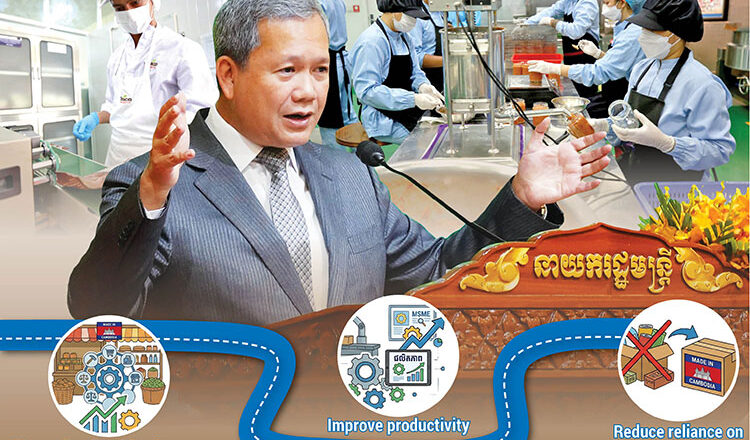
Speaking at the opening ceremony on Monday, Minister of Industry, Science, Technology and Innovation Hem Vanndy said Cambodia has maintained macroeconomic stability and is entering a new phase of development.
“With the goal of graduating from Least Developed Country status by 2029 and achieving the 2050 vision, Cambodia must build a strong economic foundation, robust governance and resilient national systems,” he said.
He stressed that future industrial growth would depend not only on increasing production volumes but also on improving value-added manufacturing, workforce skills, quality certification, trusted services and innovation.
“It requires that Cambodia produces not only more goods, but also value-added products with skilled labour, certified quality, trusted services, internationally recognised compliance and innovations that solve real problems,” he added.
Industry remains one of the key drivers of Cambodia’s economic growth, with the Royal Government continuing to prioritise the sector as a strategic pillar under the Pentagonal Strategy – Phase 1, which positions industrial development as a central engine for economic expansion, social progress and the country’s ambition to reach high-income status by 2050.
Vanndy noted that global competitiveness is increasingly shaped by factors beyond labour costs.
“We are living in an era where economic competitiveness is no longer determined solely by low costs, but by quality, standards, compliance, productivity, innovation, safety, sustainability and the ability to move up the value chain,” he said.
The one-and-a-half-day conference serves as what the ministry described as a strategic reflection platform, encouraging both internal assessment and external outlook. Participants are exchanging views and experiences, evaluating strengths and weaknesses, and setting clear directions to effectively implement the ministry’s functions and priorities in 2026.
Key discussions are focusing on addressing technical barriers to trade, strengthening science, technology and innovation, advancing industrialisation and business productivity, promoting clean water sector development, and reinforcing institutional capacity alongside strategic cooperation with development partners.
- 08:09 26/02/2026