Cambodia’s economy shows a blend of resilience and vulnerability, as growth forecast set at 4% for 2025-26
Cambodia’s economy shows a blend of resilience and vulnerability, as growth forecast set at 4% for 2025-26
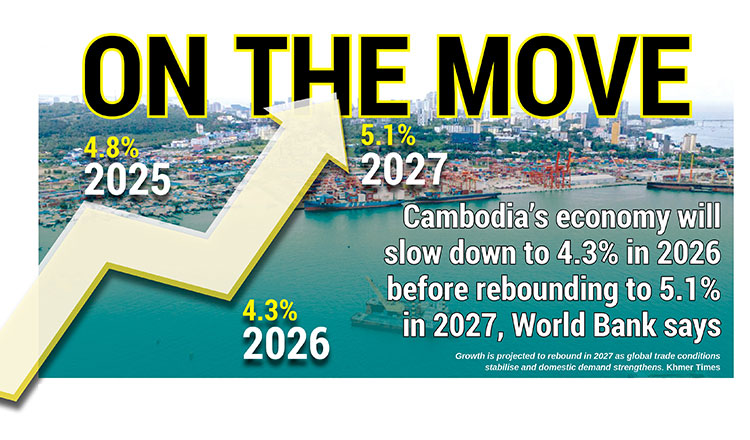
Cambodia’s economy is likely to operate at two speeds over the next two years, with strong consumption and export performance balancing out the adverse effects of border tensions, market instability and the property downturn. While growth is expected to moderate to around 4% in 2025 and 2026, the outlook is slightly more positive, particularly if the government utilises its fiscal space to shield the economy from further shocks.

Cambodia in 2025 is showing a blend of resilience and vulnerability, as strong domestic consumption and manufacturing exports continue to offset significant shocks arising from the Thai border conflict, returning migrant workers and ongoing stress in the property sector, according to the Cambodia Economic Update December 2025 released by Mekong Strategic Capital.
The report projects that Cambodia’s economic growth will reach around 4 percent in both 2025 and 2026. While this reflects a slight improvement from the firm’s assessment three months earlier—when growth was expected to hover closer to 3 percent—the economic landscape remains challenging. Mekong Strategic Capital notes that the country continues to grapple with the repercussions of ongoing regional tensions, reputational impacts linked to scam centres, and deep-rooted strains in the real estate market.
One of the most immediate pressures stems from the large number of Cambodian migrant workers returning from Thailand. The report estimates that more than 900,000 Cambodians have already left Thailand due to the conflict, placing remittances under severe strain. With remittances valued at approximately $1.5 billion annually, Mekong Strategic Capital expects around $1.125 billion could be lost, resulting in a short-term GDP impact of roughly 1.8 percent. The firm stresses that absorbing these workers into the domestic economy will require urgent policy interventions and job-creation measures.
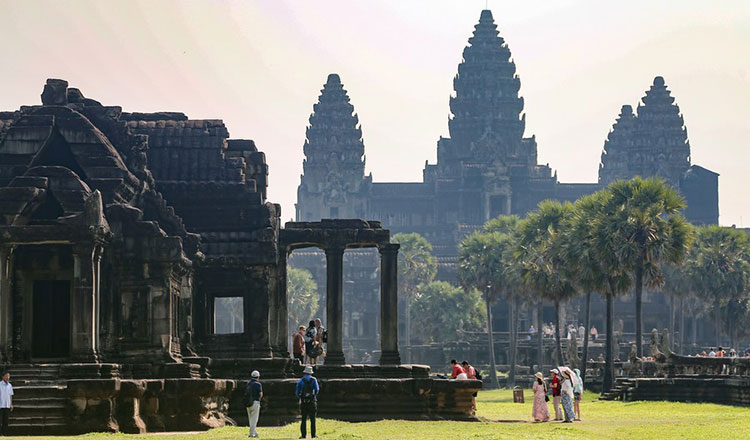
Tourism, already weakened by reputational issues surrounding scam centres, has experienced further setbacks. Angkor Wat ticket sales have declined by an estimated 20 percent over the past six months, and arrivals from East Asia remain sharply below pre-pandemic levels.
Mekong Strategic Capital anticipates a 15 percent drop in tourism linked to border tensions, equating to a short-term GDP impact of around 2 percent. Although Western tourist arrivals have recovered to 64 percent of 2019 levels, the broader sector remains under pressure.
The government’s ongoing crackdown on scam centres is expected to bring short-term economic costs but substantial long-term gains. Mekong Strategic Capital estimates the near-term impact at between 1 and 2 percent of GDP, largely due to reductions in operational spending linked to the illicit industry. However, the report emphasises that this decisive action is essential to safeguarding Cambodia’s economy.
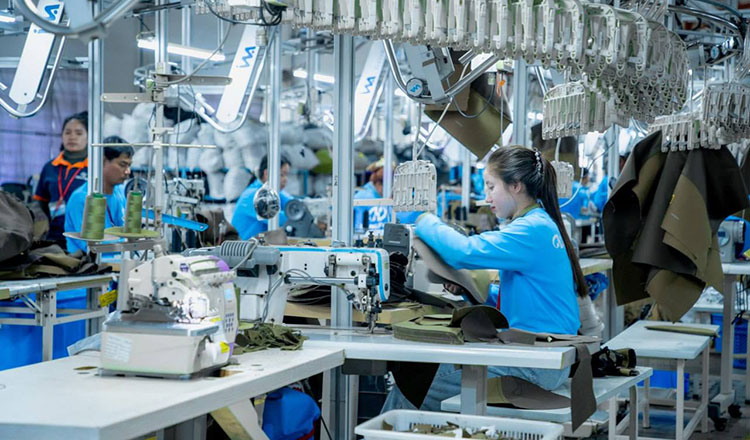
Despite these headwinds, Cambodia’s domestic economy has shown surprising resilience. VAT and excise collections grew by 23 percent year-to-date as of September 2025, while vehicle imports surged by 50 percent. Manufacturing exports have performed strongly, posting year-to-date growth of 15.2 percent despite uncertainty surrounding potential US tariffs. Imports of capital goods — including machinery and electrical equipment — were up by 93 percent, signalling continued investment momentum in the industrial sector.
However, the property market remains a persistent drag. Unsold residential inventory now equates to roughly ten years of supply, and the downturn continues to spill over into the banking sector.
The report highlights that $10.6 billion — or around 17.5 percent of all loans — are either in arrears or have been restructured. Although restructuring activity has moderated in recent months, Mekong Strategic Capital warns that the property market is unlikely to recover quickly.
On the fiscal front, the firm argues that Cambodia retains significant capacity to borrow and should deploy targeted stimulus to counteract current economic pressures. Public debt stands at a present-value ratio of just 18.8 percent of GDP, with low interest rates and long maturities. Mekong Strategic Capital describes Cambodia’s debt profile as “too conservative” and notes that the government has ample room to act more aggressively to support growth.
The report also highlights Cambodia’s long-term advantages, particularly its demographic profile. The working-age population is projected to expand steadily through 2050, in stark contrast to declines expected in China, Thailand and Vietnam. This demographic dividend is expected to underpin continued growth in consumption, labour supply and manufacturing competitiveness.
Mekong Strategic Capital concludes that Cambodia’s economy is likely to operate at two speeds over the next two years, with strong consumption and export performance balancing out the adverse effects of border tensions, market instability and the property downturn. While growth is expected to moderate to around 4 percent in 2025 and 2026, the outlook is slightly more positive than earlier in the year, particularly if the government utilises its fiscal space to shield the economy from further shocks.
Cambodia’s economy has remained broadly stable despite recent geopolitical tensions, yet the government must move swiftly to strengthen long-term resilience if pressures persist, a leading academic warned.
Thong Mengdavid, lecturer at the Institute for International Studies and Public Policy at the Royal University of Phnom Penh, told Khmer Times that Cambodia’s key economic pillars have so far withstood external shocks due to stronger fundamentals, rapid government interventions, and a widening pool of economic partners.
“Cambodia has shown that it can stay steady even when hit by sudden geopolitical shocks. The essentials such as trade, energy, and investment have not been derailed, thanks to stronger fundamentals and quick government support and policies, as well as diversified economic partners without relying on a single source of trade or investment,” he said.
However, he cautioned that these measures amount to “short-term choices”, adding that prolonged tensions could place mounting pressure on households and businesses. “If tensions last, the economic pressure will start to build and the government needs to come up with sustainable and resilient policies to mitigate tensions and economic issues,” he stressed.
According to Mengdavid, the most pressing concerns lie in the impact on Cambodian workers and the service sector. The return of many migrant workers from Thailand, he noted, poses a significant risk to remittances and household spending.
“Many Cambodians working in Thailand have returned home, which means remittances could fall and household spending will weaken. The government needs to sort out and prioritise migration policies focusing on other countries such as Japan or South Korea, or elsewhere,” he said.
Tourism, another crucial pillar, remains highly sensitive to travel advisories and negative regional developments.
- 13:37 08/12/2025