Exports of non-garment products see significant surge
Exports of non-garment products see significant surge
The main markets for non-garment products are the EU, the US, Japan, Korea and Thailand.
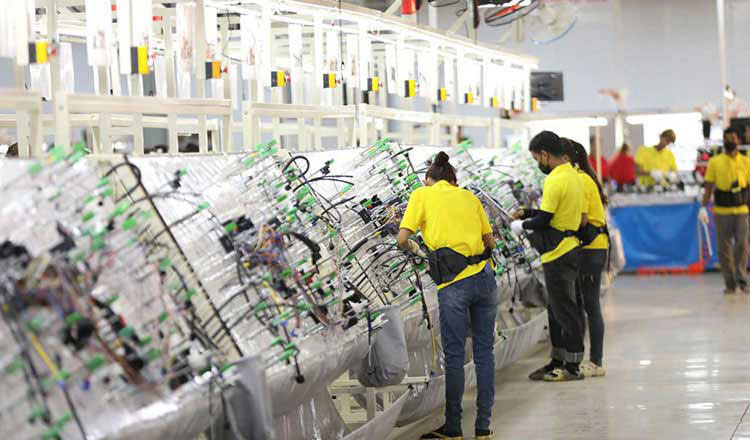
Cambodia’s non-garment manufacturing product export saw a surge with a total value of $3,395 million in the first 11 months of 2025, up 7.3 percent from $3,164 million in the same period last year, a recent report from the Ministry of Commerce showed.
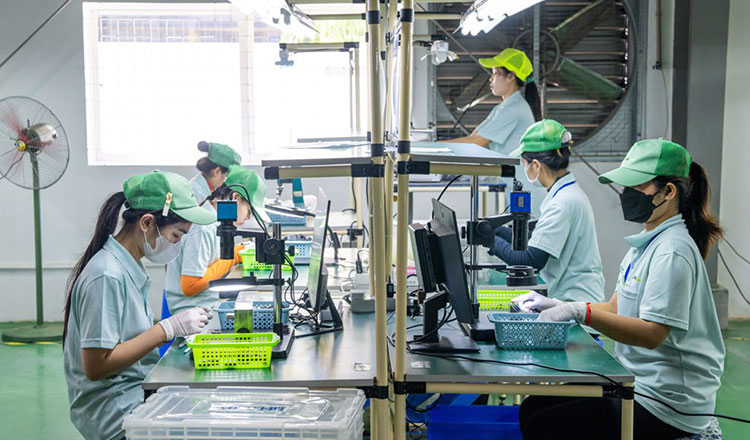
The garment, footwear and travel goods industry are the largest foreign exchange earner for Cambodia, but the non-garment manufacturing products, including electronic components, bicycles, auto parts, furniture, leather and plastic, among others, has been on a surge significantly in exports.
Tyre exports recorded a growth of 57 percent to $1,219 million between January and November of this year, while electronic component exports posed a rise of 35 percent to $838 million, stated the report.
Exports of bicycle, electric cable and wires, and auto spare parts valued $541 million, $520 million, and $260 million, with a growth of 43 percent, 58 percent, and 10 percent, respectively, according to the report.
Solar panel export, however, hit a complete decrease of 97 percent to $17 million from $830 million in the same period last year, the report added.
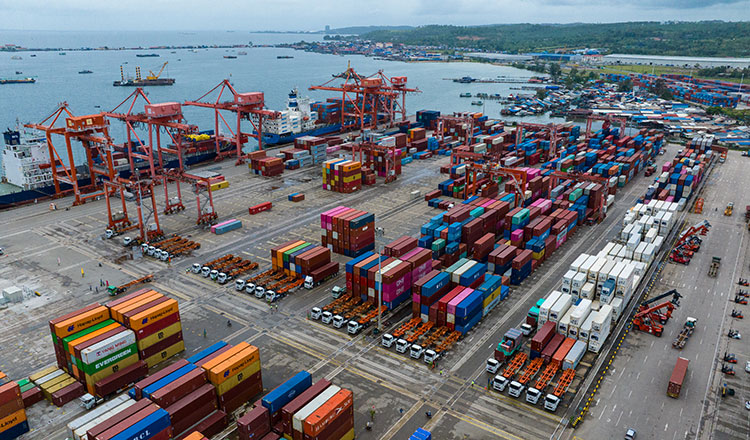
The non-garment products are mostly produced by factories in special economic zones. The main markets for non-garment products are the EU, the US, Japan, Korea and Thailand, according to the report.
According to Penn Sovicheat, Secretary of State and Spokesman of the Ministry of Commerce, Cambodia’s economic diversification is expanding the export base and boosting a more skilled workforce.
Speaking with Khmer Times yesterday, Sovicheat said, “The rise of manufacturing sectors, alongside the traditional garment industry, is key to a more sustainable economic future.”
The non-garment manufacturing sector is an important sector for job creation and economic growth, which Cambodia has to prepare to absorb more investment to boost production in response to export markets.
The Cambodian government has been pursuing a policy of shifting from the labour-intensive but low-value-added garment sector at a time when Cambodia, as well as the world, is heading for a fourth-generation industrial revolution.
Currently, the inflow of new investment tends to turn to investing in the non-garment manufacturing sector
Figures from the Council for the Development of Cambodia showed that in the first 11 of this year, Cambodia received 609 new investment projects with $9.5 billion, according to a report from the Council for the Development of Cambodia.
The projects span key sectors such as industrial factories, renewable energy, infrastructure, tourism, agriculture, and agro-industry, the report stated.
- 08:37 05/01/2026