Fuel prices revised upward again as Middle East tensions escalate
Fuel prices revised upward again as Middle East tensions escalate
Cambodia’s retail fuel pricing mechanism is closely linked to international oil benchmarks, particularly those in Singapore, a major regional trading hub.
Retail fuel prices in Cambodia were revised upward again from midnight yesterday, reflecting mounting pressure from escalating geopolitical tensions in the Middle East and tightening global energy supplies.
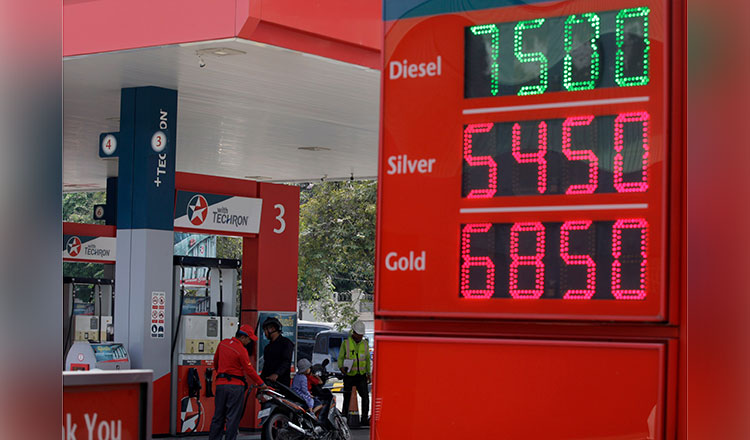
According to the latest announcement of the Ministry of Commerce, the retail price of regular petrol has risen to 5,450 riels per litre, marking a nine percent increase from 5,000 riels over the previous three-day pricing cycle. Diesel prices climbed to 7,500 riels per litre, up 4.16 percent.
Since the outbreak of the Middle East conflict, Cambodia has experienced cumulative increases in fuel costs, with petrol prices rising by 41.5 percent and diesel by 94.8 percent. The spike reflects the country’s heavy dependence on imported energy, leaving it vulnerable to global market volatility and supply chain disruptions.
According to officials, Cambodia’s retail fuel pricing mechanism is closely linked to international oil benchmarks, particularly those in Singapore, a major regional trading hub. These benchmarks are used to calculate recommended retail prices, though local fuel stations retain flexibility to adjust prices based on domestic competition.
Global oil markets have been under significant strain in recent weeks, with gasoline prices exceeding $90 per barrel and diesel surpassing $100 per barrel. Analysts attribute the surge to instability in key transit routes, including the Strait of Hormuz, a critical chokepoint for global energy shipments.
In response, the Royal Government of Cambodia has introduced a series of measures aimed at easing the burden on consumers and businesses. It provides a subsidy of 6.5 cents per litre of fuel, alongside an extra one-cent reduction as gasoline prices surpassed $90 per barrel and diesel exceeded $100 per barrel on international markets. Import duties on fuel have also been eliminated to help stabilise domestic prices.
According to the statement, Prime Minister Hun Manet has also decided to reduce additional tax on petrol and diesel to zero dollars, reduce special tax on gasoline from 30 percent to 15 percent and diesel from four percent to zero percent, and reduce value-added tax on petrol from 10 percent to four percent and diesel from 10 percent to zero percent with the Royal Government subsidising six percent for gasoline and 10 percent for diesel.
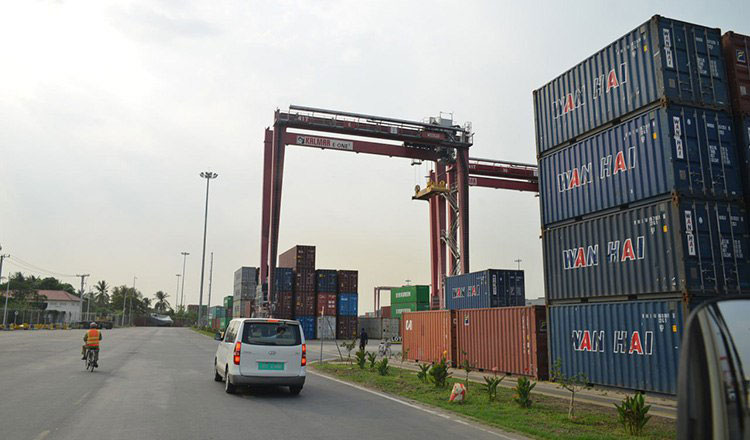
Keo Rottanak, Minister of Mines and Energy, recently emphasised that authorities are working closely with both domestic and international suppliers to ensure steady fuel availability. “The Cambodian government is closely coordinating with the private sector to maintain a continuous supply of fuel,” Rottanak said, noting that imports have declined due to logistical bottlenecks and geopolitical risks.
To address both immediate and long-term challenges, the government is pursuing a multi-pronged strategy. Efforts are underway to diversify fuel import sources, reducing reliance on any single supply route, while also promoting energy efficiency among consumers.
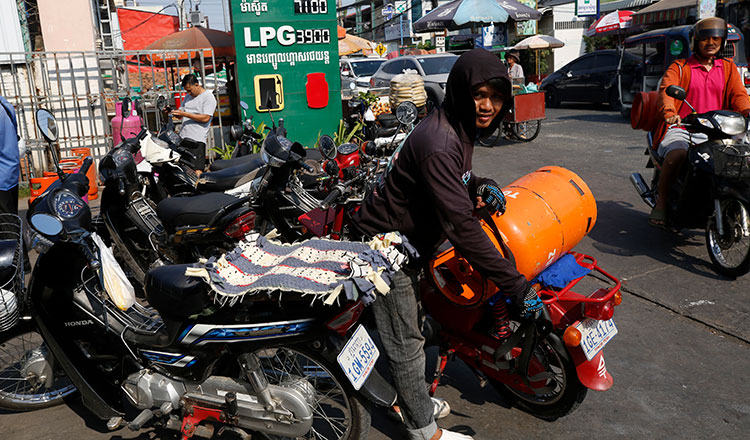
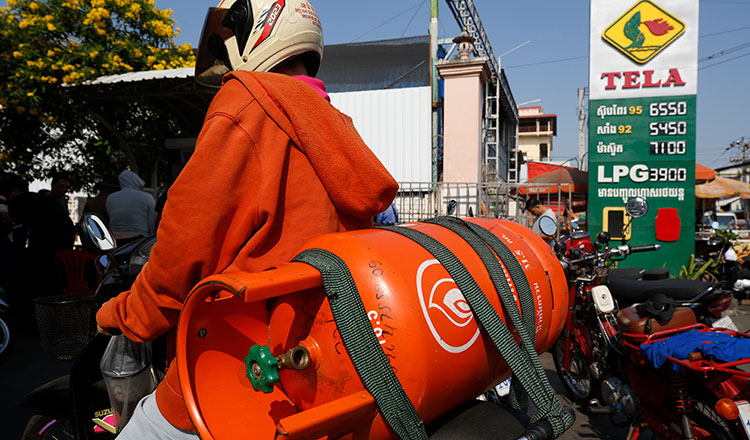
Households are being encouraged to adopt electric cooking appliances to reduce dependence on LPG, particularly as demand pressures mount. Authorities stress that responsible energy consumption is essential to ensure sufficient supply for critical sectors such as transportation, hospitality, and industry.
However, reactions from the public to the recent spike in fuel prices revealed growing concerns. Taing Leakhana asked in a social media post that if the fuel price is going up like this, how will she can carry on with her business. Soy Chantha, meanwhile, thanked the government for reducing the taxes on fuel. Another social media post under the name Vitt said employers should now raise the salaries too proportionately.
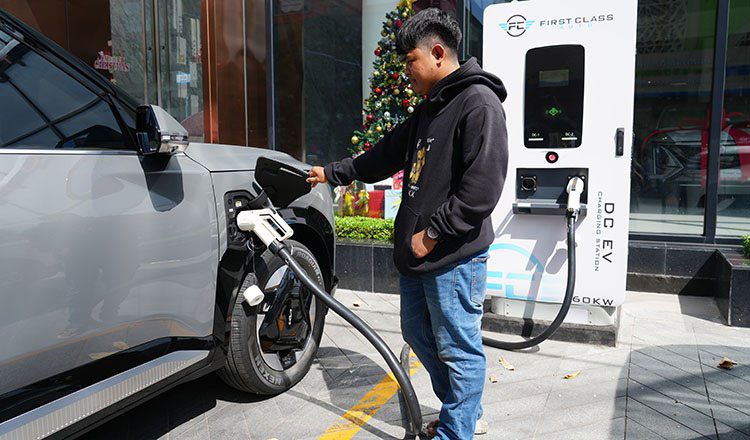
Looking ahead, a new sub-decree that came into effect on April 1 introduced further reductions in import duties on electric vehicles, solar energy systems, and other energy-efficient technologies.
- 08:15 02/04/2026