Govt cuts import, export taxes to boost EVs, green energy
Govt cuts import, export taxes to boost EVs, green energy
The new tax rates are set to take effect from April 1. Tax cuts also extend to electric household appliances such as electric stoves and kettles, as well as hybrid and electric vehicles, including HEV, PHEV and fully electric models.
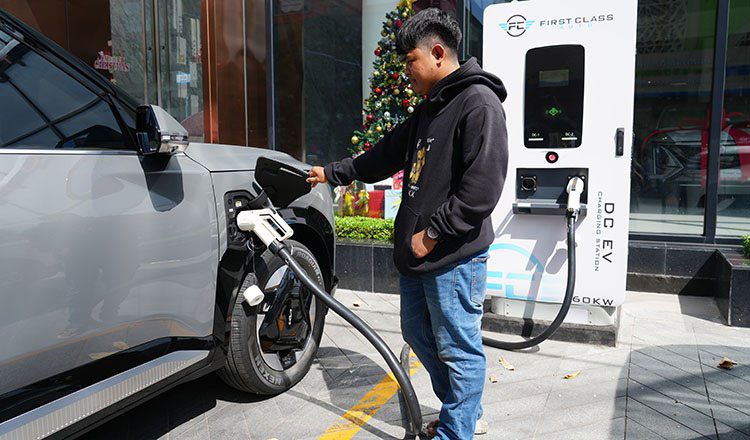
The Royal Government of Cambodia (RGC) yesterday announced sweeping tax reductions on a wide range of goods, including electric vehicles (EVs), renewable energy equipment and key consumer appliances, in a move aimed at promoting green technology adoption and supporting economic activity.
According to a notice issued by the General Department of Customs and Excise of Cambodia (GDCE), the new tax rates are set to take effect from April 1.
The government has enacted Sub-Decree No. 52, dated March 26, 2026, which was signed by Prime Minister Hun Manet, to adjust import duties and export tariffs on selected goods.
Import duties have been reduced from 7 percent to zero percent on items such as EV charging equipment, electric rice cookers and solar lamps. Meanwhile, a broader category of goods—including electric vehicle motors, solar energy systems, lithium batteries and various energy storage devices—will see tariffs reduced from 15 per cent to zero.
Similarly, tax cuts also extend to electric household appliances such as electric stoves and kettles, as well as hybrid and electric vehicles, including HEV, PHEV and fully electric models.
In a notable adjustment for the automotive sector, import duties on plug-in hybrid family vehicles (PHEVs) will be reduced from 35 per cent to 7 per cent, while fully electric family vehicles (EVs) will see tariffs slashed from 35 per cent to zero.
In addition to import tax reductions, the government has also lowered export duties on bauxite—an aluminium ore—from 25 per cent to 10 per cent.
Ministry of Public Works and Transport spokesman Phan Rim said on Friday that from 2018 to February 2026, a total of 14,534 electric vehicles have been registered in Cambodia. This includes 3,449 electric motorcycles, 722 electric three-wheelers, and 10,363 electric cars.
He added that the use of electric vehicles offers numerous benefits in terms of the environment, economy, and energy security.
Rim went on to add that, in particular, it supports the adoption of new technologies in line with regional and global trends, including reducing carbon emissions, enhancing energy security, saving costs, and embracing modern technological advancements.
Cambodia aims to increase the total number of electric cars to 30,000 by 2030, he added.
- 08:01 30/03/2026