Cambodia’s debt exceeded $62B last year, CBC reports
Cambodia’s debt exceeded $62B last year, CBC reports
CBC says that provinces with the highest credit utilisation generally maintained comparatively low late repayment rates, suggesting stable repayment capacity and disciplined borrowing behaviour.

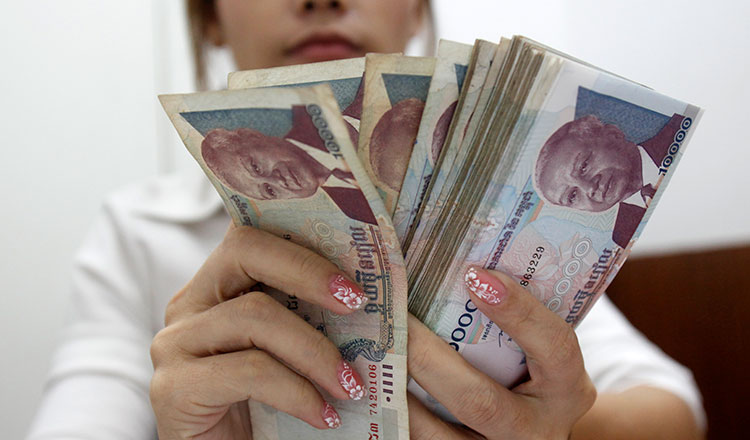
The Credit Bureau Cambodia (CBC) Monday reported that the Kingdom’s total credit balance reached 248.9 trillion riels, equivalent to approximately $62.2 billion by 2025, with women accounting for 52 percent of the 5.13 million borrowers nationwide.
According to the CBC’s Credit Situation in Cambodia 2025, Phnom Penh, Kandal, and Kampong Speu together represented 61 percent of the total debt, underscoring the dominance of the capital and surrounding areas in shaping national credit trends.
Phnom Penh recorded the largest credit volume at 126,860,546.17 million riels ($30.9 billion), representing about 51 percent of the national total, with approximately 723,000 borrowers.
It was followed by Kandal, which held 13,450,850.29 million riels ($3.3 billion), or 5.4 percent of total loans, with 409,000 borrowers. Kampong Speu ranked third with 10,608,693.09 million riels ($2.6 billion), accounting for 4.3 percent of national credit and around 392,000 borrowers.
In contrast, provinces with the lowest credit volumes included Pailin, Mondulkiri, and Kep, reflecting smaller market sizes, lower population density, and limited access to large-scale commercial financing activities. Kep, in particular, is a small town, while Pailin and Mondulkiri are border provinces, which further restricts the scale and reach of financial services.
Women’s participation in credit usage remained significant, with female borrowers representing 52 percent of the total of 5.13 million individual credit users nationwide.
The highest female loan utilisation rates were observed in Kampong Chhnang, Pursat, Kampong Cham, and Takeo at 54 percent, while the lowest were recorded in Sihanoukville, Ratanakiri, and Phnom Penh at 49 percent, indicating slightly lower participation in urban centers.
In terms of credit quality, the overall rate of repayments over 10 days late stood at 6.46 percent by the end of 2025. Svay Rieng recorded the lowest late repayment rate at 4.21 percent, followed by Kep at 4.95 percent and Phnom Penh at 5.44 percent.
Among the three provinces accounting for the highest 61 percent of total loans, the average rate of repayments more than 90 days late was about 6.70 percent, with Phnom Penh at 5.44 percent, Kandal at 7.12 percent, and Kampong Speu at 7.53 percent.
CBC observed that provinces with the highest credit utilisation generally maintained comparatively low late repayment rates, suggesting stable repayment capacity and disciplined borrowing behaviour in major economic centres.
Overall, approximately 76 percent of individuals and businesses borrowed from only one financial institution, while 20 percent borrowed from two institutions, and around four percent borrowed from three institutions.
Svay Rieng, Kep, and Sihanoukville recorded the highest proportion of single-institution borrowers at around 80 percent, reflecting manageable credit exposure and lower financial risk.
The Credit Situation in Cambodia 2025 report compiled data from all 196 CBC member banks and financial institutions, providing a comprehensive overview of provincial credit balances, market size, borrower demographics, age distribution, and credit quality across Cambodia’s banking and financial sector.
While the $62 billion debts exceeded the Kingdom’s $45 billion GDP last year, the relatively low late repayment rates and concentrated lending suggest that the sector remains manageable.
However, authorities will need to closely monitor the credit growth of household and corporate debt to prevent overheating or financial stress.
- 08:08 01/04/2026