NBC leads Cambodian banks to debunk panic-mongers
NBC leads Cambodian banks to debunk panic-mongers
Economists suggest that while short-term liquidity pressures can occur in any banking system, maintaining public trust is critical. Transparent communication from regulators, combined with prudent financial management by banks, are key to preventing further instability. For now, the message from the banking sector is clear: Cambodia’s banking system is not in crisis, and there are no major systemic challenges affecting banks in the country.
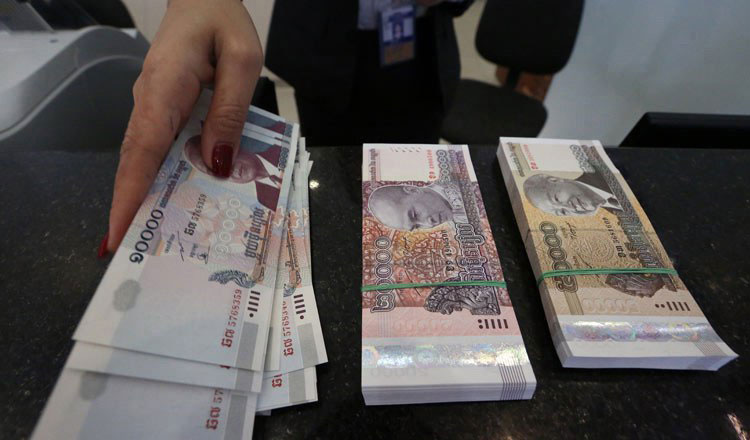
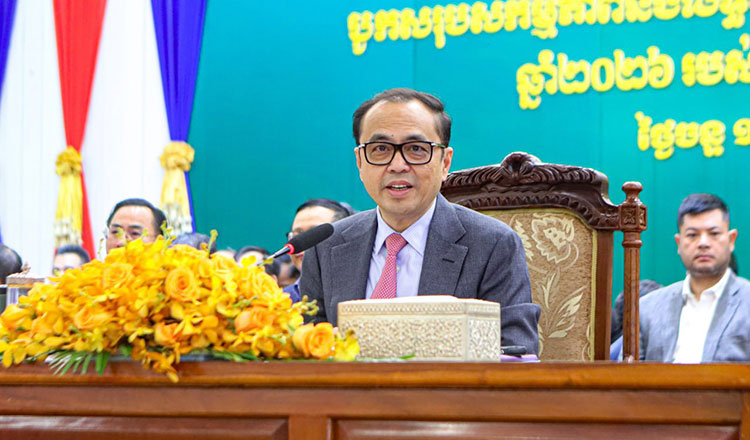
The National Bank of Cambodia (NBC), together with the Association of Banks in Cambodia (ABC), the Cambodia Microfinance Association (CMA), and several commercial banks, has urged the public to remain calm after widespread rumours triggered a wave of panic withdrawals at several banks in the country.
Over the last few days, unverified claims and panic posts have circulated across social media platforms, including Facebook, TikTok and Telegram. These rumours falsely suggested systemic instability within the banking sector, leading to unusual crowds at bank branches and ATMs in Phnom Penh.
In response to the public concerns, NBC Governor Chea Serey reassured depositors that the banking industry remains robust and highly resilient. A video statement released by the NBC Governor on March 16 firmly rejected claims that the country’s banking system is in crisis.
Serey explained that the rumours circulating online are misrepresenting the situation. According to her, the challenges experienced by some banks are not due to insolvency but rather to a surge in simultaneous withdrawals by depositors—an event that can temporarily strain any well-functioning financial institution.
“Banking systems operate on trust and timing,” she said, noting that Cambodia’s financial institutions continue to meet regulatory requirements and maintain adequate long-term liquidity.
Serey provided insight into how banks function, highlighting the concept of timing between deposits and loans. Banks act as intermediaries, collecting funds from depositors and channelling them into loans that support economic activity such as housing, infrastructure, and business expansion.
“If everyone withdraws money at the same time, banks would also have to demand repayment from borrowers at the same time,” she said, stressing that those who have taken a business loan cannot repay the full amount immediately as they plan to repay the bank over the next five years, for example.
“So, if all depositors withdraw their money at the same time, it is normal for a bank not to have enough cash to pay everyone immediately,” Serey noted.
In Cambodia, as in most countries, only a fraction of deposited funds is held in reserve to meet immediate withdrawal demands. The majority is lent out, often in long-term arrangements. For instance, home loans may extend up to 20 years, while business loans typically run for five years or more.
This structure means that when an unusually large number of depositors withdraw funds simultaneously—a phenomenon sometimes referred to as a “bank run”—banks may struggle to provide immediate cash, even if they remain financially sound.
“It is not that banks do not have the money,” Serey explained. “Rather, the funds are tied up in long-term loans that cannot be recalled instantly.”
She added that if banks were forced to demand immediate repayment from borrowers, it could disrupt businesses and the broader economy, as most borrowers rely on structured repayment schedules.
- 07:00 19/03/2026