Govt monitors fuel supply and prices to protect agriculture
Govt monitors fuel supply and prices to protect agriculture
Agriculture Ministry officials ordered to assist farmers facing rising energy costs as price of diesel spikes 66%.
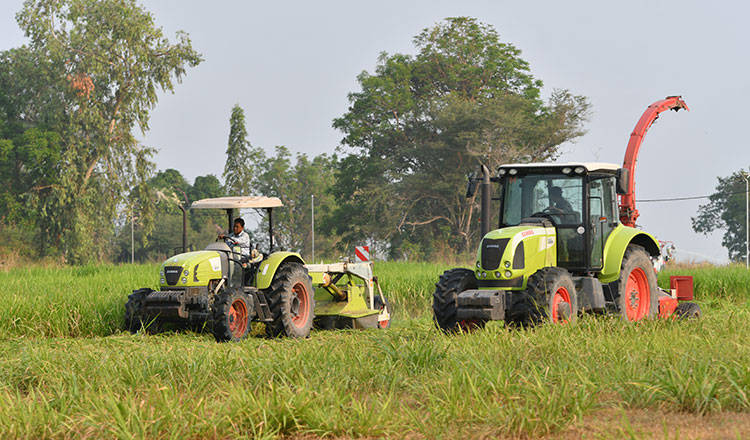
The Ministry of Agriculture, Forestry and Fisheries has ordered its officials and departments at the local level to monitor fuel supply and prices, address shortages, and ensure safe storage amid a worldwide supply disruption.
The aim is to ensure there is enough petroleum to keep the agricultural sector running as prices spike because of war in the Middle East.
Experts, meanwhile, urged prudent consumption of fuel to avoid disruption to economic activities.
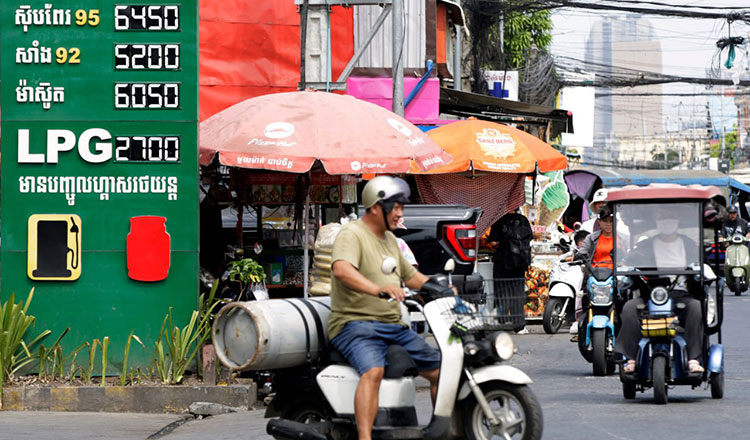
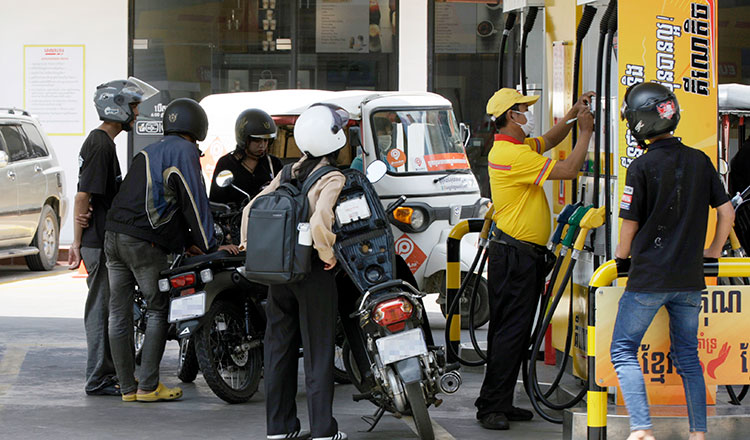
The price of petroleum in Cambodia as of yesterday stood at 5,200 riel ($1.30) per litre, marking an increase of more than 35% compared to pre-conflict levels. Diesel remained at 6,400 riel per litre as of yesterday, reflecting a 66% rise.
Such a jump has caused concern among local farmers and agricultural communities over resources to operate agricultural machinery, irrigation systems, and transport agricultural products.
In response to the fears, the Agriculture Ministry said it met with the Ministry of Mines and Energy and Ministry of Commerce yesterday to identify measures that could be taken to ease the supply shock.
In a post-meeting statement, the ministry ordered all directors of its provincial and municipal departments to closely monitor the fuel supply and prices within their respective provinces and municipalities.
“The prices of fuel and gas must follow the price schedules issued by the Ministry of Mines and Energy and/or the Ministry of Commerce,” the statement reads.
Ministry officials at the grassroots level were told to promptly resolve cases of farmers or agricultural communities facing difficulty obtaining fuel by notifying the provincial or municipal departments of mines and energy or commerce.
The officials were also ordered to disseminate information to farmers and agricultural communities regarding the safe use of storage containers to prevent fire hazards that could endanger lives, property, and livelihoods.
“If any challenges related to fuel and gas supply are observed, or if abnormal price increases occur, an urgent report must be submitted to the Secretariat-General of the Ministry of Agriculture, Forestry and Fisheries so that measures can be taken at the national level,” the Agricultural Ministry said.
A farmer in Takeo province, who asked not to be named, said the prices of fertilisers, pesticides, and other farming supplies are rising due to the increase in transport costs.
“It is very difficult to make a living like this,” he said. “We are hardly making any profit from our paddy rice. I wish the government could do something to lower the prices.”
Chan Sophal, Director of the Centre for Policy Studies, said that in the worst-case scenario, Cambodia will cut fuel imports, especially diesel, which is mainly used to run heavy machinery for work and vehicles to transport agricultural products and raw materials.
“In that scenario, which we hope will never happen, the supply chains will be seriously disrupted, and perishable goods will go to waste,” he said.
Sophal estimated that it would take at least three months for oil prices to return to normal.
“Almost every country is experiencing this,” he said. “Whether the prices drop or not depends on how long the fighting will continue in the Middle East.”
Although the situation is beyond the government’s control, he said some steps could be taken to alleviate the pain.
“Working from home and holding online class will help a lot because that will allow people to consume less fuel and ensure adequate supply at reasonable prices for those who rely heavily on them,” Sophal said.
“In addition, it will reduce traffic congestion, which causes people to waste petrol while their vehicles are stuck on the roads.”
The people, he added, also need to be more aware and efficient when travelling.
“People should avoid unnecessary travelling to save petrol,” he said. “If they really have to, they should consider taking public transport or riding a bicycle.”
Economist Duch Darin said the government must ensure stability of prices amid supply disruptions.
“It is crucial for Cambodia to keep the prices of necessities stable and carefully balance the inflation and exchange rate,” he said. “Meanwhile, the country needs to boost production of local products in which it has the strongest comparative advantages, including agricultural products.”
“Prices of imported goods will be more affected because they need to be shipped, so it is likely that local products, given the advantage of proximity, will gain more popularity because they are cheaper.”
- 09:30 17/03/2026