How should Cambodia adapt to the evolving global trade order?
How should Cambodia adapt to the evolving global trade order?
Kishore Mahbubani, a top diplomat and author of several books, once termed geopolitics as “a very cruel business”. He couldn’t have been more accurate. The US’ geopolitical stakes—tariffs, interventions in Venezuela and Iran—have had global ramifications, directly influencing the cost of essential imports. Whatever one might say, Cambodia’s economic progress is linked to the US’ geopolitical interests, and so are its adverse impacts. In addition, there are ongoing border tensions with Thailand. With increased vulnerability, risking both energy security and broader economic stability amid regional and global uncertainty, what should Cambodia do next? How will it reconcile with the changing world order? Khmer Times put these compelling questions to experts. Their responses are clear, bold and instructive. While one strongly pitches for the Royal Government to diversify both export markets and import sources, while keeping the US a crucial trading partner, others say geopolitical dependence on the US market increases Cambodia’s sensitivity to external policy shifts, reducing strategic flexibility and reinforcing its position as a price-taker rather than a rule-shaper in international trade dynamics. In short, the Kingdom needs to do a balancing act to remain afloat in these turbulent times
Amid mounting internal and external pressures, Cambodia’s economic progress remains linked to the US’ geopolitical interests, particularly under President Donald Trump, who employed various strategies, including tariffs and force, to exert pressure on smaller economies and advance its trade and security priorities.
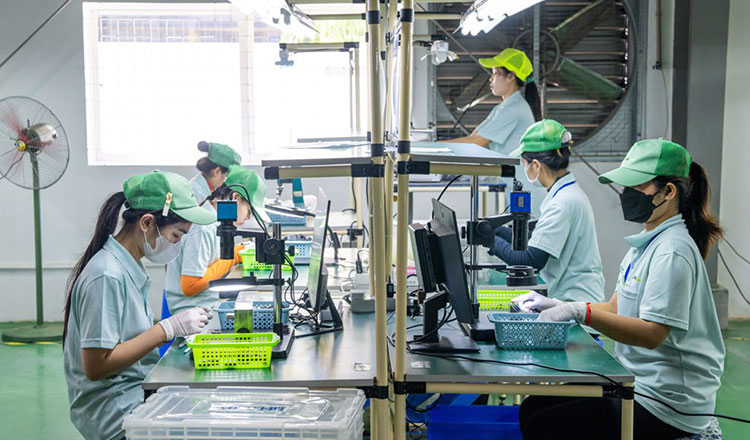
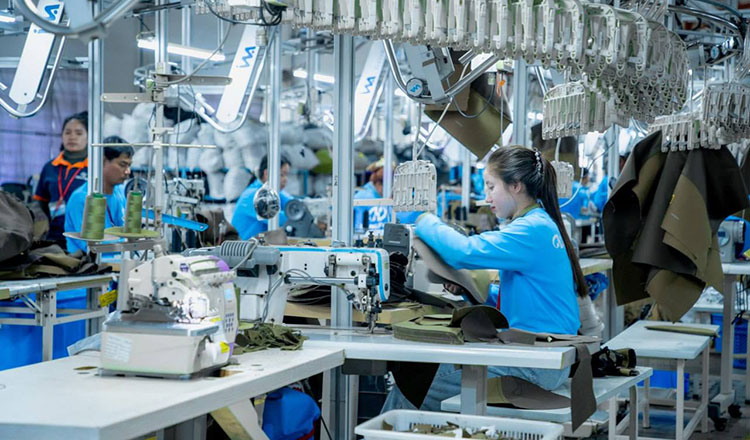
US tariffs significantly affect Cambodia as the American market absorbed nearly half of its manufactured exports, including garments, footwear and travel goods. Any change in tariff policy directly impacts industrial competitiveness, employment levels, and domestic revenue.
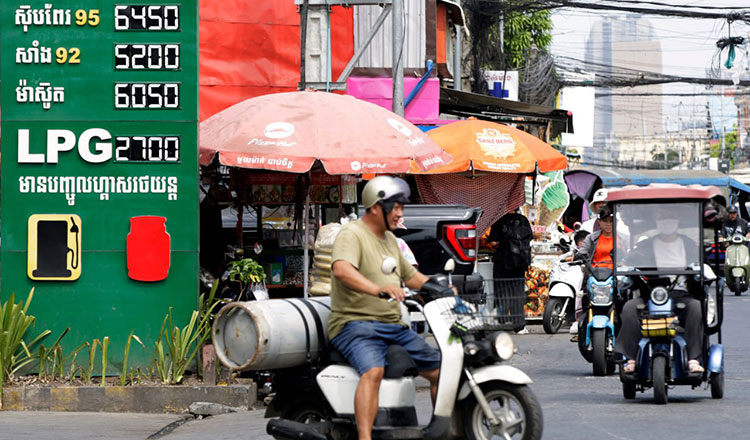
Meanwhile, Cambodia’s import profile is heavily reliant on petroleum products such as fuel, oil and diesel, making the Kingdom sensitive to global energy price fluctuations. US geopolitical interventions in regions like Venezuela and Iran have recently amplified these risks, directly influencing the cost of essential imports.
These pressures are intensified by ongoing border tensions with Thailand, which disrupt strategic supply chains for fuel and oil. With no domestic energy production, the Kingdom faces increased vulnerability, risking both energy security and broader economic stability amid regional and global uncertainty.
Dual dependence
The dual dependence on US-driven trade and energy conditions, combined with regional instability, highlights Cambodia’s exposure to a complex external environment where international policy and regional conflicts intersect to affect both export competitiveness and import affordability.
Such a dual dependence on US-driven trade and energy, combined with regional instability, underscores the exposure to complex external factors. International policy decisions and regional conflicts intersect to influence export competitiveness, import affordability, and the overall resilience of the trade-dependent economy.
According to the latest data of the General Department of Customs and Excise (GDCE), trade between Cambodia and the US reached $13.14 billion in 2025, with exports totalling $12.73 billion and imports at $417 million, representing a 29.2 percent increase from the $10.17 billion recorded in 2024.
Early 2026 data showed a continued upward trajectory. In January 2026, Cambodia-US trade reached $1.32 billion, with exports of $1.28 billion and imports of $38.8 million, marking a 48 percent increase compared to $892 million in January 2025.
By February this year, cumulative trade rose to $2.34 billion, with exports totaling $2.26 billion and imports of $80.3 million, a 39.9 percent increase relative to the first two months of 2025.
While these figures suggested strong growth, they also underscored the Kingdom’s concentrated exposure to the US market, particularly in the export sector, reflecting its sensitivity to changes in US tariff policy, especially under President Donald Trump, as he may impose additional measures to balance the trade deficit.
The Trump administration has applied several rounds of tariffs in less than a year. In fact, Cambodia faced several targeted tariffs starting from 49 percent in April, 36 percent in August, and 19 percent in October last year, imposed on most Cambodian goods entering the US territory as part of broader trade terms.
On October 26, the Royal Government officially signed the ‘Agreement on Reciprocal Trade’ with the US during the 47th ASEAN Summit in Kuala Lumpur, Malaysia. The agreement was likely to compensate President Donald Trump for bringing the Thai government to sign the ceasefire agreement.
However, after legal challenges and a US Supreme Court ruling in early 2026, some of these tariffs were deemed unlawful, leading to the imposition of a temporary global tariff of 10-15 percent by President Donald Trump himself, under Section 122 of the Trade Act of 1974.
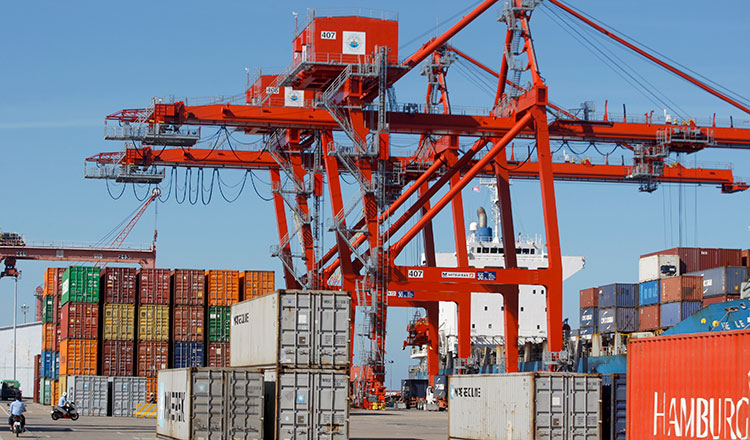
While the temporary rate is lower than the threatened 19 percent, it underscores the power of US trade policy on Cambodia’s exports, primarily driven by garment, footwear, and travel goods exports, which constitute the backbone of the export-oriented manufacturing sector.
A month-by-month analysis showed that Cambodia’s exports remain resilient despite these tariff shocks. January 2026’s export value of $1.28 billion occurred shortly after the announcement of the 10 percent global tariff in February 2026, suggesting that many orders were still processed under the previous trade regime.
By February, cumulative exports reached $2.26 billion, reflecting continued strong demand for Cambodian products in the US, although future growth may face headwinds if tariffs persist at the higher 15 percent level.
Importantly, Cambodia’s imports from the US remain marginal, just $38.8 million in January and $80.3 million by February, reflecting that the country primarily depends on other countries for industrial inputs and consumer goods.
While the export side dominated the trade relationship, the import side, particularly fuels, oil, and diesel, exposes Cambodia to vulnerabilities that are indirectly linked to US policy.
The Kingdom has no domestic production of petroleum products, meaning that global oil prices, influenced by US foreign policy, sanctions, and geopolitical developments, directly affect the import bill.
The dual exposure, which has high reliance on US exports for revenue and dependence on global oil imports, creates a ‘double vulnerability’ where US policy decisions can simultaneously affect both the inflow of foreign currency and the cost of critical imports.
Border disputes with Thailand have also disrupted logistics, raising costs and supply chain uncertainty. Combined with Trump’s 10-15 percent global tariffs, these factors threaten Cambodia’s export efficiency and increase the cost of imports, impacting the national trade-dependent economy.
Comparatively, the trade growth observed in early 2026, 48 percent in January and 39.9 percent in February, demonstrated a strong underlying demand for Cambodian goods. However, it also reflected the lag effect in tariffs, as many US buyers had likely placed orders before the new global tariff came into effect.
Diversification needed
Going forward, if tariffs remain at 15 percent, some economists predict a slowdown in Cambodia-US trade growth, particularly in price-sensitive sectors like garments and footwear.
The situation highlighted the need for the Royal Government to diversify both export markets and import sources. While the US will remain a crucial trading partner, relying on a single market exposes Cambodia to policy volatility beyond its control.
Diversification could include strengthening trade relationships with ASEAN neighbours, China, and Europe, as well as exploring new markets in the Middle East and Africa.
On the import side, securing alternative fuel suppliers and investing in strategic reserves could mitigate the impact of global energy price shocks, which are increasingly influenced by US geopolitical decisions.
To gain insight into how the Royal Government could adapt to shifting US policies, Khmer Times asked Dr Sam Seun, a policy analyst at the Royal Academy of Cambodia, focusing on historical relations and the importance of strategic flexibility.
Dr Sam noted that the US was among the earliest countries to establish diplomatic relations with Cambodia, beginning on July 11, 1950, three years before the Kingdom gained independence from France on November 9, 1953, reflecting early political engagement.
“The US first established diplomatic representation in Vietnam before sending an envoy to Cambodia to explore cooperation. Despite resistance from some Vietnamese officials at the time, the American envoy proceeded and laid the foundation for formal diplomatic ties between the two countries,” he said.
He explained that this early outreach demonstrated the US’s willingness to engage Cambodia during a difficult historical period. “Over the decades, the relationship has contributed to development in several areas, including economic cooperation and support for territorial integrity,” he said.
Dr Sam further noted that Cambodia established diplomatic relations with China in 1958, eight years after establishing ties with the US, suggesting that engagement with Beijing developed more slowly despite China’s closer geographic proximity to the Kingdom.
He emphasised that, as a small country, Cambodia can draw lessons from Vietnam’s flexible foreign policy, which has enabled Hanoi to maintain constructive relations with both the US and China despite historical conflicts, demonstrating the importance of balancing ties with major powers.
According to him, strategic adaptability and diversified partnerships are essential for Cambodia to manage external pressures, particularly as global geopolitical competition increasingly influences trade policy, investment flows and economic stability in smaller, open economies like Cambodia.
He pointed to Vietnam’s participation in President Donald Trump’s Board of Peace (BoP) as an example of balanced diplomacy. While engaging with the US initiative, Vietnam simultaneously maintained high-level engagement with China, signalling its intention to preserve stable relations with both sides.
Dr Sam noted that Vietnam maintains strong relations with the US while preserving cooperation with China, even after tensions over the South China Sea dispute in 2012. Despite earlier disagreements, Vietnam was able to gradually restore constructive ties with Beijing.
He noted that Chinese President Xi Jinping, who has described Cambodia as an ‘ironclad friend’, has visited Vietnam more frequently than Cambodia, reflecting the scale of China’s economic interests in Hanoi and the importance of diversified diplomatic engagement.
Balancing act
Overall, Dr Sam suggested that to adapt to current US policy dynamics, Cambodia should maintain diplomatic flexibility and actively engage with American policymakers to explain its national context, similar to approaches used by Vietnam to manage relations with major global powers.
At the same time, he emphasised that Cambodia should continue balancing diplomatic and economic relations with a wide range of partners, including neighbouring and regional countries, as international relations can evolve quickly depending on changing geopolitical and economic conditions.
Speaking to Khmer Times, Kevin Nauen, Dean of the Faculty of Social Sciences and International Relations of Paññāsāstra University of Cambodia (PUC), said that shifting US trade policies, including temporary broad-based tariffs and targeted measures, place Cambodia in a more constrained economic position within global supply chains.
Nauen explained that these policies affect multiple exporting countries. “The main impact is not isolation but intensified competition, where Cambodia’s reliance on low-value garment exports limits its ability to adjust. Economically, this raises the risk of losing market share to more diversified or efficient producers, he said.
“Geopolitically, dependence on the US market increases Cambodia’s sensitivity to external policy shifts, reducing strategic flexibility and reinforcing its position as a price-taker rather than a rule-shaper in international trade dynamics,” he said.
When asked about how Cambodia can balance its economic dependence on major powers like the US while maintaining strategic autonomy, he noted that Cambodia can balance dependence on major powers by maintaining engagement while expanding alternatives and strengthening domestic capacity.
Nauen said, “Continued access to the US market remains essential, but diversification through the Regional Comprehensive Economic Partnership and improved access to the European Union reduces overreliance. Strategic autonomy depends on avoiding alignment with any single power while attracting investment from multiple partners.”
Domestically, upgrading industries beyond garments and improving workforce skills reduces structural dependence. The combination of external diversification and internal strengthening allows Cambodia to remain economically integrated without becoming politically constrained by any one major partner, he noted.
Regarding global geopolitical tensions, including US actions such as sanctions and security involvement in energy-producing regions, Nauen explained that it has shaped oil prices and supply stability indirectly. “For Cambodia, which relies heavily on imported fuel, this creates persistent vulnerability to external shocks,” he said.
Nauen continued that rising energy costs increase production and transport expenses, weakening export competitiveness over time. Unlike some regional competitors, Cambodia has limited capacity to buffer these shocks through domestic energy production or large fiscal interventions.
“Over the long term, repeated exposure to volatile energy prices can constrain industrial development, increase inflationary pressure, and reduce economic stability, making external geopolitical dynamics a central factor in Cambodia’s economic security,” he added.
When further asked about the policy adjustments to strengthen resilience against both trade and energy-related external pressures, the PUC Dean said that Cambodia should adopt policies that address both trade exposure and energy vulnerability.
First, diversifying exports beyond garments into electronics, agro-processing, and light manufacturing reduces sensitivity to tariffs affecting multiple countries.
Second, investing in renewable energy and improving grid reliability lowers dependence on imported fuel.
Third, enhancing trade logistics such as ports, customs efficiency, and transport networks while improving competitiveness under shared tariff constraints.
Fourth, securing diversified energy supply agreements can reduce exposure to price shocks.
“Finally, strengthening workforce skills and social protection systems ensures adaptability to external disruptions, enabling Cambodia to sustain growth and stability despite ongoing global trade and geopolitical uncertainties, he added.
- 08:01 23/03/2026