63% firms to raise investments in Cambodia this year, finds survey
63% firms to raise investments in Cambodia this year, finds survey
Overall, the survey paints a picture of an economy that is adapting to a rapidly changing global environment. While challenges persist, particularly in tourism and energy, business confidence remains relatively strong, underpinned by investment growth, improved governance, and expanding international trade relationships.
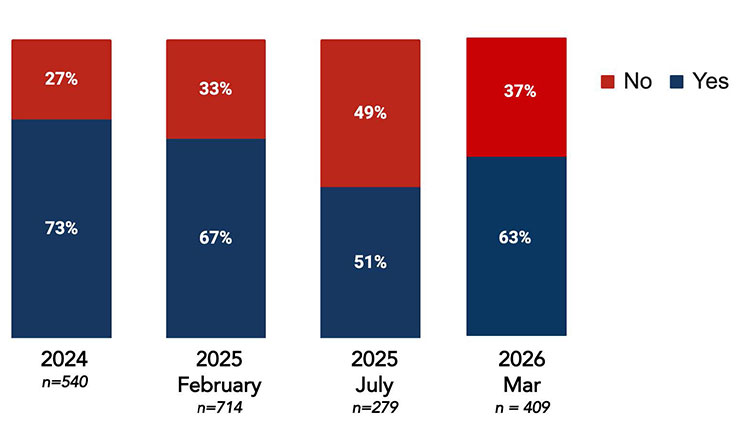
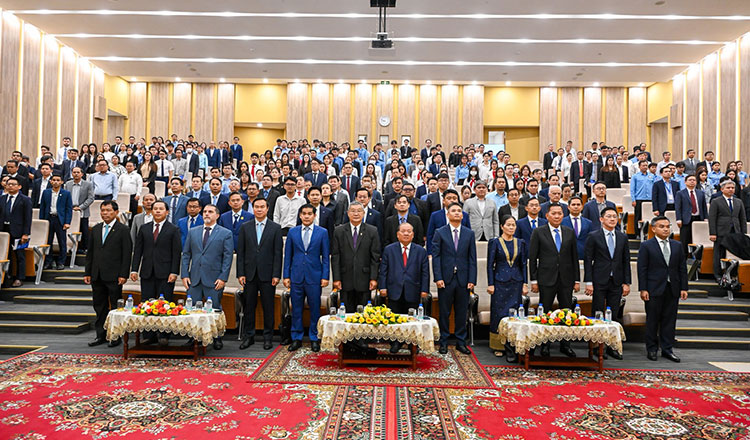
As many as 63 percent of companies that participated in a recent survey in the country said they will increase their investments in Cambodia this year, and 50 percent said they expected profit growth. The 2026 Business Outlook survey was conducted by the American Chamber of Commerce (AmCham) among CEOs and business executives in Cambodia.
However, the proportion of companies expecting a decline in profits has increased from 20 percent in 2025 to 34 percent in 2026, the survey found.
The overall expectation of growing profits shows surprising resilience of the Cambodian economy despite headwinds including US military operations in Iran, a now-stable border conflict with Thailand, and a crackdown on pervasive industrial-scale online scamming, according to the survey results released by outgoing AmCham President Casey Barnett.
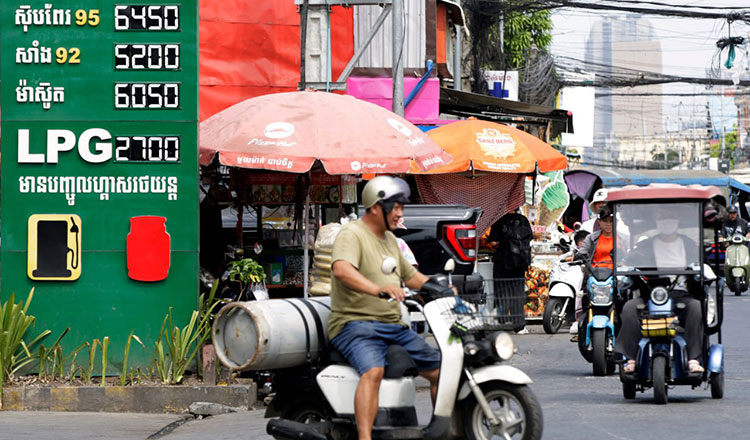
The survey pointed out two main negative effects of the ongoing military conflict in Iran on businesses. First, the conflict has increased the price of petroleum fuel in Cambodia. This directly raises transportation costs and indirectly raises the prices of consumer goods through a knock-on effect.
The supply of petroleum fuels is also affected because the Cambodian government imposes a price ceiling that is now updated every three days. However, the government price ceiling formula does not consider other variable costs, such as the cost of shipping fuel to Cambodia. As these costs rise, the supply of petroleum fuel in Cambodia becomes unprofitable, and a number of retailers are reporting stock-outs. Moreover, the 3-day repricing exposes importers and retailers to additional risks due to increased daily variation.
A second negative effect of the conflict in Iran is a disruption of air services and an increase in airfares, which has resulted in a drop in tourist arrivals. “Tourism is negatively affected by the military conflict in Iran, the ongoing border conflict with Thailand, and the presence of industrial-scale online scamming centres. As a result, tourism in 2025 declined, as reflected in a drop in ticket sales at Angkor Wat, which remains far below the pre-COVID highs,” the survey report noted.
The border closure with Thailand has an impact not only on tourism but also on most companies; nevertheless, a number of local producers, non-Thai importers, and logistics companies have experienced growth due to the closure of the Thai-Cambodia border.
According to the survey report, widespread industrial-scale online scamming was a unique phenomenon in Cambodia and Myanmar, with steady growth from 2015 to 2025. This resulted in reputation damage, and Asian tourist arrivals to Cambodia have dropped significantly. Survey respondents estimate that it will take, on average, 2.7 or more years for the tourism industry to recover from the reputational damage of online scamming.
There is an ongoing government crackdown on industrial-scale online scamming, which the business community perceives as either somewhat effective or effective. The crackdown on online scamming has an overall neutral impact on business in the short term, but is seen as positive in the long term.
Respondents have also reported positive improvement in tax administration, with faster audit completion and more clarifications. The General Department of Taxation (GDT) has introduced standard operating procedures for tax audits and investigations, which help streamline services and manage taxpayer expectations.
“GDT has been a role model in engaging the private sector, with regular meetings in the form of a Tax Working Group in which private sector representatives, including AmCham, are able to raise any issues, recommendations, or requests for clarification. While the number of tax audits reported in the survey has declined only marginally, from 42 percent to 38 percent, the speed and ease of audits have improved to the point that private-sector tax service providers have reported a decline in income due to fewer tax disputes,” it said.
The survey was conducted online in March 2026 and included 409 responding companies. The business outlook is positive, with surprising resiliency despite a number of challenges.
"The survey reflects overall business sentiment of both Cambodian and international investors,” Casey Barnett told Khmer Times.
The United States of America again proved to be a reliable economic partner for Cambodia, purchasing 41 percent of Cambodia’s exports. Despite the challenge posed by the US reciprocal tariffs, Cambodian exports to the US increased by 28 percent year-on-year in 2025.
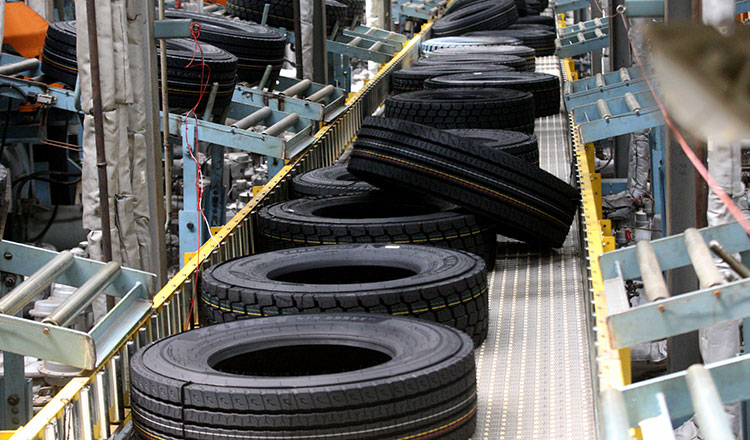
Cambodia has dramatically increased its exports of steel goods, toys, footwear, and tyres. However, bags and travel goods have experienced limited growth. Also, the export of electrical equipment has notably declined due to the US imposing countervailing and anti-dumping duties due to adverse findings regarding the transhipment of solar panels from China.
Despite this, Cambodia continues to export other electrical products such as lighting equipment. Much of Cambodia’s export gains are due to a shift in manufacturing away from China, as the US seeks to diversify supply chains and Chinese manufacturers seek refuge from high US tariffs on Chinese-made goods.
US exports to Cambodia have also surged, up 96 percent between August and December of 2025 compared to the same period in 2024. This is mainly due to Cambodia granting US-made goods tariff-free access starting in August 2025. The elimination of tariffs on US-made goods is especially beneficial to US-made vehicles, agricultural produce, cosmetics, and spirits.
However, while tariffs on US-made goods have been eliminated, Cambodia maintains a tax called “special tax” on imports from the US. Because of the “special tax,” certain US products, such as petroleum fuel, do not benefit from the elimination of tariffs.
Overall, the survey paints a picture of an economy that is adapting to a rapidly changing global environment. While challenges persist, particularly in tourism and energy, business confidence remains relatively strong, underpinned by investment growth, improved governance, and expanding international trade relationships.
- 07:57 23/03/2026