Anutin’s party pledges economic diplomacy with Cambodia
Anutin’s party pledges economic diplomacy with Cambodia
The Bhumjaithai Party’s latest economic diplomacy rhetoric stands in sharp contrast to its actions, says an analyst, adding that persistent military operations and border closures have weakened trust and stalled economic activities.
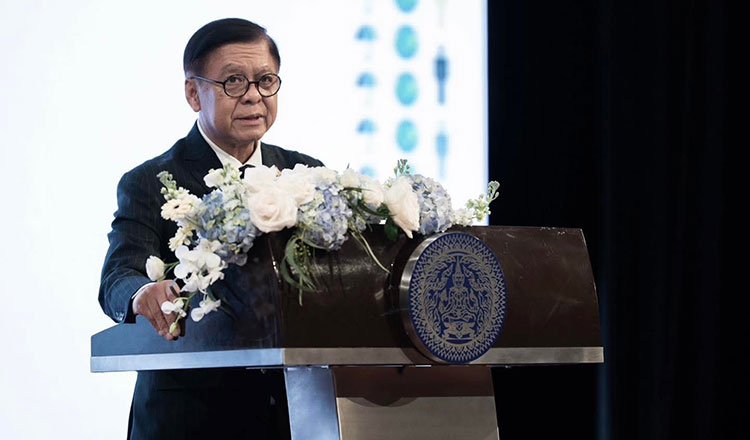
Two months prior to Thailand’s election, the Bhumjaithai Party, led by current Thai Prime Minister Anutin Charnvirakul, promised economic diplomacy with Cambodia, a political message widely viewed as an attempt to attract voters affected by ongoing border tensions and disrupted cross-border trade.
The shift in foreign policy tone was announced on Wednesday by Sihasak Phuangketkaew, Minister of Foreign Affairs of Thailand, who pledged to guide the country beyond its diplomatic rifts while positioning economic cooperation as a central focus of future diplomacy.
Sihasak said foreign policy must advance with honour and dignity, adding that Thailand would unveil detailed economic diplomacy plans next week to boost growth and regional engagement. However, realities on the ground have raised doubts over whether such policies will materialise.
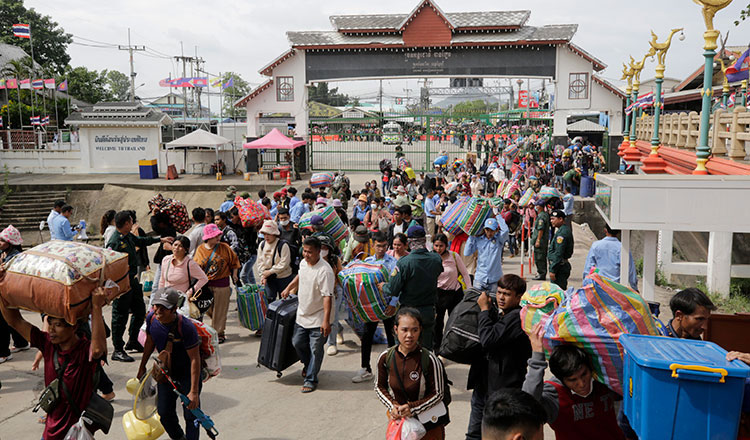
Since Anutin took office, Thai military operations along Cambodia’s border provinces have soared, with reports of strikes and incursions triggering large-scale displacement and deepening humanitarian and economic strain on frontier communities.
Local traders and residents on both sides of the border have endured substantial economic losses as crossings remain restricted and transport routes unsafe, while displacement linked to military escalation has disrupted livelihoods, labour mobility and daily economic activity.
Despite these challenges, Sihasak maintained that stable relations with Cambodia could unlock economic opportunities, arguing that peaceful ties would support trade, investment and long-term prosperity.
He also outlined a strategic agenda aimed at strengthening Thailand’s bargaining power in technology and supply chains, maintaining balanced relations with major powers, and reinforcing ASEAN mechanisms to manage regional instability.
“Thailand must look ahead to the next four years, hoping the country will overcome its current conflicts and that foreign policy during that period will create opportunities for both nations,” he said.
Regarding immediate priorities, the Thai Foreign Minister highlighted stronger relations with neighbouring countries. “Thailand must move beyond its conflict with Cambodia and support stability and peace in Myanmar,” he said.
For Cambodian communities, the promise of economic engagement is overshadowed by Thailand’s invasion. While these initiatives could indirectly benefit Cambodia in a stable environment, success depends entirely on Thailand ceasing aggressive actions—something that has not happened under the current Bhumjaithai Party leadership.
On the same day, the Bhumjaithai Party announced it would nominate two prime ministerial candidates, Anutin and Sihasak, stating that if victorious, Anutin would become Prime Minister while Sihasak would continue as Foreign Minister and serve concurrently as Deputy Prime Minister of Thailand.
Speaking to Khmer Times, Seun Sam, a policy analyst at the Royal Academy of Cambodia (RAC), said the Bhumjaithai Party’s latest economic diplomacy rhetoric stands in sharp contrast to its actions over recent months, noting that persistent military operations and border closures have weakened trust and stalled economic activities.
“The message suggests a desire to reassure voters, but the ground reality along the border reflects limited willingness to de-escalate tensions or rebuild confidence through practical measures,” he said.
Sam added that Charnvirakul rose to power following the departure of the Pheu Thai Party government after the August 2024 election, meaning his leadership now requires both palace alignment and broader public support as he seeks a full electoral mandate.
“The dynamic places the Bhumjaithai Party under pressure to demonstrate national strength while simultaneously presenting a conciliatory economic narrative toward Cambodia,” he noted.
With Thailand’s general election scheduled for February 8 next year, Sam said the Bhumjaithai Party is trying to regain support from citizens who have faced prolonged economic hardship from closed border crossings, disrupted trade flows and declining income for businesses in frontier provinces.
“Economic diplomacy has become a key campaign slogan, but without concrete steps to ease tensions or reopen trade routes, it remains uncertain whether these promises will translate into real change,” he noted.
- 07:57 26/12/2025