US remains Cambodia’s largest export market as shipments top $11B
US remains Cambodia’s largest export market as shipments top $11B
The growth indicates that Cambodia is gradually moving up the value chain, which is essential for sustainable economic growth and competitiveness in the global market.
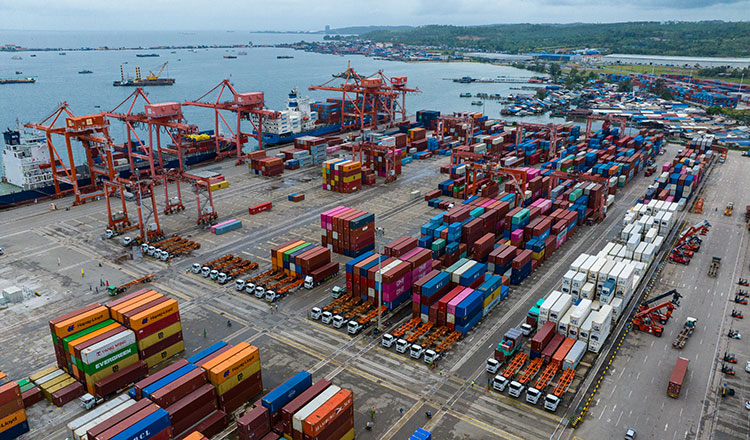
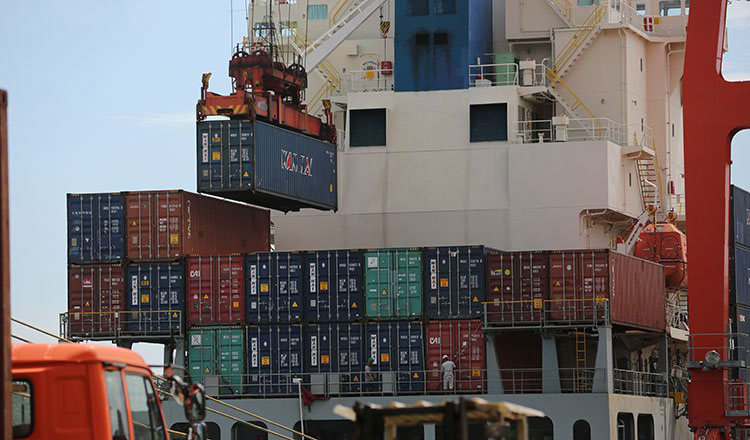
Cambodia exported more than $11 billion worth of goods to the United States in the first eleven months of 2025, reaffirming Washington’s position as the Kingdom’s largest export market, according to the latest data from the Ministry of Commerce.
Bilateral trade between Cambodia and the US reached $11.87 billion during the January-November 2025 period, marking a robust increase of 27.68 percent compared to the same period last year.
The growth underscores the continued strength of trade ties between the two countries, particularly in Cambodia’s export-oriented manufacturing sector.
Cambodia’s exports to the US totalled $11.50 billion, up 27.07 percent year-on-year, while imports from the US stood at $367.46 million, representing a sharp increase of 50.27 percent compared with 2024, the data showed.
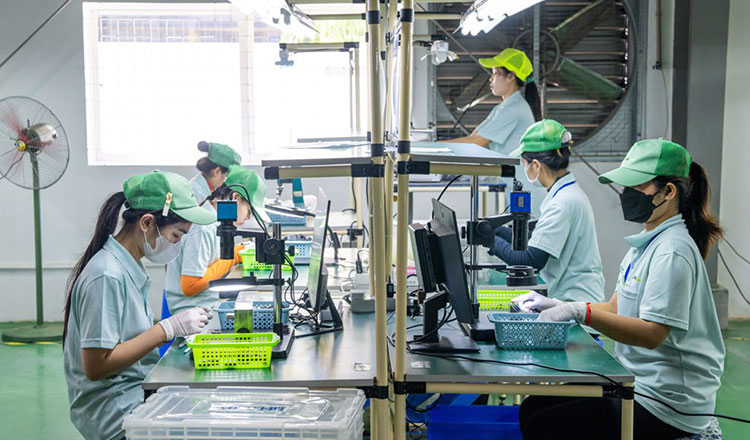
The report noted that the US remained Cambodia’s top export destination during the period, followed by Vietnam, China, Japan and Canada. Cambodia’s exports to the US are dominated by garments, footwear, travel goods and other manufactured products, which continue to benefit from strong demand despite global economic uncertainties.
Economist Darin Duch told Khmer Times that Cambodia’s strong export performance to the US reflects a mix of product competitiveness, favourable trade relations and market access.
“Cambodia’s exports to the United States surpassed $11 billion in the first 11 months of 2025, increasing by 27.1 percent,” Darin said. “This growth is driven by several factors, including the competitiveness of Cambodian products, mainly garments and footwear, strong bilateral trade relations with the United States, and preferential market access under existing trade system arrangements.”
He noted that while rising international demand has supported export momentum, sustaining growth will depend on continued improvements in productivity and standards.
“This drive is backed by increasing international demand, but the momentum will continue only if Cambodia enhances productivity standards, quality control and compliance with global standards, particularly during a period of global economic uncertainty,” he said.
Darin stressed that diversification remains critical for long-term trade resilience.
“Market diversification continues to be a relevant element for trade resilience in the long term, and Cambodia would do well to expand its presence in regional and fast-growing markets,” he said.
He also pointed to rising imports from the US as a positive signal for the domestic economy.
“The rise in imports from the US reflects stronger domestic demand and increasing industrial sophistication, including technology transfer and higher value-added production,” Darin said. “This indicates that Cambodia is gradually moving up the value chain, which is essential for sustainable economic growth and competitiveness in the global market.”
Cambodia must work collectively to safeguard its access to the US market, which accounts for around 43 percent of the Kingdom’s total exports, a senior customs official has said, underscoring the market’s strategic importance to the country’s export-led growth.
Speaking at the “Dissemination Workshop on Standard Operating Procedures for Implementing Preventive and Suppressive Measures Against Goods-Origin Fraud in Exports to the United States” on Monday, Kun Nhim, Minister Delegate to the Prime Minister and Director General of the General Department of Customs and Excise of Cambodia, said all relevant actors and stakeholders need to make sustained efforts to maintain and protect Cambodia’s position in the US market amid an increasingly challenging global trade environment.
“The US remains Cambodia’s most important export destination, and maintaining this market is critical for the stability and expansion of our export sector,” he said. His remarks come in the context of recent trade tensions, after the US announced in April 2025 the imposition of a 49 percent tariff on certain Cambodian exports.
In response, the Royal Government of Cambodia, under the leadership of Prime Minister Hun Manet, moved swiftly to address the issue by seeking formal negotiations with Washington. The government’s objective was to protect Cambodian exporters while reinforcing long-term trade relations with the US.
These efforts culminated in the signing of the “Agreement on Trade Reciprocity” between Cambodia and the US on October 26, 2025. Under the agreement, tariffs on Cambodian goods were significantly reduced from 49 percent to 19 percent, easing pressure on exporters and helping to restore competitiveness in the US market.
Cambodia has taken a prominent place in the United States’ evolving trade strategy following the release of a detailed Agreement on Reciprocal Trade between the two countries on October 26, 2025, under the so-called “Trump Tariff Deals”, according to the updated Tariff Deals Booklet.
The agreement, one of the most comprehensive concluded by Washington in 2025, sets out reciprocal tariff arrangements, investment facilitation commitments and a framework for deeper long-term trade cooperation. It will enter into force once both governments complete their respective domestic legal procedures.
Under the deal, the US will maintain a reciprocal tariff rate of 19 percent, consistent with measures announced earlier in July. In a significant concession, Washington will also apply duty-free reciprocal tariffs on 1,875 eight-digit tariff lines covering agricultural products, pharmaceuticals, textiles and aircraft-related goods, marking an unprecedented level of access for Cambodia among developing economies engaged in the new US trade framework.
Cambodia, in turn, reaffirmed its zero-tariff access for all US goods and pledged to facilitate American investment in critical minerals and energy. The Kingdom also committed to avoiding new discriminatory trade barriers and to prohibiting imports of goods produced using forced labour.
- 07:13 25/12/2025