Cambodia’s economy faces multiple challenges amid border, tariff woes
Cambodia’s economy faces multiple challenges amid border, tariff woes
However, Cambodia’s medium-term recovery will depend on restoring trade flows, reintegrating returning migrants into jobs, diversifying exports beyond garments, and transforming informal businesses into more productive, formal enterprises, says a policy expert.
Cambodia’s economy is going through one of its most challenging periods in recent years, as a downturn in the property sector, a sudden return of migrant workers from Thailand, and rising global trade protectionism converge to weigh on growth, according to the World Bank’s Cambodia Economic Update released in December 2025.
The latest update paints a picture of an economy under pressure from multiple shocks, even as headline growth remains relatively resilient in the short term. Real GDP growth is projected at 4.8 percent in 2025, supported largely by a temporary surge in exports, before slowing to 4.3 percent in 2026 as domestic demand weakens.
A prolonged downturn in the construction and real estate sector has been a major drag on economic activity since 2023. Investment in the sector has collapsed, with Qualified Investment Project (QIP) approvals falling to just $660 million in 2024, down sharply from $6.4 billion in 2019. Property prices have continued to slide, with the Property Price Index declining 1.9 percent year-on-year as of August 2025.
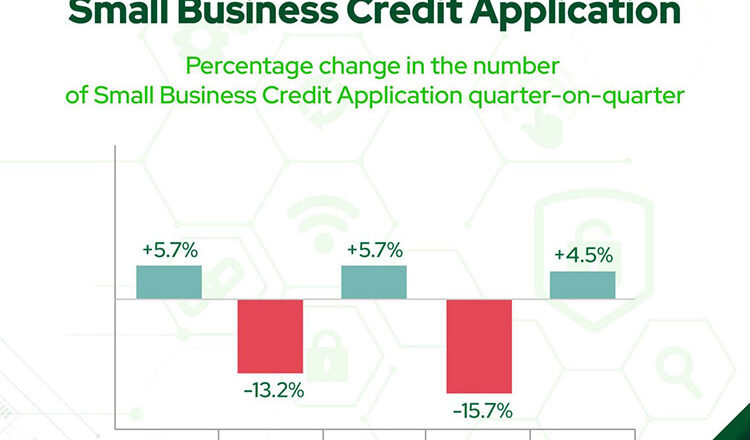
The slowdown has affected the financial system as well. Credit growth decelerated to 4.9 percent year-on-year, far below the pre-Covid average of 26 percent, undermining household consumption and investor confidence. Non-performing loans rose to 8.3 percent by mid-2025, driven largely by exposure to real estate and heightening concerns about banking sector risks.
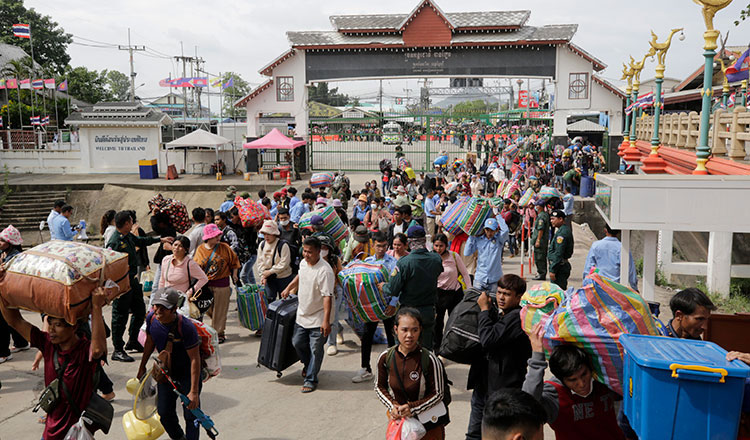
Economic pressures intensified in mid-2025 following border tensions with Thailand, which triggered the return of hundreds of thousands of Cambodian migrant workers. Before the conflict, around 1.3 million Cambodians were employed in Thailand. Between June and October 2025, an estimated 940,000 workers returned home.
The impact on household incomes has been severe. Remittances, which amounted to $2.6 billion or 5.5 percent of GDP in 2024, are projected to fall by around 60 percent in the final quarter of 2025. Only about 300,000 returnees had found domestic employment by October.
Tourism has also suffered. The collapse in arrivals from Thailand contributed to a 27 percent drop in international tourist arrivals, further widening the current account deficit alongside high import demand.
As a result, the World Bank expects Cambodia’s poverty rate to rise by about one percentage point in the near term, reversing some recent gains.
Adding to the pressure, the United States imposed a 19 percent tariff on Cambodian goods, a significant blow given that exports account for roughly 66 percent of GDP and the US absorbs about 40 percent of Cambodia’s exports. The World Bank estimates exports to the US could decline by 13 percent, reducing real incomes by 0.3 percent.
Despite the shocks, foreign direct investment has remained robust. FDI inflows reached $2.3 billion in the first half of 2025, up 28.4 percent year-on-year, concentrated mainly in manufacturing and energy. These inflows helped boost foreign exchange reserves to $25.1 billion.
Inflation has remained subdued, averaging 2.1 percent in September 2025, reflecting weak domestic demand. Monetary policy has stayed accommodative, with reserve requirements held at seven percent, though lending to productive sectors outside real estate remains limited.
On the fiscal front, the deficit widened modestly, while public debt remains low at around 25 percent of GDP. Deposits remain strong, providing some fiscal space to respond to shocks.
A special focus of the update highlights the importance of Cambodia’s vast informal economy, which dominates employment but suffers from low productivity. The World Bank argues that enabling viable informal firms to formalise could raise productivity, expand the tax base, and improve job quality. Key barriers include high registration costs, complex licensing and limited perceived benefits of formalisation.
Looking ahead, the World Bank warns that risks remain elevated, including renewed border tensions, rising banking sector stress, slower recovery in China and weaker global demand. Cambodia’s planned graduation from the Least Developed Country status after 2029 adds urgency to reforms, as preferential trade access and concessional financing may decline.
According to David Van, policy expert and advisor with decades of managerial experience with international firms, Cambodia’s medium-term recovery will depend on restoring trade flows, reintegrating returning migrants into productive jobs, diversifying exports beyond garments, and transforming informal businesses into more productive, formal enterprises. If successful, these reforms could help the country rebuild momentum and strengthen resilience in an increasingly uncertain global environment.
- 08:31 23/01/2026