Bridges over barriers: Cambodia-Vietnam’s $20B trade target
Bridges over barriers: Cambodia-Vietnam’s $20B trade target
American inventor Alexander Graham Bell once famously said, “When one door closes, another opens.” When once-flourishing trade ties between Cambodia and Thailand collapsed into conflict, leading to the outright closure of key trade routes, Vietnam wasted no time filling the vacuum. While trade ties between Cambodia and Vietnam are long-standing, the economic momentum of late has shifted dramatically as Hanoi accelerates its export push. For years, both nations have pursued an ambitious $20 billion bilateral trade target. According to recent data from the General Department of Customs and Excise of Cambodia, two-way trade reached $6 billion during the first eight months of 2026. While this upward trajectory is encouraging, it still falls short of the milestone set by both governments. How can the two countries evolve their existing trade relationship into deeper, more commercially integrated supply chains? Khmer Times speaks with experts about the most plausible measures. They broadly agree that both governments must enact key policy shifts, particularly in ensuring fair treatment for traders, guaranteeing smooth transit through Vietnam for Cambodian trade bound for China and pursuing mutually beneficial cooperation. Hitting the $20 billion target may not be achievable in the near future, but a strong foundation has been laid. Now is the time to build upon it
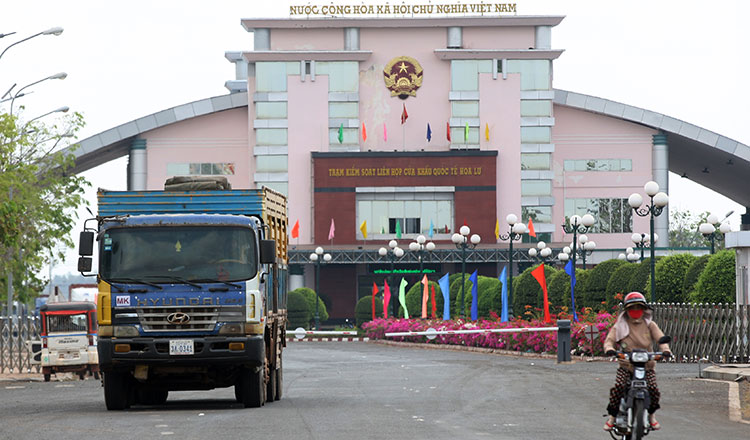
As land borders with Thailand remain shut, Cambodia is seeking to boost commerce with Vietnam as an alternative route, targeting $20 billion in bilateral trade. However, two-way commerce reached only about $6 billion in the first eight months, amid concerns over the quality of Vietnamese-made products.
Achieving the goal will depend on easing border and logistics bottlenecks, improving supply-chain connectivity, creating more opportunities for Cambodian products in the Vietnamese market and strengthening consumer confidence in their quality.
The target has gained urgency as the Kingdom continues to face disruptions to land trade with Thailand following the border conflict and restrictions on crossings, increasing the need for alternative trade routes, with Vietnam offering a nearby market and supply-chain partner.
However, current trade figures show that significant growth will be needed to reach $20 billion. According to General Department of Customs and Excise of Cambodia data, bilateral trade reached nearly $6 billion in January-August 2026, up 7% year on year.
Cambodia exported $2.96 billion to Vietnam during the period, up 7.6%, while imports increased 6.4% to $3.02 billion. The trade deficit narrowed from $92.5 million to $63.2 million, while export coverage of imports improved to 97.9%.
Vietnam ranked as Cambodia’s third-largest trading partner, behind China and the United States (US), accounting for about 11.8% of the Kingdom’s total trade. The figures indicated that the relationship is already relatively balanced, but greater trade volume remains necessary.
Closing the trade gap
If the January-August pace continued through the full year, Cambodia-Vietnam trade would reach roughly $9 billion, leaving a substantial gap to the $20 billion target despite both governments reaffirming the goal and identifying areas for expansion.
These areas included transport connectivity, energy, digital transformation, agro-processing, industrial supply chains and investment promotion. Cambodian and Vietnamese business representatives have also highlighted infrastructure, agricultural processing and joint investment and trade promotion as potential drivers of higher trade.
One immediate area for action is cross-border logistics, as the two neighbouring countries share a 1,137-kilometre border with many international and secondary border gates, providing a foundation for greater trade and supply-chain integration.
Improving roads to border crossings, expanding logistics facilities and simplifying customs procedures could reduce the time and cost of moving goods. Both governments have discussed connecting the Phnom Penh-Bavet Expressway with the Ho Chi Minh City-Moc Bai Expressway.
The Tan Nam-Meun Chey crossing also illustrated the opportunity and remaining challenges. Trade through the crossing grew strongly in the first half of this year, although freight movement remains constrained by incomplete implementation of the bilateral road transport agreement.
Product diversification
Agriculture provides another route to higher trade, but Cambodia faces the challenge of capturing more value from its exports. Its agricultural products and raw materials already have demand in Vietnam, creating opportunities for deeper links with Vietnamese processing and distribution networks.
Expanding processing in the Kingdom could increase export value while creating additional demand for packaging, storage, transportation and other supporting services, while also strengthening production links between Cambodian producers and Vietnamese companies operating across regional supply chains.
Vietnamese investment could further strengthen these links. The country ranked as Cambodia’s third-largest source of foreign direct investment in 2025 and second among ASEAN investors, behind Singapore, according to the Council for the Development of Cambodia.
Encouraging investment in agro-processing, manufacturing and logistics could create two-way trade flows involving machinery, production inputs, raw materials and finished products.
The neighbours have also identified telecommunications, renewable energy, infrastructure, digital transformation, finance and tourism for greater cooperation.
For Cambodia, greater trade with Vietnam will be more sustainable if investment and trade links also strengthen domestic suppliers, processing capacity and its participation in regional value chains, rather than focusing only on increasing the overall trade figure.
Strategic bypass
The disruption to Cambodia-Thailand land trade has added urgency to efforts to diversify trade routes, although Vietnam cannot immediately replace Thailand across all products and supply chains. The country nevertheless offers the Kingdom an established neighbouring market and route into regional supply networks.
The gap between Cambodia’s trade ambitions with its neighbours also reflects the larger scale of its commercial relationship with Vietnam. The two governments are targeting $20 billion in bilateral trade, compared with a $700 million target for Cambodia-Laos trade by 2030.
The current circumstances provide an opportunity to accelerate existing Cambodia-Vietnam plans, particularly in border logistics, agricultural trade, processing and supply-chain connectivity. The challenge is turning existing commitments into practical improvements for businesses on both sides.
Reaching $20 billion will require faster border clearance, lower logistics costs, better transport connectivity, greater agricultural processing, stronger investment links and wider market access for Cambodian businesses.
The key question is how Cambodia and Vietnam can turn their existing trade relationship into deeper and more commercially integrated supply chains. Three experts told Khmer Times about the policies, opportunities and challenges they see in moving toward the $20 billion goal.
Speaking to Khmer Times, Royal Academy of Cambodia (RAC) policy analyst Sam Seun highlighted six key areas that need to be addressed to achieve the $20 billion bilateral trade target with Vietnam.
“First is trust in Vietnamese products. Many Cambodian consumers believe their products are lower quality and tend to have greater confidence in Thai products,” he said.
Seun explained that Vietnam is a modern, developing economy that exports high-quality goods to Europe and the US, but its lower-quality products entering Cambodia have affected perceptions of its goods.
“Vietnam produces and exports high-quality products to major markets. However, some products entering Cambodia are perceived as lower quality, which has affected confidence in ‘Made in Vietnam’ products,” he said.
Second, he highlighted the need to improve trade flows through border provinces such as Prey Veng, Svay Rieng and Tboung Khmum, which export agricultural products including corn, rubber and rice to Vietnam.
“Vietnam should facilitate the movement of Cambodian agricultural products by reducing unnecessary inspections and ensuring fair treatment for traders from the country, particularly as Cambodia seeks alternative markets amid the disruption of border trade with Thailand,” Seun said.
Third, the RAC policy analyst called for smoother transit through Vietnam for Cambodian trade with China. “The Kingdom has strong trade with China, and some goods use Vietnam as a transit route. So, they should further facilitate logistics and transportation to support these trade flows,” he said.
Fourth, Seun urged Vietnam to maintain stable prices for essential products, particularly fertilisers needed by Cambodia’s agricultural sector.
“Cambodia has lost one of its major fertiliser suppliers from Thailand. Although we can source from China and Russia, Vietnam remains important because of its geographical proximity, especially for the border provinces,” he said.
Fifth, he called for stronger people-to-people relations through cultural exchanges and other programmes. “Government relations are strong, but people-to-people understanding should also be strengthened. More cultural exchanges could help build closer relations,” he said.
Finally, the RAC policy analyst urged both countries to pursue cooperation that provides mutual benefits.
“If Vietnam has strengths in agriculture, it should share technology and expertise to help Cambodia develop its own agricultural sector, rather than simply investing in production that provides limited benefits to Cambodian workers,” he said.
Cross-border integration
Responding to Khmer Times’ query on how to achieve the $20 billion trade target, Dean of the Faculty of Social Sciences and International Relations of Paññāsāstra University of Cambodia (PUC) Kevin Nauen said the target would rely on leveraging complementary supply chains, expanding agro-processing exports and fully utilising border Special Economic Zones (SEZs).
“However, poor logistics infrastructure, non-tariff trade barriers, informal border costs and high transport fees pose severe hurdles. Policy measures must prioritise modernising border logistics, fully digitise customs clearance processes, and complete major transport corridors like the Phnom Penh-Bavet Expressway,” he noted.
Nauen added that expanding bilateral trade preference frameworks, harmonising sanitary and phytosanitary standards, and establishing joint economic zones along shared border provinces would be important to streamline cross-border commerce and scale trade toward the target.
He said Cambodia’s primary opportunity lies in supplying raw agricultural products such as cashews, rubber and paddy rice to Vietnam’s advanced processing industries, while leveraging Vietnam as a gateway to global supply chains.
“Conversely, the largest obstacle is structural trade asymmetry: Cambodia predominantly imports high-value manufactured goods, electronics and fuel while exporting low-value raw commodities, driving a trade deficit.”
Additional hurdles include widespread informal cross-border settlement, fragmented logistics networks, regulatory misalignments and strict non-tariff barriers. Without transitioning from raw commodity exports to value-added domestic processing, sustainably reaching the $20 billion threshold will remain difficult, he added.
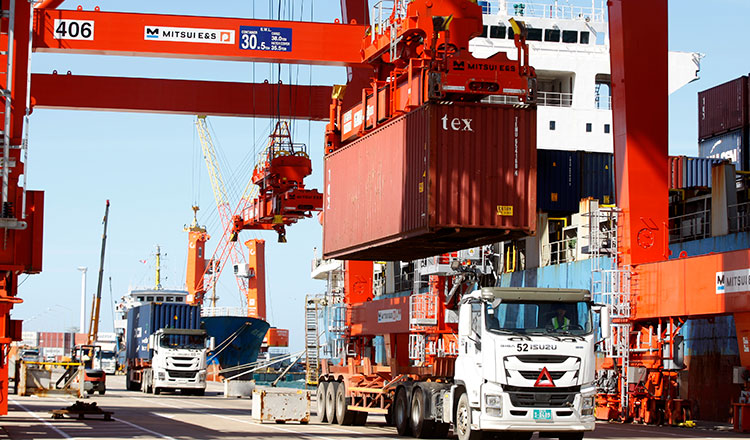
Asked about the risks of relying more heavily on Vietnam, Nauen said that amid disruptions to Thai border trade, the country serves as a vital alternative corridor connecting Cambodian commerce to regional supply networks and global shipping via southern Vietnamese deep-sea ports such as Cai Mep.
“Vietnam also provides immediate access to crucial intermediate manufacturing inputs and raw goods. However, heavier reliance carries strategic risks: it deepens Cambodia’s structural trade imbalance, exposes supply chains to Vietnamese domestic policy shifts, and reduces diplomatic and economic leverage.”
He added that over-dependence on Vietnamese transit infrastructure could also subject Cambodian exporters to border congestion and localised logistics bottlenecks, highlighting the need for domestic port expansion.
Asked about policies to increase the value of trade with Vietnam, Nauen said Cambodia must implement targeted investment policies positioning the country as a “Vietnam+1” manufacturing destination.
SEZ modernisation
Nauen continued, “Key policy shifts should include tailored tax incentives for high-tech and agro-processing industries, streamlined digital investment approvals and expanded vocational technical training to raise labour productivity.”
He noted that upgrading border SEZs with lower-cost, reliable energy and direct logistics connections would attract Vietnamese manufacturers seeking lower labour costs.
“Finally, strengthening domestic supplier networks and enforcing intellectual property protections will encourage foreign firms to establish higher-value production facilities linked to regional value chains,” the PUC Dean added.
President of the Logistics Supply Chain and Brokers Business Association in Cambodia (LOSCBA) Chea Chandara, who recently opened a new branch in Svay Rieng, told Khmer Times that Vietnam offers strong potential for the Kingdom to expand trade.
He explained that Vietnam has ranked among the leading trading economies in Southeast Asia in recent years, supported by strong economic growth. He noted that the country has also become an important destination for Cambodian agricultural exports, particularly raw agricultural products.
“Cambodia and Vietnam are on the right path to further strengthen bilateral trade, as logistics infrastructure connecting the two neighbours continues to improve, making cross-border trade more convenient for businesses,” Chandara said.
“We also see strong demand from Vietnam for raw agricultural products from Cambodia, which can be processed there and then exported to other markets, including Europe. The neighbours need each other and can benefit from stronger economic cooperation and mutual growth,” he added.
Chandara said the new LOSCBA branch in Svay Rieng was established to work more closely with both countries and facilitate the movement of goods across the border, noting that the province has strong agricultural production and growing industrial activity.
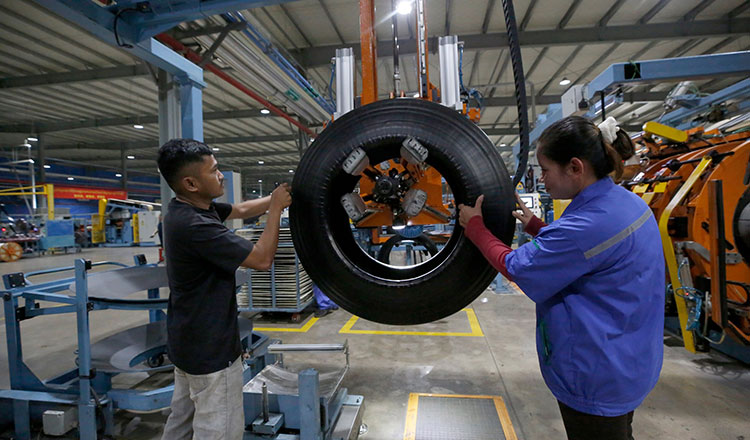
“Svay Rieng also has many industries, including garment, tyre and component factories, which have attracted Japanese, Korean and Chinese investors to produce goods for export to international markets,” he said.
The LOSCBA president underlined that he recently led a Cambodian business delegation to Ho Chi Minh City to explore trade opportunities and strengthen supply-chain links, particularly for agricultural products such as cassava, green beans and corn.
“Despite the closure of the Cambodia-Thailand land border, the Kingdom can continue exporting agricultural products to Vietnam, where there is strong demand for these products. China is also interested in purchasing Cambodian agricultural products, so we still have alternative markets,” he said.
Chandara emphasised that Cambodia’s agricultural sector remains strong and has access to diverse markets across the region, as well as the US and European Union.
“Cambodia has a strong agricultural sector and continues to have opportunities in different markets. Recently, the Philippines also sent a ship to purchase about 10,000 tonnes of rice, showing that demand for agricultural products remains strong,” he added.
- 07:53 05/10/2026