Reforms vital to turn US tariff threat into growth catalyst
Reforms vital to turn US tariff threat into growth catalyst
Achieving sustainable economic success requires the nation to aggressively streamline its business climate, digitise customs processing, overhaul logistics infrastructure, and upskill its domestic workforce.
Rather than responding defensively to the new United States tariff framework, Cambodia should pursue a comprehensive competitiveness agenda that positions the country as one of Southeast Asia’s most reliable manufacturing platforms, according to an executive brief Khmer Times obtained on Thursday.
Prepared by business strategist and public-policy advisor David Van, the document argued that the Kingdom remains fundamentally competitive but must accelerate structural reforms, industrial upgrading and diversification to convert the external challenge into long-term advantage.
The brief stressed that international competitiveness is no longer determined primarily by labour costs or tariff preferences. Productivity, logistics efficiency, institutional quality, compliance standards and supply-chain resilience have become the decisive factors influencing investment and sourcing decisions.
While continued engagement with the United States remains important, Cambodia’s long-term success will depend more heavily on domestic reforms that improve the business environment, modernise customs, strengthen logistics and enhance workforce productivity.
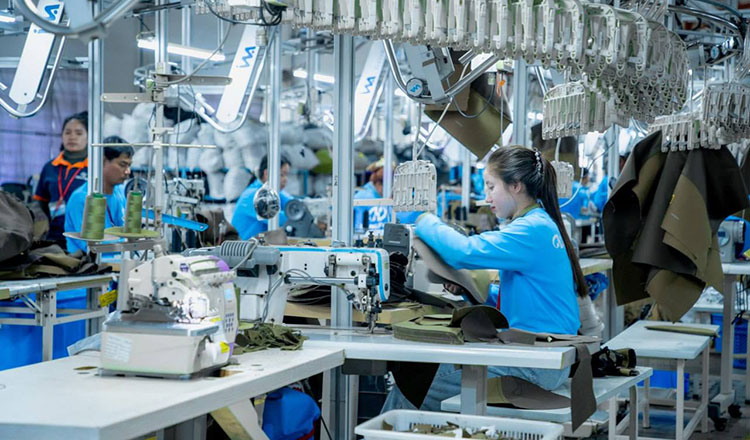
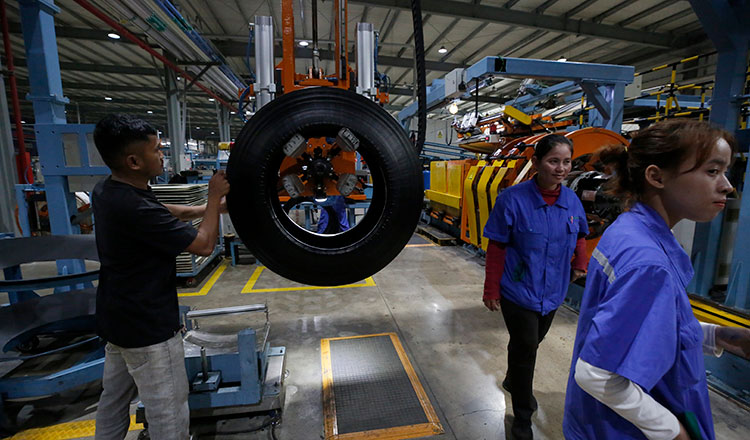
Traditional export sectors such as garments and footwear face high tariff exposure and are assessed as having moderate growth potential. The report recommended protecting and upgrading these industries, which remain central to employment and foreign-exchange earnings.
Priority actions included raising factory productivity, supporting technology upgrades, cutting logistics costs, strengthening labour and ESG compliance, and helping firms diversify markets beyond the United States.
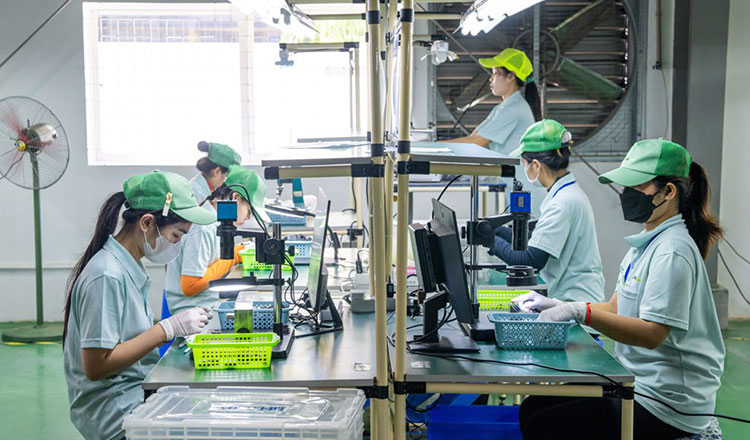
The brief also identified higher-value sectors as essential for future growth. Electronics and electrical assembly, furniture, agro-processing, bicycle manufacturing and emerging green industries are highlighted for their stronger productivity potential and lower relative tariff vulnerability. Electronics, in particular, is described as a possible future growth engine due to its low tariff exposure and very high growth outlook.
A national competitiveness dashboard in the document rated Cambodia’s overall export competitiveness and investment attractiveness as strong, while manufacturing capability, productivity, customs efficiency, logistics and workforce skills remain moderate and require priority attention. The long-term outlook is assessed as positive, provided reforms are accelerated before regional competitors widen their lead.
Government priorities are organised into three timeframes. In the next 12 months, the focus should be on stabilising investor confidence, accelerating customs and trade-facilitation reforms, and expanding market intelligence for exporters.
Over one to three years, efforts should focus on developing industrial clusters, aligning technical and vocational skills with industry needs, improving logistics infrastructure, and enhancing incentives for strategic sectors.
In the three-to-five-year horizon, the Royal Government should aim to become a regional hub for advanced light manufacturing, sustainable production and resilient supply chains.
Business leaders are also urged to treat the changing tariff environment as a strategic rather than purely policy issue. Immediate priorities for exporters include cost optimisation, productivity gains, market diversification and stronger compliance systems. Medium-term steps involve technology adoption, workforce development, and building supply chain resilience.
- 08:17 04/08/2026