NBC reports 4.6% credit growth for banking sector
NBC reports 4.6% credit growth for banking sector
Serey says despite intense external and internal economic pressures, Cambodia’s financial sector remains highly resilient.
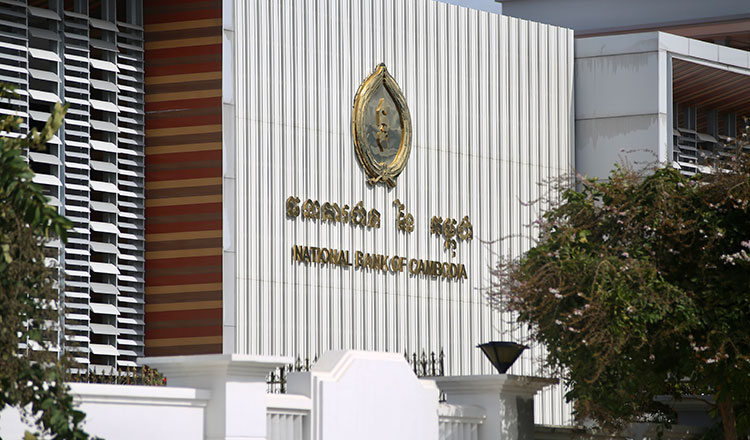
Data from the National Bank of Cambodia (NBC) yesterday highlighted that domestic banking institutions maintained a modest growth trajectory in the first half of 2026, despite facing internal and external challenges.
Outstanding loans rose by 4.6 percent year-on-year to 256.7 trillion riels (approximately $64.2 billion) by June 2026, while customer deposits climbed 4.4 percent to 257.4 trillion riels (approximately $64.4 billion), read the report.
Similarly, growth in assets, credit, and deposits continues to reflect the banking sector’s important role in supporting economic activity, while capital and liquidity remain above regulatory limits.
Credit growth has contributed to domestic activity in goods production and services, agriculture and fisheries, and small and medium enterprises, said NBC Governor Chea Serey.
“Cambodia’s banking system remains resilient despite facing high economic and financial uncertainties from both external and domestic factors,” Serey said at the central bank’s review meeting on July 27, which assessed first-half performance and set objectives for the second half of 2026.
The banking sector has supported key economic sectors by providing loans at reasonable interest rates for business establishment and development, she added.
Serey emphasised that the central bank and the banking system have actively collaborated within their jurisdictions, with maintaining price and financial stability remaining a top priority.
The report showed gross non-performing loans (NPLs) rose to 9.6 percent as of June 2026, up from 8.4 percent in 2025.
However, increased provisioning kept the net NPL ratio low at 3.3 percent, showing thatbanks and financial institutions have sufficient capacity to absorb potential losses.
Banks restructured 239,546 accounts with a total loan value of $4.8 billion, representing 7.5 percent of the total loan portfolio. These restructuring measures are being normalised to strengthen the system’s resilience.
However, the rise in non-performing loans, the slow recovery of the construction and real estate sectors, climate change risks, as well as new risks including cybersecurity risks and technology fraud remain challenges that need to be closely monitored.
The NBC said it has continued to strengthen oversight and introduce risk-based, forward-looking regulations to monitor systemic risks while supporting economic activity.
“The effectiveness of risk management in the banking system also requires the cooperation of stakeholders,” NBC Governor added.
- 07:51 29/07/2026