MEF notifies cut in fuel VAT to ease people’s burden
MEF notifies cut in fuel VAT to ease people’s burden
While the tax cut is expected to reduce state revenue in the short term, officials emphasise that the policy is necessary to protect livelihoods and sustain economic momentum.
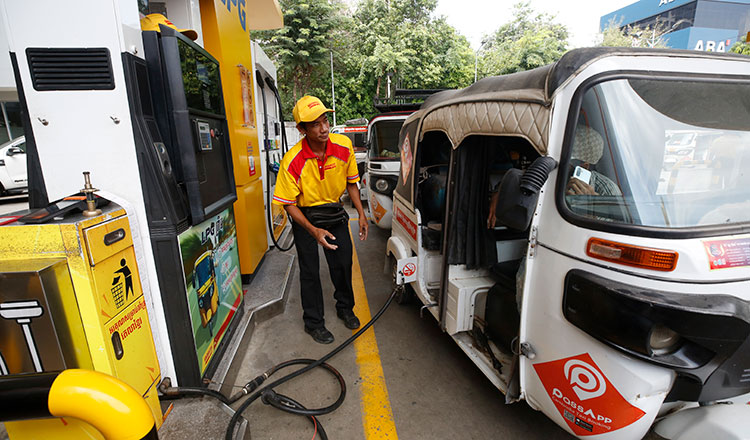
The Ministry of Economy and Finance (MEF) has notified a significant reduction in Value Added Tax (VAT) on petroleum products (regular petrol and diesel), aiming to ease the financial burden on both businesses and households amid rising global oil prices.
The measure, introduced by the Royal Government of Cambodia, lowers the VAT rate on regular petrol and diesel from 10 percent to four percent, with the state absorbing the remaining six percent. The policy took effect on March 20.
According to the ministry’s notification yesterday, the tax relief is part of broader efforts to stabilise domestic fuel prices and support citizens’ cost of living as international energy markets remain volatile.
Global oil prices have experienced upward pressure following the recent outbreak of war in the Middle East region. This has directly impacted fuel-importing countries like Cambodia.
Under the new directive, enterprises importing and distributing petroleum products (regular petrol and diesel) must calculate VAT at the rate of four percent by implementing the following:
A – Must issue a tax invoice for the supply of fuel products to customers who are taxpayers under the self-declaration regime, by changing the VAT rate of 10 percent to four percent.
B – Must issue a normal invoice for the supply to customers who are end-users (not under the self-declaration regime), with the selling price including tax, with VAT at the rate of four percent.
The ministry also clarified that companies can continue to claim input tax credits based on the actual VAT paid during imports or domestic purchases. This includes VAT previously charged at 10 percent or the newly reduced four percent, provided that proper documentation—such as customs declarations, tax receipts, and valid invoices—is maintained. This provision is intended to ensure that businesses are not disadvantaged during the transition and can maintain liquidity.
Economists note that the VAT reduction could have a direct impact on retail fuel prices, potentially lowering transportation and logistics costs across multiple sectors. This, in turn, may help curb inflationary pressures, particularly on essential goods that rely heavily on fuel-dependent supply chains. However, analysts also point out that the effectiveness of the measure will depend on global oil price trends and how quickly savings are passed on to consumers.
This is not the first time the Cambodian government has intervened in fuel pricing. In previous years, similar tax adjustments and subsidies were implemented during periods of economic strain, including during the COVID-19 pandemic and earlier commodity price surges. Such measures reflect the government’s strategy of using fiscal tools to shield consumers from external shocks while supporting economic stability.
In addition to this, the government is currently providing a subsidy of 6.5 cents per litre for petrol and diesel. An additional subsidy of one cent per litre is in place if international prices exceed $90 per barrel for petrol and $100 per barrel for diesel.
While the tax cut is expected to reduce state revenue in the short term, officials emphasise that the policy is necessary to protect livelihoods and sustain economic momentum. The government has not yet indicated how long the reduced VAT rate will remain in place, but it is likely to be reviewed in line with global market conditions.
As fuel remains a critical input for Cambodia’s growing economy, the latest move underscores the government’s ongoing efforts to balance fiscal responsibility with social and economic resilience.
- 08:08 25/03/2026