Cambodia’s int’l trade surges 17.6% despite challenges
Cambodia’s int’l trade surges 17.6% despite challenges
The Kingdom should produce more goods in which it has strong comparative advantage to maintain export competitiveness. It should also monitor external shocks to maintain this momentum, says an expert.
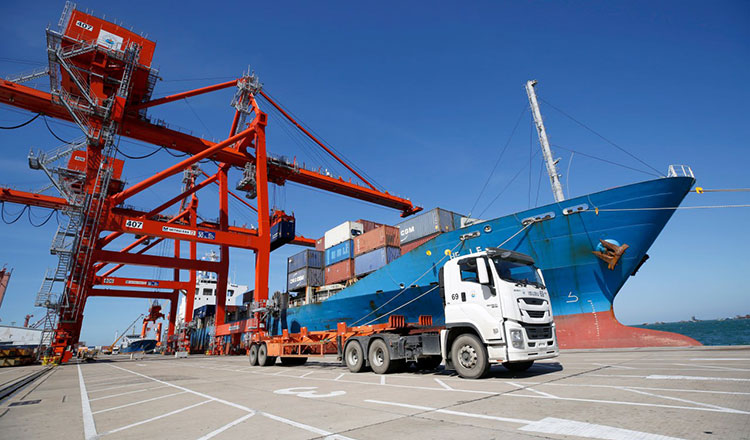
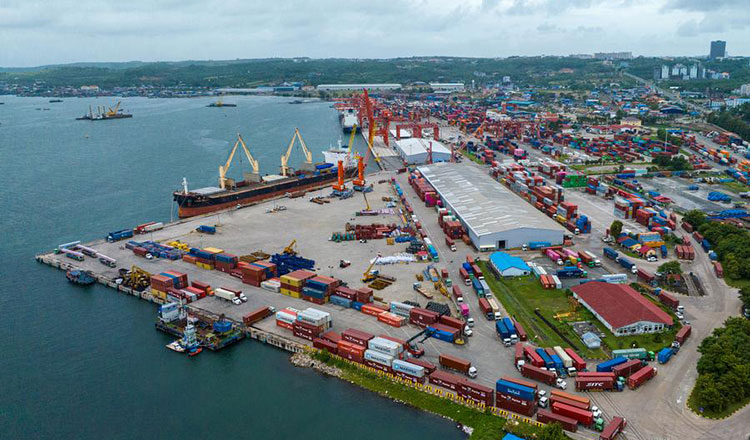
Cambodia’s international trade surged 17.6 percent in the first two months of the year and reached $11.11 billion, according to trade data released by the General Department of Customs and Excise (GDCE) yesterday, indicating the country’s strong economic resilience in the backdrop of rising geopolitical challenges.
Exports in the January to February period went up by 17.2 percent year-on-year to reach $5.23 billion while imports went up by 18 percent to reach $5.88 billion, resulting in a trade deficit of $656 million for the Kingdom.
China remained the leading trade partner of the country with $3.57 billion worth trade, showing an increase of 34.4 percent year-on-year. Imports from China reached $3.28 billion, rising 34.2 percent, whereas the exports to China stood at $296 million.
Trade with the US, the second biggest trading partner, showed a surge of 39.9 percent and reached $2.34 billion. The US was also the biggest export market for Cambodia in the first two months of the year with $2.26 billion, showing a year-on-year rise of 39.1 percent. Imports from the US reached $80 million, showing an increase of 64.8 percent.
Vietnam emerged as another key partner, with bilateral trade exceeding $1.27 billion during the period. Cambodia exported around $626 million to Vietnam and imported roughly $651 million, maintaining a modest deficit. Vietnam also serves as a major gateway for Cambodian agricultural commodities and intermediate goods.
Trade with Japan also remained significant. Cambodian exports to Japan totalled about $328 million, compared with imports of about $178 million, creating a surplus of roughly $150 million. Japan continues to be a major investor in Cambodia’s manufacturing sector, particularly in electronics and automotive components.
Meanwhile, Cambodia recorded notable trade surpluses with markets such as Canada, Germany, and the Netherlands, driven largely by exports of garments, footwear and travel goods.
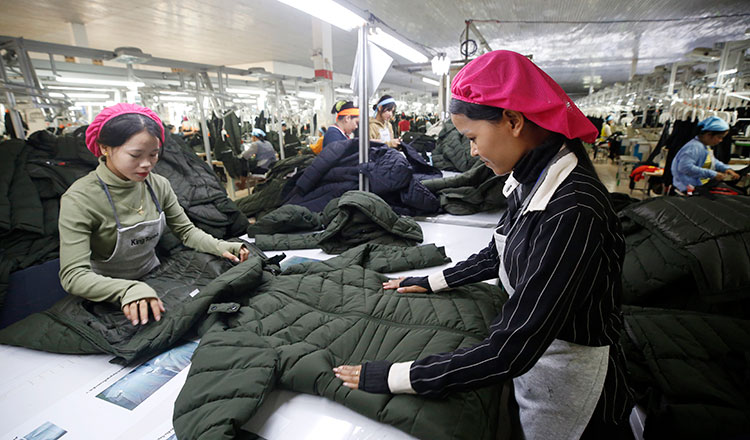
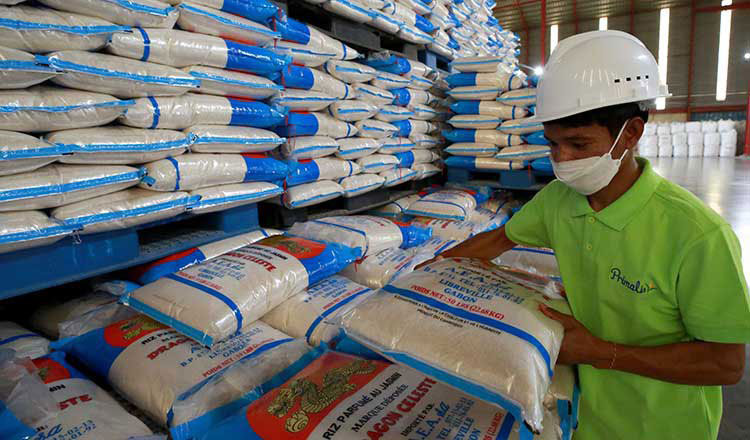
The garment, footwear and travel goods (GFT) sector remained the backbone of Cambodia’s export economy. These products dominated shipments to Western markets including the US, Canada and the European Union. At the same time, Cambodia imported substantial quantities of textiles, fabrics and industrial inputs from China and other Asian economies, explaining the persistent trade deficit with regional suppliers.
Economists noted that this pattern reflects Cambodia’s role in global manufacturing supply chains, where imported materials are processed locally before being exported as finished products.
Overall trade activity showed steady expansion compared with the same period last year, suggesting resilient external demand despite global economic uncertainties. However, the continuing deficit underscores Cambodia’s structural dependence on imports for industrial production, energy and consumer goods.
Cambodian economist Duch Darin told Khmer Times that the steady growth in trade in the first two months of 2026 reflected strong external demand despite the war in the Middle East. Key sectors such as garments, agricultural products, and electronics kept their momentum, he noted.
“Economically speaking, Cambodia’s open trade policy and market diversification protect the country from global economic uncertainties. Cambodia should continue to produce more of the goods in which it has a strong comparative advantage to maintain its export competitiveness. It should also improve labour productivity and closely monitor external shocks, such as energy prices, in order to maintain this momentum,” Darin said.
In fact, initiatives linked to the Royal Government of Cambodia’s industrial development policy aim to promote higher-value manufacturing, strengthen agro-processing and reduce reliance on imported intermediate goods.
Analysts also said that expanding domestic supply chains and increasing value addition will be key if Cambodia hopes to narrow its trade deficit while sustaining export-led growth in the coming years.
- 08:12 11/03/2026