Govt monitors fuel sales after reports of violations at petrol pumps
Govt monitors fuel sales after reports of violations at petrol pumps
With global energy markets facing uncertainty and geopolitical tensions showing little sign of easing, authorities say continued vigilance and strict enforcement of fuel regulations will be critical to maintaining market stability and protecting consumers in the weeks ahead.
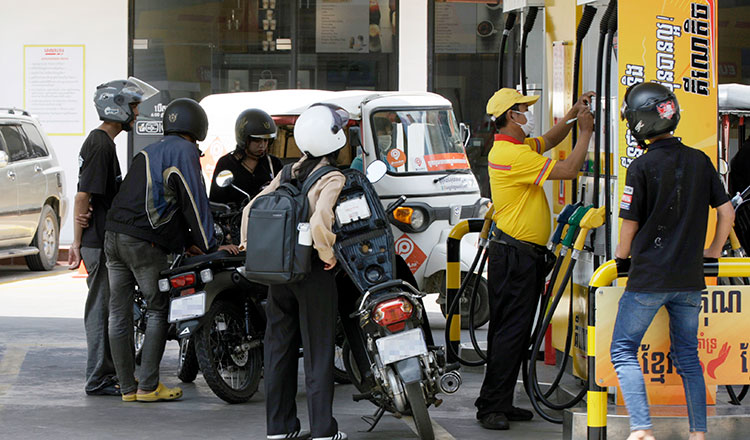
The Ministry of Commerce has issued a new directive requiring fuel distributors, petrol stations and storage depots across Cambodia to strengthen compliance in the buying and selling of petroleum products, as authorities move to ensure transparency in the fuel supply chain and protect consumers from irregular pricing amid global market volatility.
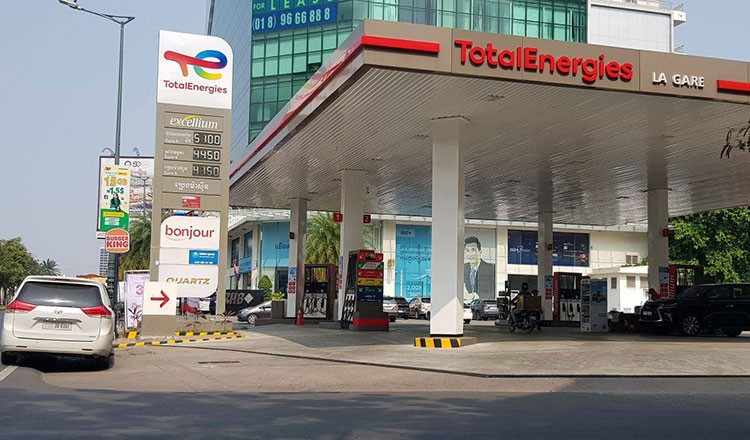
The announcement comes after the government implemented a fresh retail price adjustment for petroleum products, reflecting the rising costs in the international energy market. Under the latest pricing structure, which took effect on March 8, regular gasoline increased to 4,400 riel per litre—approximately $1.10—representing a 14.2 percent rise from the previous price of 3,850 riel per litre. Diesel prices experienced an even sharper increase, climbing to 5,150 riel per litre, or around $1.28.
Officials warned that domestic fuel prices could continue to climb if geopolitical tensions in the Middle East escalate further. In particular, authorities pointed to the conflict involving the United States, Israel and Iran, which has disrupted shipping through the Strait of Hormuz, a strategic maritime chokepoint that handles roughly 20 percent of global oil shipments.
According to the Ministry of Commerce, prolonged disruption to shipping routes through the strait could push domestic fuel prices up by an additional 5 percent to 20 percent in the coming weeks.
In a directive released on Monday, the ministry instructed fuel distribution companies operating in the capital and provinces to strictly enforce technical standards and internal regulations governing fuel management and retail practices within their networks.
The guidelines aim to strengthen transparency throughout the supply chain while ensuring fairness in fuel transactions between retailers and consumers.
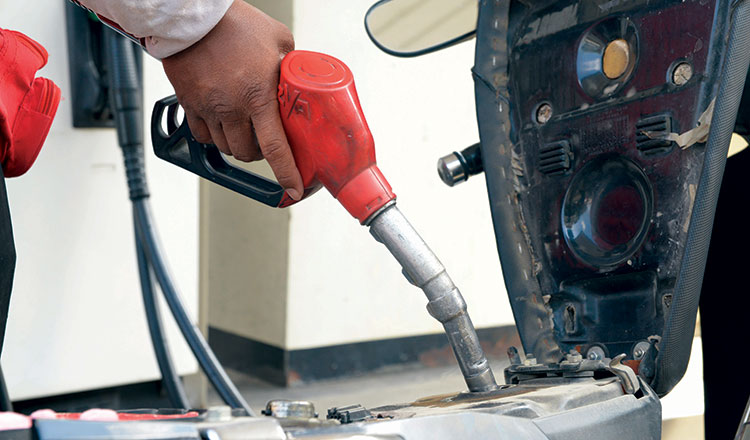
Under the new instructions, fuel stations and depots must sell petroleum products strictly according to the publicly displayed prices based on official retail price announcements issued by the Ministry of Commerce. Operators are also required to guarantee the accuracy of both the quality and quantity of fuel sold to consumers.
Authorities emphasised that retailers must not manipulate prices or alter pump measurements to gain unfair profits.
The ministry also highlighted the importance of transparent stock management. Fuel station operators must provide accurate information regarding their fuel inventory and alert authorities when supplies are running low.
In cases where operators anticipate a shortage or intend to temporarily suspend fuel sales, they must notify relevant authorities at least one day in advance. Such notifications must be submitted to provincial departments of mines and energy, commerce departments, branches of the Consumer Protection, Competition and Fraud Repression Directorate-General (CCF), or local authorities.
If a station or depot runs out of fuel, operators are required to publicly announce when new supplies will be available again to avoid confusion or panic among customers.
The directive further stipulates that operators must notify authorities when their fuel stock reaches 10 percent before depletion, allowing regulators to monitor supply conditions and take timely measures if necessary.
Stations or depots planning to temporarily halt operations must follow official procedures and obtain approval from authorities before suspending sales or distribution activities.
Once authorities assess that the station is eligible to resume operations, the operator must cooperate fully to complete the required procedures before reopening.
The ministry warned that any operators found violating the directive could face legal action under existing Cambodian laws.
The new guidelines also emphasise the need to prioritise fuel distribution for essential public services in the event of supply constraints. Fuel stations and distributors are instructed to give priority access to emergency vehicles such as ambulances, fire trucks and other vehicles providing critical public services.
Fuel supply should also prioritise farmers and individuals involved in production chains and logistics activities that are essential for maintaining economic operations and ensuring the continued flow of goods.
Officials from the Consumer Protection, Competition and Fraud Repression Directorate-General, together with provincial commerce departments, mines and energy authorities and local administrations, will conduct regular inspections to ensure compliance with the directive.
These inspections are designed to ensure proper management of fuel sales and prevent opportunistic behaviour such as price manipulation or artificial shortages that could harm consumers.
Members of the public are encouraged to report concerns or complaints related to fuel sales through the Ministry of Commerce hotline, 1266, or via the CCF Complaint App available on iOS and Android platforms.
Global conflict rattles fuel markets
Cambodia, which relies entirely on imported petroleum products, remains highly vulnerable to fluctuations in global energy markets. The country sources most of its fuel imports from Singapore, followed by Vietnam, Indonesia and Malaysia.
Recent tensions in the Middle East have sent shockwaves through global oil markets, raising fears of supply disruptions and price volatility. Shipping companies, major oil firms and traders temporarily halted the transportation of crude oil, refined fuel and liquefied natural gas (LNG) through the Strait of Hormuz after Iran announced a full maritime closure in response to attacks by the US and Israel.
The disruption has raised concerns worldwide because the strait is one of the most critical oil transit routes in the world. The rising fuel costs have sparked concern among Cambodian citizens and businesses, particularly low-income households already facing economic pressure.
Lim Heng, Vice-President of the Cambodia Chamber of Commerce, said the rise in fuel prices has begun to negatively affect both businesses and consumers. “As a country that depends 100 percent on petroleum imports, Cambodia remains highly vulnerable to global energy price volatility,” Heng said.
“The oil price has started to feel the negative impacts on people and businesses. But it is a global issue, and we have to adopt and adjust strategies to the trend of market prices,” he told Khmer Times.
Heng praised the government’s efforts to manage the situation through coordinated interventions between ministries. However, he noted that further measures may be necessary if global prices continue to rise.
“If the price continues to increase significantly, more government intervention will be needed to cut retail prices and ease the burden on citizens,” he said.
Small business owners and ordinary residents have also voiced concerns that the spike in fuel prices could soon translate into higher costs for transportation, food and electricity. Many social media users have expressed anxiety that the rising fuel costs will contribute to broader inflation across the economy.
Reports have also emerged that dozens of petrol stations temporarily closed after running out of retail fuel supplies, raising fears among the public about possible shortages.
Despite these concerns, the Ministry of Mines and Energy has sought to reassure the public that Cambodia’s fuel supply remains stable. Minister of Mines and Energy Keo Rottanak said the country currently maintains sufficient fuel reserves to meet domestic demand for up to 21 days even if imports were temporarily disrupted.
“The government has conducted emergency talks with major oil-importing firms who have guaranteed continued delivery,” Rottanak said at an event on March 8.
Authorities are continuing to monitor global market developments closely. When commodity prices rise sharply, governments typically use a combination of short-term relief measures and long-term structural policies to mitigate the impact on citizens.
One of the most immediate tools is fiscal policy, including tax adjustments to help offset rising costs.
In the latest fuel price announcement, the Ministry of Commerce (MoC) noted that the government reduced retail fuel prices by $0.065 per litre through tax adjustments in order to help ease the burden on citizens.
Officials said inter-ministerial coordination between the Ministry of Mines and Energy, the Ministry of Commerce and the Ministry of Economy and Finance will continue to track international oil price trends.
“If it is necessary, the Ministry of Economy and the Ministry of Commerce will discuss directly with the Prime Minister to resolve this issue for the citizens,” Rottanak said.
The government has also signalled that it may intervene more aggressively if global oil prices continue to rise. Penn Sovicheat, Secretary of State at the MoC, said authorities are closely monitoring developments in the international oil market. “The Cambodian government is closely monitoring the situation of the oil market. We will provide fuel subsidies should international market prices continue to rise to ease the burden on citizens.”
He added that the government remains committed to preventing abnormal fuel price inflation that could negatively affect people’s livelihoods. Sovicheat also stressed that fuel stations must strictly follow the official retail price announcements issued by the government.
His comments came after reports that some gas stations had raised fuel prices beyond the levels announced in the inter-ministerial statement.
Some residents have called on authorities to strictly enforce the regulations to prevent unfair practices. Phnom Penh resident Sok Sopheap said stricter action should be taken against stations that sell fuel at inflated prices.
“As a citizen, I would like to request the relevant ministries to take action against station owners who sell at inflated prices,” Sopheap said. “Such behaviour disrupts the order of oil prices and causes problems and loss of confidence for our people.”
- 07:59 10/03/2026