AMRO revises Cambodia’s growth to 4.3% as global oil prices spike
AMRO revises Cambodia’s growth to 4.3% as global oil prices spike
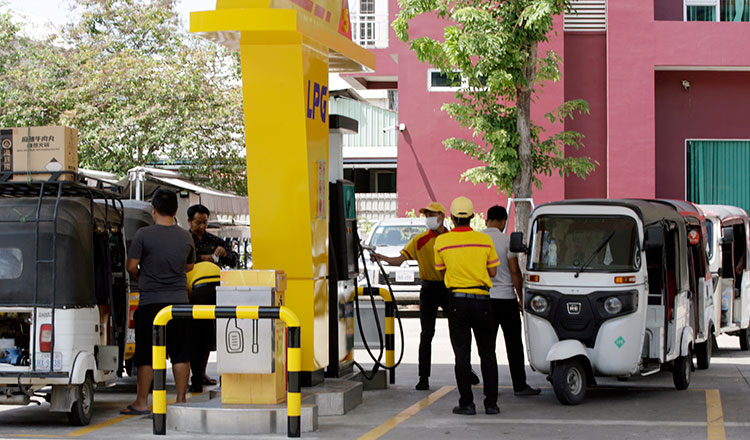
Soaring oil prices remain the most immediate external risk. Slower growth in major trading partners, driven by spillovers from the Middle East conflict, could further weaken exports and investment.
ASEAN+3 Macroeconomic Research Office (AMRO), yesterday, revised Cambodia’s growth projection for 2026 to 4.3 percent on completion of its Annual Consultation Visit to the country from April 20 to 29.
According to an AMRO statement, the “preliminary assessment” found that Cambodia’s economy proved to be relatively resilient against external shocks in 2025. “Economic growth moderated to an estimated 5.3 percent in 2025 and is projected to slow further to 4.3 percent in 2026 as higher global oil prices weigh on the economy,” it said.
The Annual Consultation Visit was led by Lead Economist Jinho Choi, with participation from AMRO Director/CEO Yasuto Watanabe and Chief Economist Dong He. Earlier in April, AMRO made a projection of Cambodia growing by 4.9 percent in 2026, accompanied by an inflation rate of 2.9 percent.
The revised projection for the year is based on key macroeconomic factors, including inflation, which is now expected to rise to 3.9 percent in 2026 from 2.5 percent in 2025 due to higher global oil prices.
The current account shifted to a deficit of 3.6 percent of GDP in 2025 and projected to widen further to 8.5 percent of GDP in 2026, reflecting higher energy imports, weaker tourism receipts, and a sharp decline in remittances following the return of migrant workers from Thailand. Meanwhile, FDI inflows remained resilient.
Credit growth improved to some extent but remained relatively slow in 2025, while the non-performing loans (NPL) ratio remained elevated at above eight percent. The real estate sector also continued to face persistent oversupply and subdued demand.
The fiscal deficit narrowed to 1.0 percent of GDP in 2025 due to stronger revenue collection and contained spending. However, the deficit is projected to widen in 2026 because of higher spending related to border security and elevated oil prices. Public debt remained low and stable at below 30 percent of GDP.
To manage heightened uncertainties and repeated shocks, proactive policies and effective implementation will be essential, including targeted fiscal support to vulnerable households and firms affected by the energy shock and the border conflict, and pre-emptive measures to address banking sector vulnerabilities, particularly elevated NPLs.
“Despite heightened uncertainty surrounding US reciprocal tariffs, Cambodia’s economy grew steadily in 2025, supported by strong garment exports, steady FDI inflows, and swift policy responses,” said Choi. “Looking ahead, proactive and targeted policy support, together with structural reforms, will be important to sustain medium-term growth.”
High oil prices remain the most immediate external risk. Slower growth in major trading partners, driven by spillovers from the Middle East conflict or renewed trade protectionism, could further weaken exports and investment.
Banking sector vulnerabilities have increased amid rising NPLs and recent bank liquidations. Uncertainty surrounding the border conflict also poses downside risks to economic activities.
Cambodia’s graduation from least developed country status by the end of 2029 could reduce export competitiveness and raise borrowing costs if not managed carefully.
According to AMRO, policy priorities should focus on strengthening resilience while supporting growth. Fiscal policy should remain flexible and targeted, including temporary support measures to cushion the impact of higher energy prices and border disruptions. Over the medium term, rebuilding fiscal buffers should remain a priority.
Monetary and financial policies should continue to support economic activity while remaining vigilant to inflation and financial stability risks. The National Bank of Cambodia (NBC) should maintain an accommodative policy stance, strengthen credit intermediation through targeted measures, accelerate NPL resolution, reinforce bank capital buffers, and enhance liquidity oversight and the bank resolution framework.
Structural reforms should focus on enhancing energy and food security, diversifying export markets, strengthening infrastructure, and promoting exports with higher domestic value-added to support stronger medium-term growth. Expedited labour market and social protection measures would help mitigate the impact of the border conflict and support returnees’ reintegration into the local labour market as productive members of the workforce.
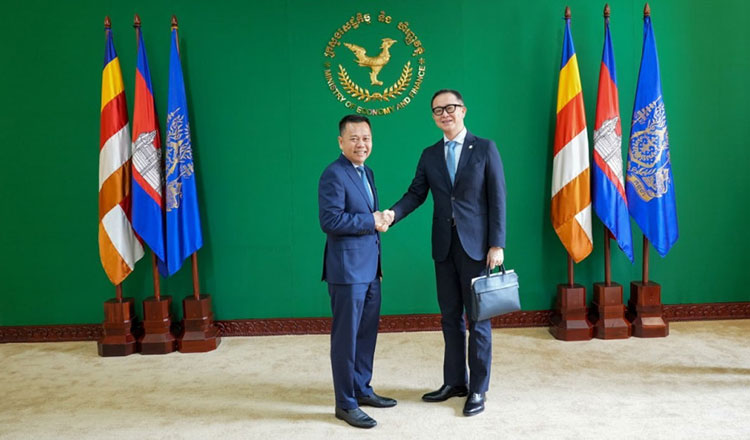
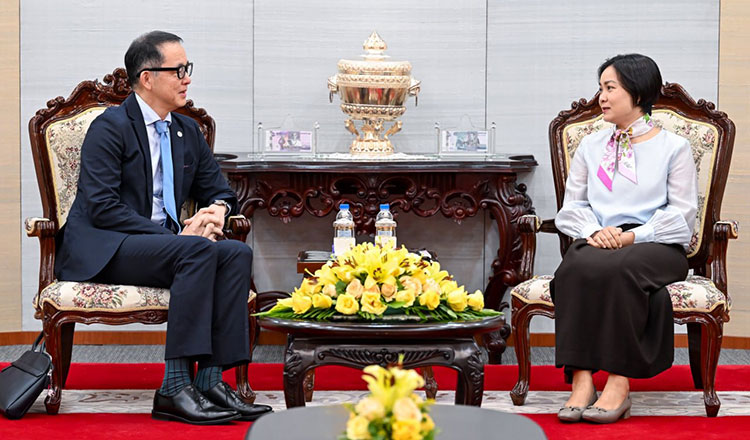
Phan Phalla, Secretary of State of the Ministry of Economy and Finance, who met the AMRO delegation as representative of Aun Pornmoniroth, Deputy Prime Minister and Minister of Economy and Finance, indicated that the ministry’s assessment of the overall economic growth trend and key sectors is consistent with AMRO’s assessment, especially the high risks and uncertainties.
According to a statement from MEF, Cambodia has declared a “Neutral Fiscal Stance” for the medium term, aiming to maintain a balance between people’s livelihoods, economic recovery, and ensuring public financial sustainability.
In response to the challenges ahead, the Royal Government has implemented several mitigation measures, such as reducing taxes on petroleum products, introducing energy efficiency measures, continuing assistance for refugees and migrant workers, and implementing intervention measures to address socio-economic impacts and strengthen structural resilience in the medium to long term.
- 12:43 01/05/2026