Cambodia navigates new chapter in reset US trade policy
Cambodia navigates new chapter in reset US trade policy
As global trade rules shift, the Kingdom faces a familiar test: adapt swiftly, preserve competitiveness, and transform uncertainty into opportunity.
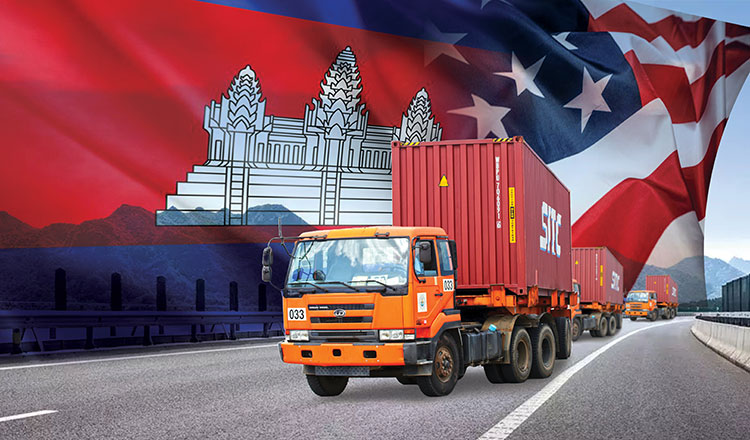
Cambodia’s economic outlook has entered a fresh phase of uncertainty and opportunity after a dramatic shift in US trade policy reshaped the global tariff landscape for the second time in less than a year.
On April 2, 2025, US President Donald Trump announced sweeping “reciprocal tariffs” targetting countries with significant trade surpluses with the United States. Cambodia initially faced a punishing 49 percent levy. Following negotiations, the rate was reduced to 19 percent in August 2025, a move that preserved the Kingdom’s competitiveness among exporting nations.
Then came another twist. On February 20, 2026, the US Supreme Court struck down the reciprocal tariff framework, prompting the administration to introduce a new global tariff of 10-15 percent. For Cambodia, the reset may prove less a setback than a strategic opening.
Export resilience
Despite operating under the 19 percent tariff for much of late 2025 and early 2026, Cambodia’s export engine did not stall; it accelerated.
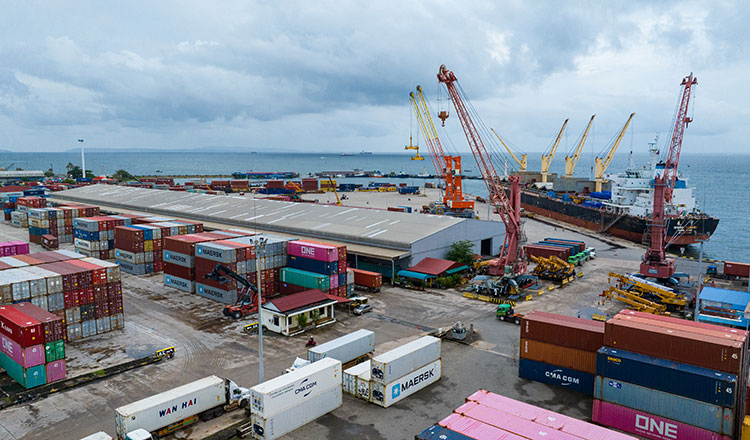
According to the General Department of Customs and Excise, shipments to the United States reached $1.28 billion in January 2026, a striking 47.6 percent increase from $868.7 million in January 2025. The US accounted for 43.9 percent of Cambodia’s total exports during the month, up from 37.7 percent a year earlier.
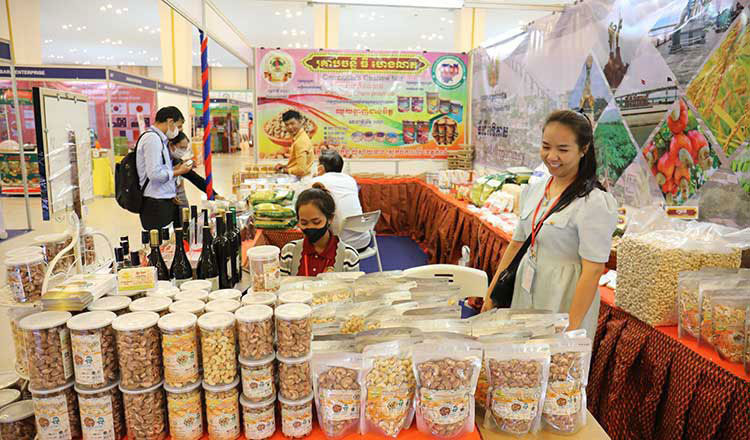
The data underscore the durability of US demand for Cambodian garments, footwear, and travel goods sectors that remain the backbone of the country’s export economy. Even under elevated tariffs, American buyers continued to source heavily from Cambodian factories.
Now, with the global tariff set at 10-15 percent, Cambodia’s relative burden has narrowed compared to the earlier 19 percent rate. While not a full reprieve, the adjustment places the country on a more equal footing with competitors.
Relief to recalibration
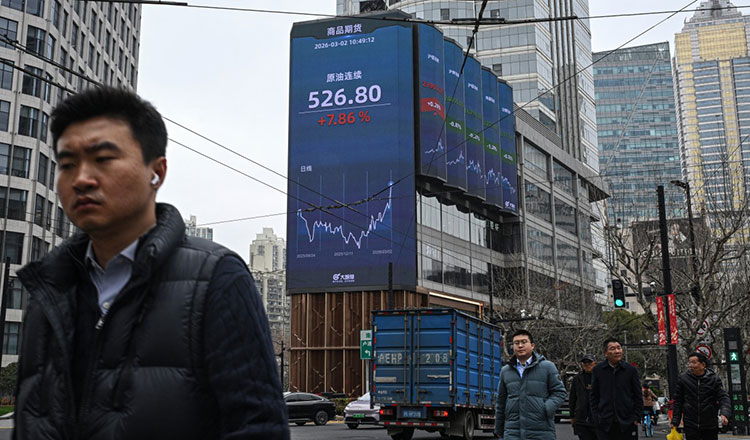
Financial markets responded swiftly to the Supreme Court’s decision. Wall Street rallied, with the S&P 500 rising 0.7 percent, the Dow Jones Industrial Average gaining 0.5 percent, and the Nasdaq Composite climbing 0.9 percent.
In Asia, optimism was even stronger. Hong Kong’s Hang Seng Index surged more than 2 percent, while Seoul’s KOSPI reached a record high.
Yet the rally proved fragile. When President Trump unveiled the new 10-15 percent global tariff, US markets reversed course. The S&P 500 fell 1 percent, the Dow dropped 1.7 percent, and the Nasdaq declined 1.1 percent as investors recalibrated their expectations amid renewed trade uncertainty. Notably, several Asian markets showed resilience, with the Hang Seng maintaining gains and the KOSPI continuing upward.
The whiplash reaction highlights the delicate balance between tariff relief and persistent policy unpredictability in global trade.
Stock market stability
While global markets swung sharply, Cambodia’s bourse remained comparatively calm.
In August 2025, when the 19 percent tariff rate was confirmed, the Cambodia Securities Exchange Index edged up around 0.1 percent over the month, reflecting limited volatility and no significant selling pressure.
During February 2026 — a period marked by global turbulence — the index rose approximately 1.1 percent from early to late February. The gradual upward movement suggests that Cambodia’s equity market remains largely insulated from external trade shocks, driven more by domestic liquidity and structural factors than by global macroeconomic tremors.
Narrowing competitive gap
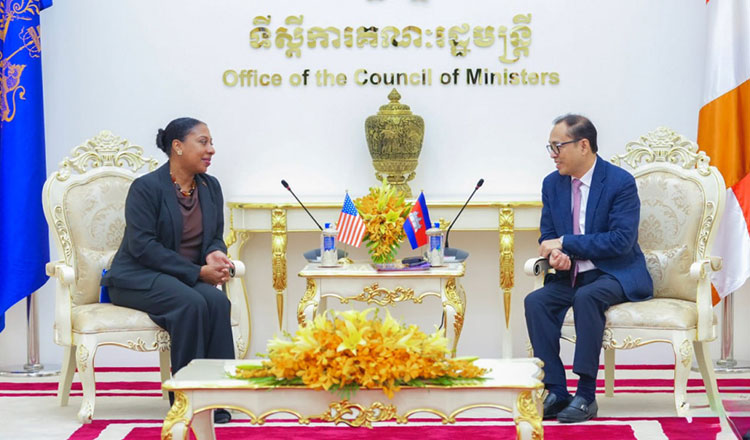
According to Casey Barnett, President of AMCHAM Cambodia and CamEd Business School, the new global tariff framework could strengthen Cambodia’s relative standing.
Under the previous system, several countries producing similar goods — including nations in Central and South America, as well as Turkey, Egypt, and parts of Africa — faced tariffs as low as 10 percent. The revised structure now requires all countries to pay at least the Most Favoured Nation rate plus an additional tariff component of up to 15 percent.
The effect is a narrowing of the competitive gap. Cambodia, once disadvantaged by a higher tariff rate, may now appear more attractive as a manufacturing base. The shift could redirect export orders and even spur fresh foreign direct investment into export-oriented industries.
Risks & strategic imperatives
Still, the picture is far from settled.
The new global tariff was introduced under Section 122 of US trade law, allowing temporary measures of up to 150 days. President Trump has signalled that alternative legal tools — including Section 301 investigations into alleged unfair trade practices — remain on the table. Further escalation cannot be ruled out.
For Cambodia’s economy which is heavily dependent on the US market, managing this relationship is not optional; it is existential.
Barnett argues that Phnom Penh should focus on strengthening its business climate for American firms. Streamlining and formalising licensing exemptions for American-made ICT equipment, agricultural inputs, medical devices, and pharmaceuticals could build goodwill and deepen bilateral economic ties. At present, licensing procedures are often slow, complex, and opaque — barriers that risk deterring investment.
For three decades, the US market has served as a cornerstone of Cambodia’s economic ascent. As global trade rules shift yet again, the Kingdom faces a familiar test: adapt swiftly, preserve competitiveness, and transform uncertainty into opportunity.
In a world of tariff resets and policy reversals, resilience – once again – may be Cambodia’s greatest export.
- 09:18 05/03/2026