Cambodia sharpens national budget priorities for 2027
Cambodia sharpens national budget priorities for 2027
As a strategic policy tool, the funding roadmap for next year focuses on shielding national security, stabilising livelihoods and driving sustainable socio-economic prosperity.
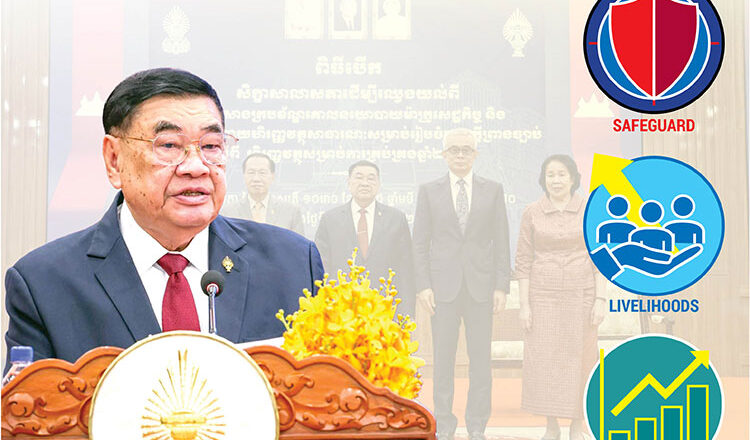
The National Assembly (NA) on Thursday discussed next year’s national budget priorities, focusing on safeguarding sovereignty, protecting citizens’ livelihoods and supporting targeted economic growth amid heightened uncertainty.
The key budget priorities were outlined during the workshop titled “Developing the Macroeconomic Policy Framework and Public Financial Policy for the Preparation of the Draft Law on Financial Management for 2027”, which was presided over by NA First Vice-President Cheam Yeap in the capital.
According to an NA announcement, the workshop focused on two major topics: the macroeconomic framework and Cambodia’s development vision towards 2030, and the preparation of the draft financial law for next year.
The initiative aimed to jointly define the direction of the national budget, highlighting the fiscal policy framework, budget framework, key challenges and priority measures for implementation.
The budget is intended to serve as a strategic policy instrument for safeguarding national sovereignty, improving people’s livelihoods and maintaining socio-economic stability, the statement added.
In his opening remarks, the NA First Vice-President stressed that the national budget was more than a financial plan, serving as a strategic instrument to guide national development, shape economic priorities and support long-term growth.
“It serves as a vital policy tool for setting development priorities, allocating resources and effectively achieving national economic goals,” he said.
Yeap noted that the meeting provided an important opportunity to foster dialogue and strengthen interaction among the legislative and executive institutions and partners, enabling them to gain a clearer understanding of the country’s actual economic situation, public financial trends and various challenges.
He said that the discussions were intended to ensure that the Draft Law on Financial Management for 2027 had a solid legal foundation and effectively addressed the essential needs of citizens and the nation as a whole.
During the workshop, the NA Chairman of the Commission on Economy, Finance, Banking and Audit Chheang Vun highlighted close collaboration with the Ministry of Economy and Finance (MEF) in preparing the strategic budget plan for 2027-2029, which focuses on three key priorities.
These include promoting budget efficiency and transparency to ensure public financial sustainability; strengthening socio-economic resilience to enable timely responses to potential crises; and addressing socio-economic development needs to drive sustainable economic growth, he noted.
The Deputy Prime Minister and Minister of Economy and Finance Aun Pornmoniroth also presented economic data based on performance during the first nine months of 2026, projecting that Cambodia’s economy would grow by around 4% this year before accelerating to 4.8% in 2027.
He said the growth projections were lower than previously expected, as the Kingdom continued to face pressure from global economic uncertainty, rising fuel prices, cybercrime and challenges stemming from the closure of land border crossings between Cambodia and Thailand.
Nevertheless, the Deputy Prime Minister said that the government remained committed to a proactive policy approach guided by the principle of “hoping for the best, but preparing for the worst”.
Under this approach, the national budget for 2027 has been formulated around a public financial policy stance aimed at supporting targeted economic growth while maintaining socio-economic stability, he said.
Pornmoniroth explained that the budget was characterised as a financial plan to safeguard national sovereignty and territorial integrity, protect people’s livelihoods and support targeted growth amid heightened uncertainty.
“The approach aimed to ensure the Royal Government has the capacity to respond comprehensively to emerging challenges while maintaining the long-term sustainability of public finances,” he added.
The workshop also featured technical presentations on the “Macroeconomic Policy Framework and Public Financial Policy for the Preparation of the Draft Law on Financial Management for 2027”.
The presentations were delivered by the MEF General Department of Policy Director-General Ung Luyna and General Department of Budget Director-General Hav Ratanak.
The presentations highlighted the fiscal policy framework, budget framework, key challenges and priority measures for implementation, providing technical perspectives to support the preparation of the next year’s financial law.
During the closing session, the Chairman of the Second Committee of the Senate Yos Panitta presented a summary report on the progress and outcomes of the workshop.
She highlighted that the workshop served as an important bridge between the legislative and executive branches, providing an opportunity for both institutions to convene, discuss and conduct an in-depth review of the contents of the Draft Law on Financial Management for 2027.
Senate Second Vice-President Thun Vathana noted that the workshop provided an important opportunity for the legislative and executive branches to engage in close dialogue while relevant ministries and institutions were preparing the draft law.
He added that the discussions and recommendations emerging from the workshop would serve as a valuable foundation and catalyst for reviewing and adopting next year’s financial law, helping to improve its effectiveness.
Vathana also urged relevant ministries and institutions to strengthen cooperation and maintain greater focus on managing the national budget with transparency, accountability and operational efficiency to support national socio-economic sustainability and protect the interests of the nation as a whole.
- 10:34 10/11/2026