World Bank forecasts 3.5% economic growth for Cambodia
World Bank forecasts 3.5% economic growth for Cambodia
The lower growth outlook highlights the Kingdom’s struggle to sustain domestic demand amid weak credit, tourism and household incomes, despite supporting exports.
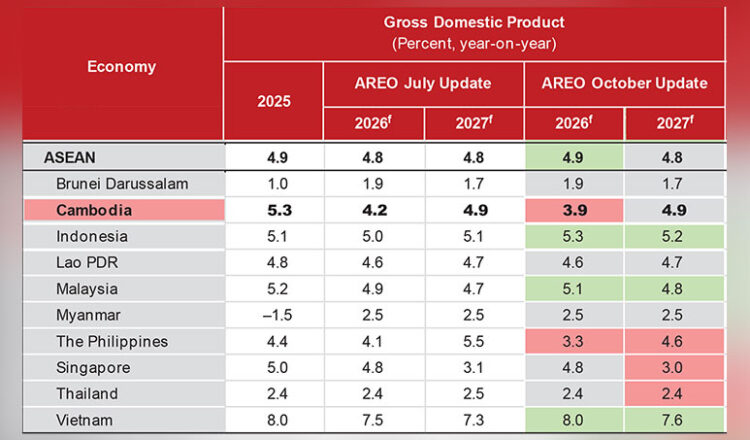
In its final projection for this year, the World Bank (WB) expected Cambodia’s economy to grow by 3.5%, down from the 3.9% forecast in April, citing weaker household consumption, declining remittances, elevated inflation and subdued credit growth that have constrained purchasing power.
The October forecast, released yesterday in the East Asia and Pacific Economic Update themed “Riding the AI Wave”, represented a 0.4 percentage-point downgrade and reflected a sharp slowdown from the Kingdom’s 5.3% growth last year.
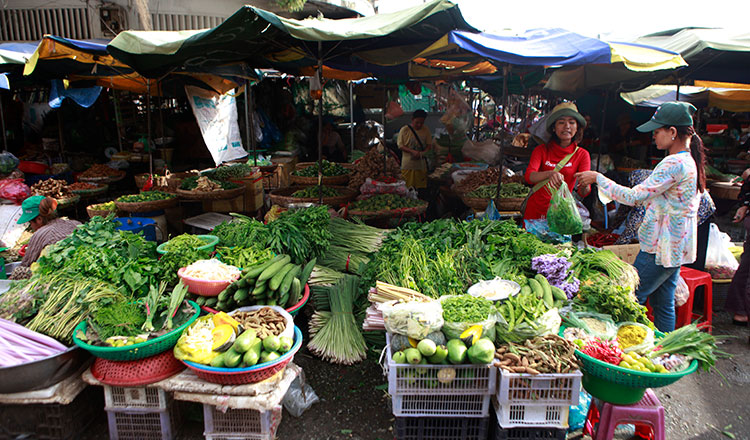
WB noted that the slowdown is driven primarily by a contraction in private consumption, as declining remittance inflows, higher inflation and subdued credit growth have combined to weaken household purchasing power and reduce domestic demand.
The 3.5% growth projection for Cambodia in 2026 reflected broad pressure across the economy, with declining household incomes and weaker spending weighing on both consumption and investment.
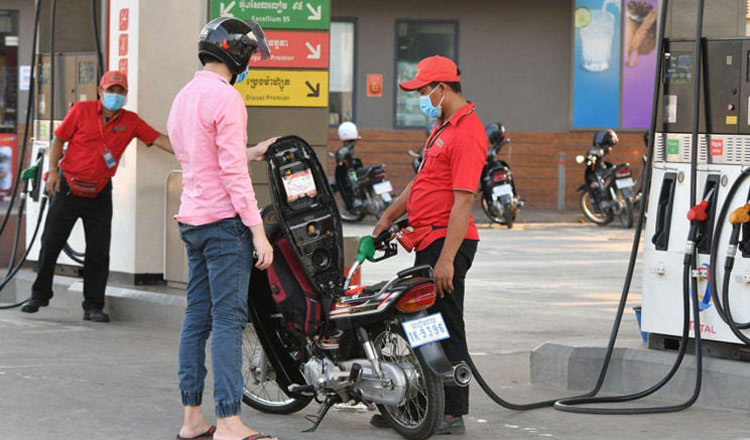
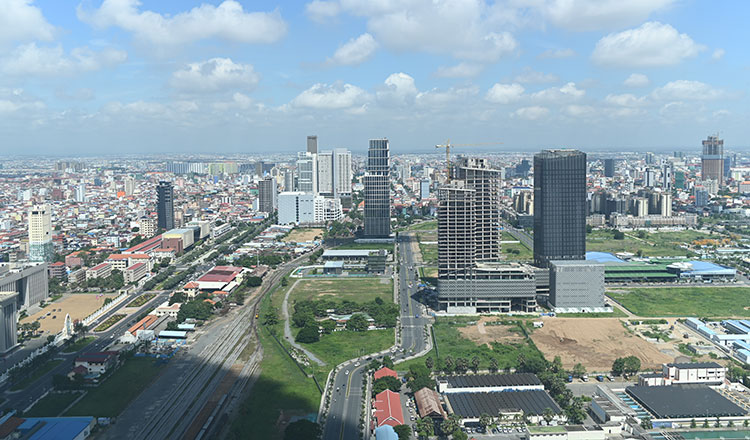
International tourist arrivals have weakened, remittances have declined, and higher oil prices have squeezed household incomes. Meanwhile, the correction in the real estate sector and tighter credit conditions have weighed on investment.
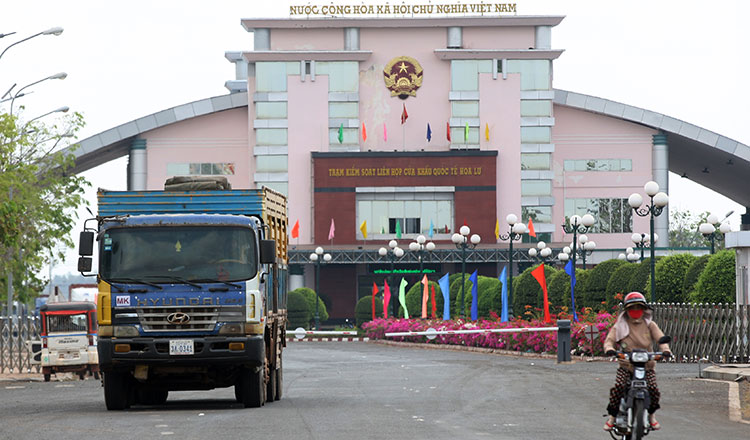
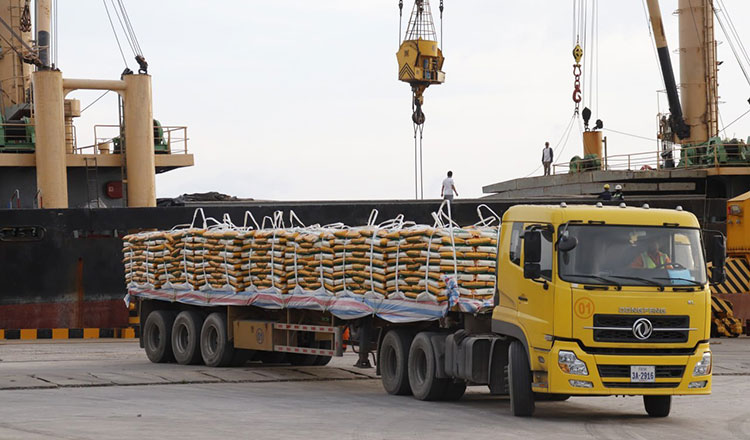
Despite the domestic slowdown, goods exports have continued to support economic activity, helping to cushion some of the weakness in household demand and providing an important source of growth amid softer domestic consumption and investment.
Looking ahead, WB also lowered the Kingdom’s growth projection to 4.0% next year, down 0.9 percentage points from the 4.9% forecast in April, before expecting growth to strengthen to 5.0% in 2028.
The projected recovery is expected to be supported by stabilising energy prices, a recovery in tourism and the successful economic reintegration of migrant workers returning to Cambodia, which should help strengthen household incomes and domestic demand.
However, the recovery is not without risks. WB expected El Niño to temper the recovery of the agricultural sector in 2027, potentially limiting the contribution of agriculture to overall economic growth.
The latest assessment comes against a backdrop of continued pressure on household incomes and economic activity. WB’s earlier ‘Cambodia Economic Update’ released in June had also identified falling remittances, higher fuel prices and weak domestic credit as key pressures on the economy.
Beyond Cambodia, the latest forecast also pointed to a broader slowdown across the East Asia and Pacific region, where economies are facing external shocks while seeking to benefit from stronger investment and trade linked to artificial intelligence.
For the Kingdom, the lower growth outlook highlights the challenge of maintaining domestic demand while addressing weaknesses in credit, tourism and household incomes, even as exports continue to provide support.
WB’s assessment suggested that a stronger recovery will depend not only on external demand but also on the ability of returning workers to re-enter the domestic economy, tourism to recover and households to regain purchasing power.
The assessment provided an important backdrop to discussions among policymakers and development partners at the ‘2026 International Monetary Fund–World Bank Group Annual Meetings’ to be held in Bangkok, Thailand from October 12-18.
With less than three months remaining in 2026, the October projection is likely to be the WB’s final growth forecast for the year, unless significant changes in economic conditions prompt the institution to reassess its outlook.
- 08:51 07/10/2026