Cambodia-Thailand trade inches back to life despite border shutdown
Cambodia-Thailand trade inches back to life despite border shutdown
Trade between the two nations is slowly steadying despite long-term border closures. While overall trade is still lower than last year, the gap is shrinking.
Despite the prolonged closure of land crossings between the two kingdoms, bilateral trade has shown signs of gradual stabilisation, with the year-on-year decline narrowing steadily throughout 2026, easing from 43.5 percent in January to 32.7 percent by July, according to Cambodia’s customs data.
The reports from the General Department of Customs and Excise (GDCE) showed that total trade between Cambodia and Thailand reached $1.61 billion in the first seven months this year, down from $2.4 billion recorded during the same period in 2025.
Although the decline remained significant, the pace of contraction has moderated considerably since the beginning of 2026. The year-on-year decline stood at 43.5 percent in January and 42.3 percent in February before gradually narrowing from March onward, reaching 32.7 percent in July.
Cambodia’s exports to Thailand have proved more resilient than imports. Exports fell by 14 percent to $420 million, while imports from Thailand dropped 37.5 percent to $1.19 billion.
The sharper decline in imports has also narrowed Cambodia’s trade deficit with Thailand, from approximately $1.41 billion in the first seven months of 2025 to about $770 million during the corresponding period this year.
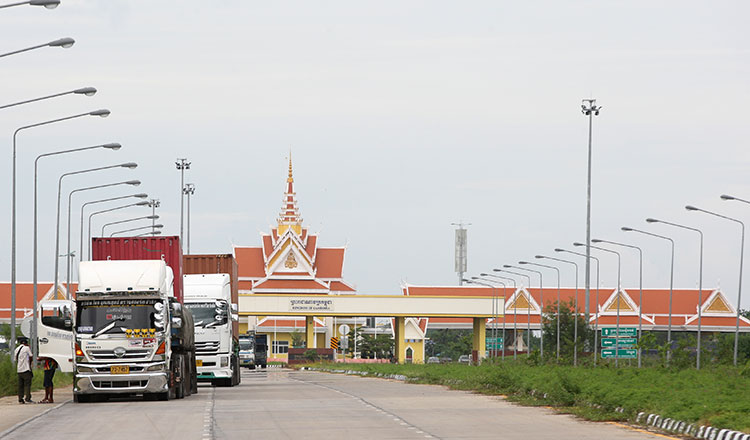
The land border between the two countries was fully closed in late June 2025 amid escalating tensions. The disruption intensified following a second round of border conflict in December, which lasted nearly three weeks and further affected cross-border commercial activity.
The impact was most pronounced in the first two months of 2026, when the year-on-year decline in bilateral trade exceeded 40 percent. However, the subsequent moderation suggested that businesses have gradually adjusted to the prolonged closure by maintaining trade through alternative channels.
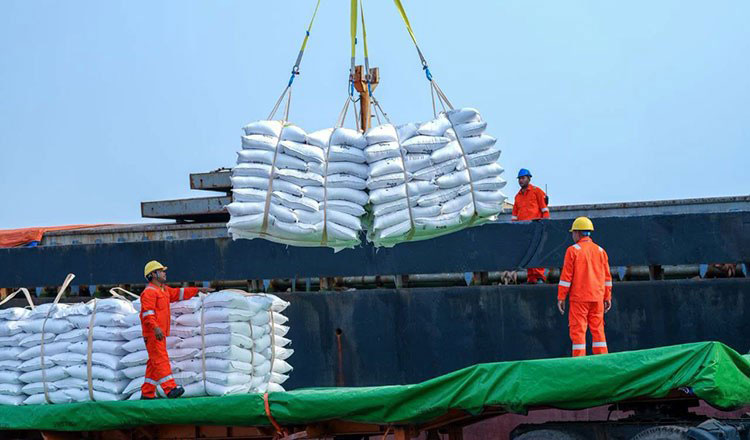
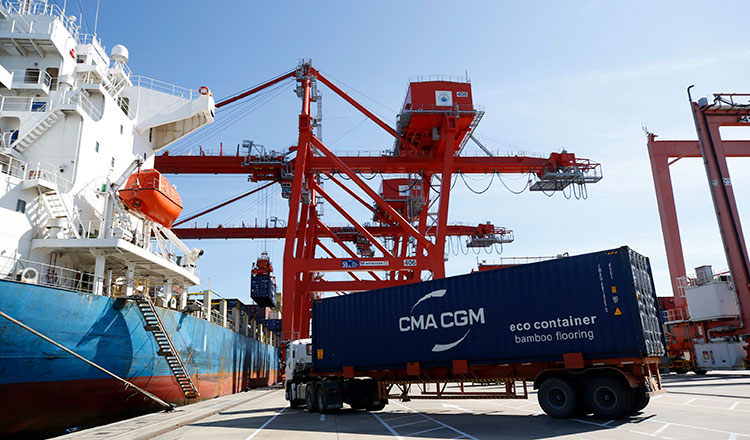
For some products, particularly higher-value manufactured goods, maritime transport has provided an alternative to land-based trade. However, these routes generally involved higher transportation costs and longer delivery times, limiting their ability to fully replace cross-border commerce.
The GDCE figures therefore pointed to a partial recovery rather than a return to normal trade conditions. The continued decline in imports and exports showed that significant disruption remains, while the narrowing year-on-year contraction indicated that commercial activity has begun to stabilise.
The recovery has also been uneven across product categories, reflecting differences in domestic production capacity and demand. Cambodia continues to depend on imported goods and inputs that are difficult to replace with domestic supplies, helping sustain certain trade flows despite the border restrictions.
At the same time, government restrictions on the import of strategic products have further reduced the volume of trade that can take place through official channels. However, the gradual improvement indicated that businesses on both sides continue to find ways to maintain essential commercial links despite the prolonged disruption.
Speaking to Khmer Times, socio-economic and geopolitical analyst Chey Tech identified three major factors behind the recovery of Cambodia-Thailand trade despite the continued closure of land border checkpoints.
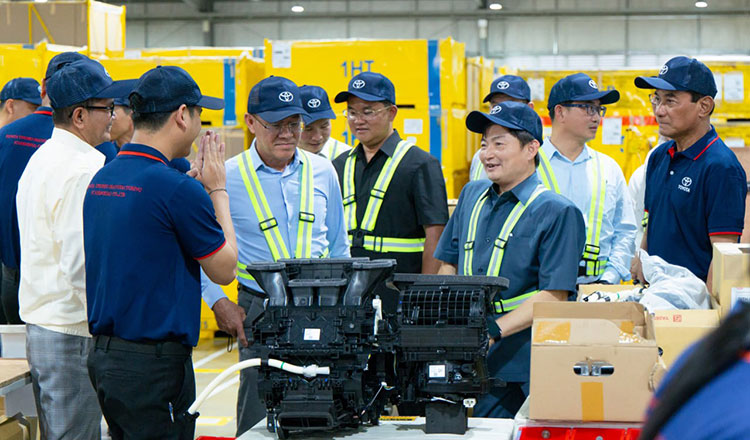
First, supply chains for electronic devices and equipment involving Japanese companies that have invested in both countries have shifted from land transport to maritime shipping, allowing trade to continue despite border restrictions.
Second, Cambodia remains dependent on Thai imports that it cannot produce domestically, particularly in agriculture and construction. “Farmers continue to rely on imported power tillers, tractors, fertilisers and insecticides, while the construction sector depends on imported materials and furniture,” he said.
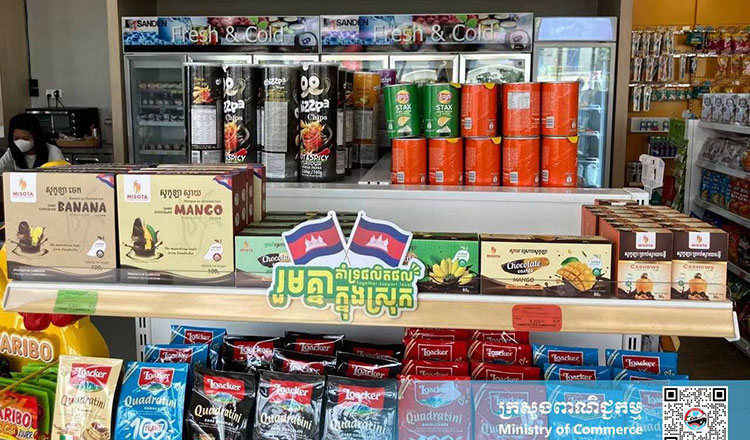
Third, Cambodian consumers have gradually returned to Thai products after initially supporting calls to boycott them when the conflict began. Tech stressed that Cambodian consumers can quickly turn against Thai products but can also easily return to them, reflecting limited consumer awareness and knowledge.
He also highlighted the role of wealthy Cambodian traders and importers, saying their business interests often take precedence over nationalist sentiments. “These people are focused on making profits, and we cannot stop them,” he said.
Overall, Tech emphasised that Cambodia-Thailand trade is recovering mainly due to seasonal agricultural demand and continued reliance on products Cambodia cannot produce domestically.
However, he noted that trade is unlikely to return to pre-conflict levels soon, as the government has restricted imports of strategic products, including oil, gas, vegetables and fruits, which previously accounted for hundreds of millions of dollars in trade.
- 07:57 13/08/2026