Cambodia launches 5-year strategy to supercharge startups
Cambodia launches 5-year strategy to supercharge startups
By providing a clear roadmap for ministries and stakeholders, the National Strategy strengthens the startup ecosystem to nurture entrepreneurial talent and drive scalable, competitive business growth.
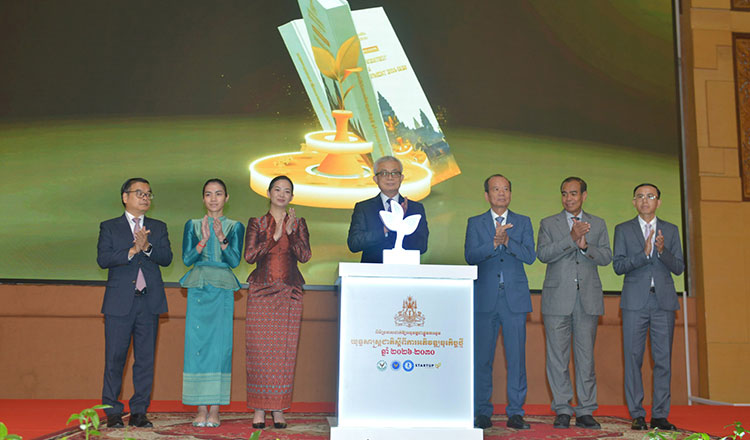
The Ministry of Economy and Finance (MEF) yesterday launched a five-year strategic framework to strengthen Cambodia’s startup ecosystem, foster innovation and entrepreneurship, and support their growth into scalable and competitive enterprises.
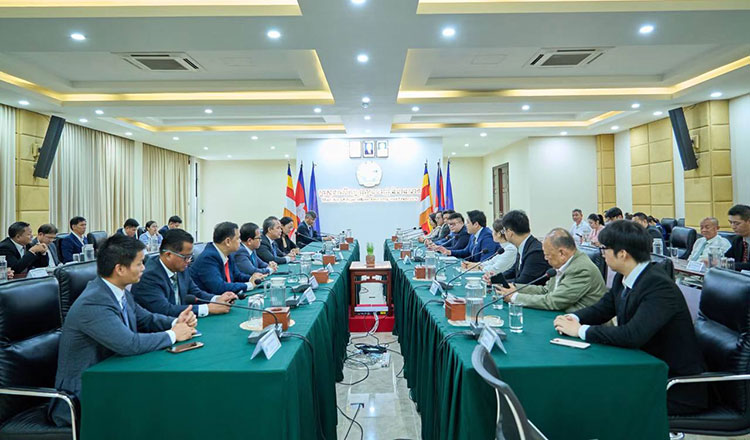
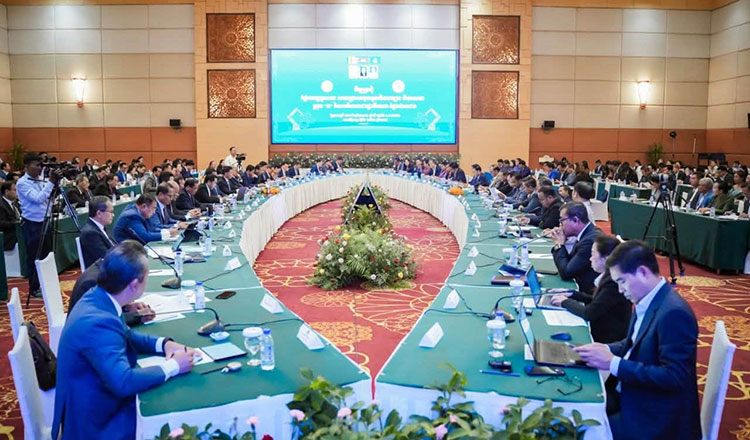
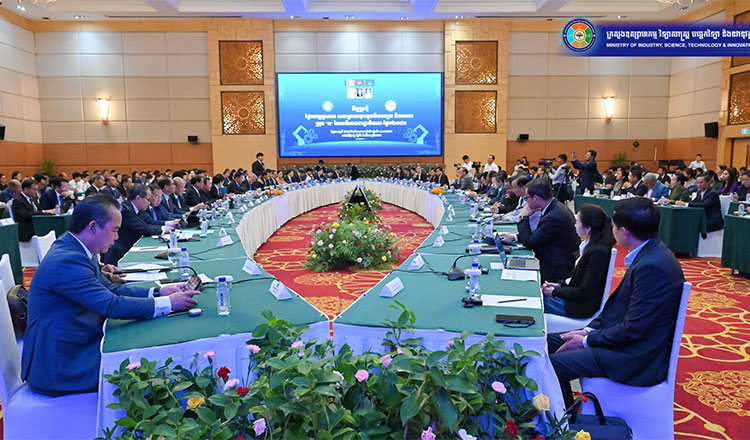
The official launch ceremony and dissemination workshop of the ‘National Strategy on Startup Development 2026-2030’ were presided over by Deputy Prime Minister and Minister of Economy and Finance Aun Pornmoniroth, in Phnom Penh on August 11.
The event, organised by the Digital Economy and Business Committee (DEBC) and the Techo Startup Center (TSC), was attended by Minister of Commerce (MoC) Cham Nimul and Minister of Post and Telecommunications (MPTC) Chea Vandeth.
In his keynote address, Pornmoniroth, also Chairman of DEBC, said that the ceremony not only launched the National Strategy but also demonstrated the Royal Government’s commitment to promoting businesses, particularly innovative startups that use digital technology as a core component.
“The strategy aims to strengthen Cambodia’s capacity and competitiveness amid growing regional and global uncertainty, while supporting the wider adoption of digital technologies, particularly advances in artificial intelligence (AI),” he added.
He explained that digital technology has become integral to daily life, learning, business and public services, permeating socio-economic activities and serving as an important catalyst for innovation, economic growth and stronger economic resilience in the modern era.
Pornmoniroth went on to add that for the private sector, adopting innovative digital technologies provides an advantage by improving production efficiency, capacity and quality, reducing costs, connecting production chains and strengthening competitiveness in domestic and international markets.
Similarly, for the public sector, digital technology is driving reforms, particularly in public service delivery, by reducing bureaucratic complexity, improving administrative efficiency, strengthening compliance and enhancing Cambodia’s business environment to better respond to the needs of people and businesses, he added.
The Deputy Prime Minister emphasised the role of implementing ministries and institutions in translating the strategy into concrete action plans, urging DEBC to establish a robust monitoring and evaluation framework with clear Key Performance Indicators (KPIs) to ensure effective and efficient implementation.
Furthermore, Pornmoniroth called upon all actors within the ecosystem to work closely and actively participate with the ministries and institutions responsible for implementing policy measures to create synergy and a favourable environment for developing startups into highly competitive enterprises.
The government’s push comes as Cambodia’s startup ecosystem has expanded significantly in recent years, with growth in the number of startups, ecosystem actors and business support programmes, according to Kong Marry, Secretary of State of MEF and Secretary-General of the General Secretariat of DEBC.
“Start-ups have grown from 98 in 2022 to 256 as of May 2026, while the number of actors in its ecosystem has also increased from 153 to 245. In addition to these core players, new business support programmes have also increased significantly, from 108 in 2022 to nearly 500 this year,” he said.
Marry noted that these support programmes include business training and acceleration programmes, competition and presentation programmes for obtaining investment capital, support for study tours abroad and investor networking, as well as other initiatives to support startups.
“Startups have also emerged as a major driving force in national economic development and play an indispensable role in contributing to the realisation of Cambodia’s economic vision in 2050,” he said.
Against this backdrop, the GEBC Secretary-General noted that the Royal Government has established a common framework to strategically address challenges hindering startup development and maximise the sector’s potential to contribute to the transformation of the national economy.
In this regard, the government has prepared the National Strategy to provide a clear path for ministries, institutions and all relevant actors to contribute to developing Cambodia’s startup ecosystem to be better, more inclusive and sustainable, he added.
The session was followed by a presentation summarising the strategy by Dr Taing Nguonly, Executive Director of TSC and also Deputy Secretary-General of the General Secretariat of DEBC, as well as a panel discussion on ‘Translating National Strategy into Impacts: The Future of the Startup Sector in Cambodia’.
According to an MEF announcement, the National Strategy will serve as a roadmap for ministries, institutions and stakeholders to build a more robust, inclusive and sustainable startup ecosystem.
The strategy also seeks to strengthen Cambodia’s connectivity with regional and global innovation ecosystems, supporting national economic development. Its vision is based on three approaches: positioning the government as a developmental enabler, promoting ecosystem-based startup development and fostering co-evolution for startup development.
The strategy sets four key targets, including moving the Startup Ecosystem Performance Index from emerging to expanding, supporting 300 startups through incubation, helping 100 startups secure investment and attracting $30 million in investment.
- 08:04 12/08/2026