Cambodia targets SME, investment bottlenecks
Cambodia targets SME, investment bottlenecks
In a major collaborative push, the government and business leaders agree on clear strategies to eliminate hurdles hindering manufacturing, SMEs and services.
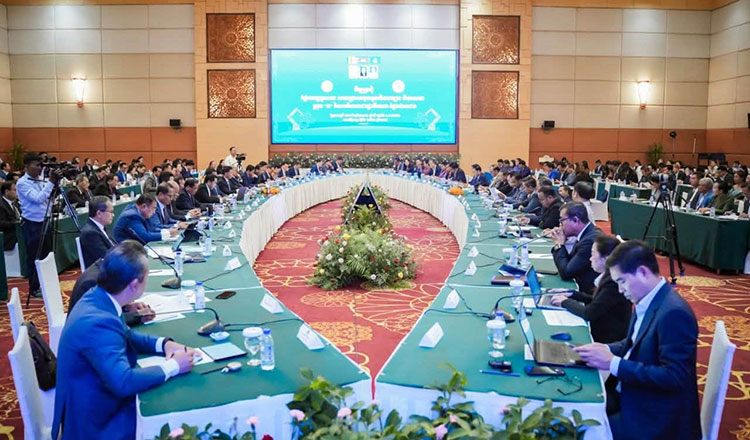
The government and private sector have agreed to pursue concrete measures to address 13 key business challenges affecting the manufacturing, small and medium-sized enterprises (SMEs) and services sectors, as Cambodia seeks to improve its business environment and strengthen private-sector competitiveness.
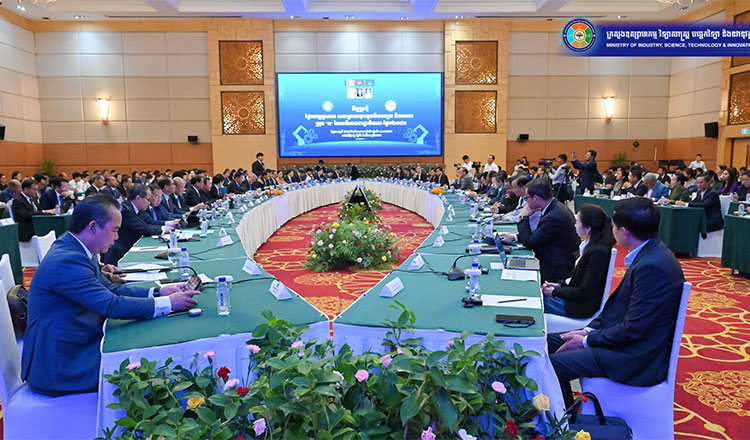
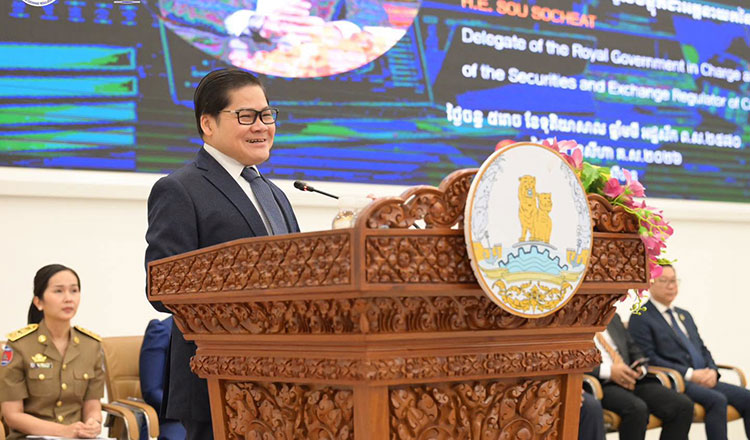
The issues were discussed at the fourth meeting of Working Group “C” on Manufacturing, SMEs and Services under the Government-Private Sector Forum (G-PSF), at Sokha Phnom Penh Hotel in the capital on Thursday.
The meeting was co-chaired by Minister of Industry, Science, Technology and Innovation (MISTI) and government co-chair of Working Group “C” Hem Vanndy, and Cambodia Chamber of Commerce Vice President and private-sector co-chair Te Tangpor.
Representatives from government institutions, provincial departments, financial institutions, business associations and private companies also participated.
Working Group “C” provides a platform for the government and private sector to jointly identify and resolve policy, regulatory and implementation issues affecting businesses. The mechanism is intended to turn private-sector concerns into practical reforms that improve competitiveness and support private-sector development.
As a start, Tangpor presented 13 priority challenges, covering areas including salt production and imports, access to finance, investment incentives, electricity costs, business licensing, environmental compliance, skilled labour shortages, cashew processing, product certification, the formalisation of informal businesses and compliance among online businesses to ensure fair competition.
He also proposed establishing a “single-entry point” through Working Group “C”, with the Cambodia Chamber of Commerce playing a coordinating role in collecting and consolidating business concerns for discussion under the G-PSF.
Vanndy underscored the importance of the Government-Private Sector Forum as a mechanism for delivering practical solutions.
“The value of this Government-Private Sector Forum mechanism lies not in the number of issues raised, but in our ability to transform challenges into solutions that are clear, actionable and measurable,” he said.
“The challenges faced by the private sector do not always stem from the absence of policies or regulations. In many cases, they arise from the gap between policy, implementation and the practical realities experienced by businesses.”
The government and private sector also agreed to strengthen institutional coordination and monitoring to ensure that agreed measures are effectively implemented.
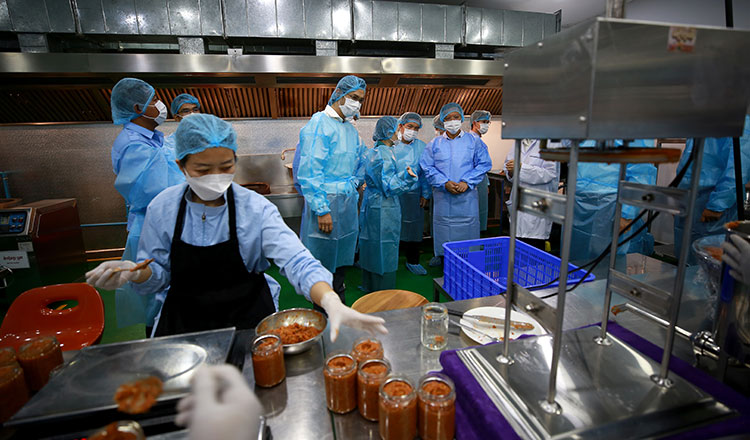
Meanwhile, Cambodia Cashew Nut Association President Uon Silot highlighted rising raw cashew nut prices and limited working capital as major constraints on local processors.
He called for affordable financing mechanisms to help SMEs, particularly cashew processors, secure additional capital and expand production.
- 08:01 10/08/2026