Cambodia’s RCEP trade surges past $24B in H1
Cambodia’s RCEP trade surges past $24B in H1
The RCEP plays an important role in the Kingdom’s long-term export expansion, giving additional complementary markets over existing markets for make-in-Cambodia products.
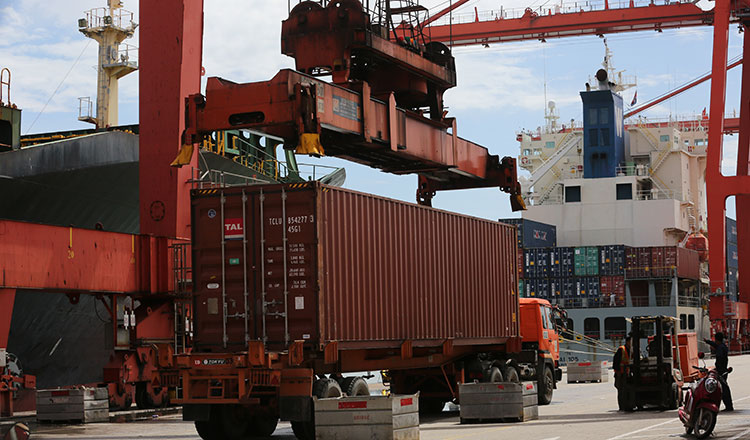
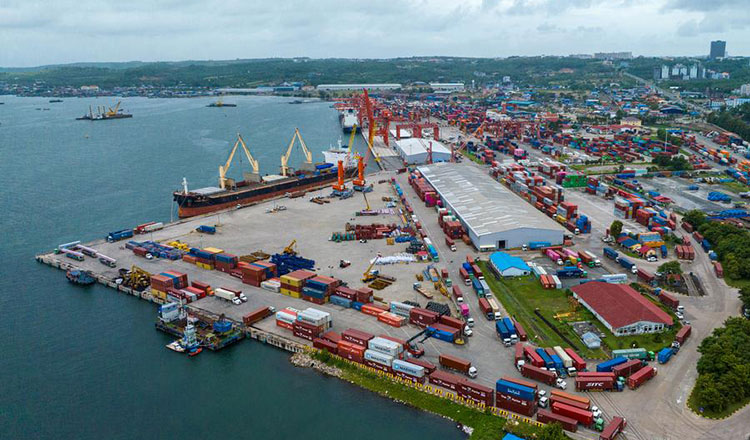
Cambodia’s trade with the Regional Comprehensive Economic Partnership (RCEP) partners reached $24.5 billion in the first half of 2026, up nearly 24 percent from $19.7 billion in the same period last year, a report from the Ministry of Commerce showed yesterday.
Between January and June of this year, the Kingdom exported $5.63 billion worth of goods to RCEP members, up 11.87 percent from $5 billion in the same period last year, stated the report.
Meanwhile, imports from RCEP nations rose by 33 percent to $18.8 billion.
China, Vietnam, Singapore, Japan, and Thailand are Cambodia’s top trading partners within the 15-nation bloc.
The report showed that the mega-free trade agreement remains the primary engine of Cambodia’s international commercial activity, accounting for nearly 64 percent of Cambodia’s total global trade volume of $38.2 billion in the January–June period of this year.
Penn Sovicheat, Secretary of State and Spokesperson for the Ministry of Commerce, emphasised that the mega-free trade agreement continues to provide stability and momentum for the Kingdom’s growth in exports amid the global economic uncertainties.
Speaking with Khmer Times, Sovicheat said, “The RCEP plays an important role in Cambodia’s long-term export expansion, giving additional complementary markets over Cambodia’s existing markets for make-in-Cambodia products.”
Enforced since January 1, 2022, the RCEP agreement unites the 10 ASEAN member states alongside China, Japan, South Korea, Australia, and New Zealand, covering roughly 30 percent of the world’s population and global gross domestic product.
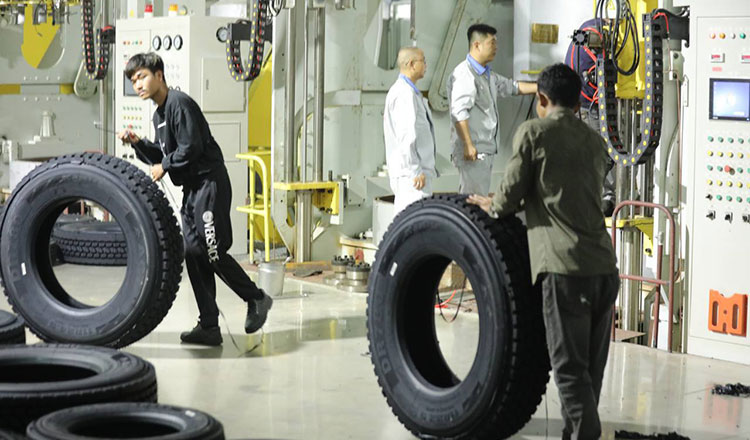
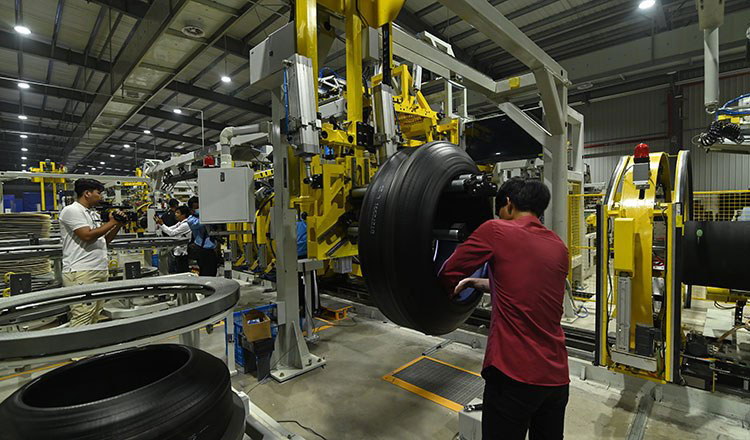
Cambodia’s main export products are garments, machinery, electrical equipment, footwear products, leather goods, grain, furniture, rubber, fruits, vegetables, pearls, toys and textiles.
Cambodia’s major imports include raw materials for garment manufacturing, medicines and supplements, consumables and food and beverages.
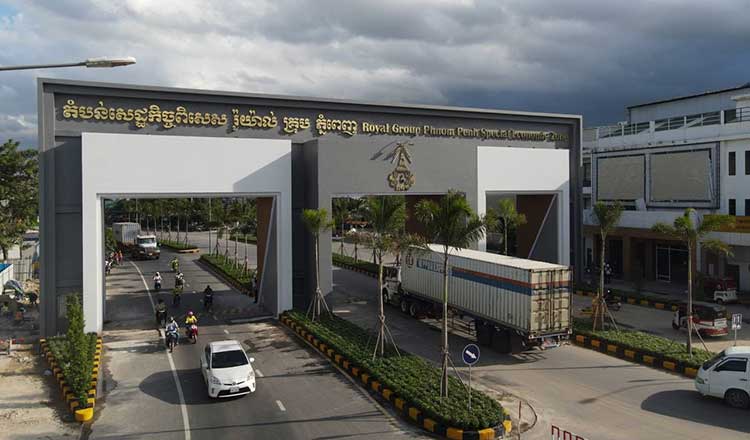
Lim Heng, Vice-President of the Cambodia Chamber of Commerce, viewed the RCEP agreement as a catalyst in attracting investment to step into Cambodia for producing and processing products, not only supplies to the local market but also for exports.
“The RCEP agreement has given Cambodian enterprises wider market access and lower trade barriers in the regional market, particularly contributing to attracting foreign direct investments to Cambodia for producing products to export to other members,” Heng said.
In 2025, Cambodia’s trade with RCEP member countries reached $40.2 billion. Exports reached $9.8 billion, an increase of 7 percent compared with 2024, according to the Ministry of Commerce.
The Ministry of Commerce has also encouraged the private sector to maximise the benefits of RCEP to offset the eventual loss of other trade preferences.
According to the report, in the first six months of this year, Cambodia’s trade with ASEAN nations rose by 21.8 percent to $10.3 billion.
The country’s bilateral trade with Vietnam reached $4,729 million, a year-on-year increase of 8.9 percent, followed by Singapore, with bilateral trade increased by 238 percent to $2,370 million, and Thailand $1,371 million, down 37 percent.
To diversify markets beyond the existing markets, the ministry is currently working to create more free trade agreements with main trade partners to expand market access to local products for export.
To support the private sector in advance of the benefits from the country’s free trade agreements, the ministry has launched the Cambodia Free Trade Agreement (FTA) Portal, which serves as a comprehensive database of Cambodia’s trade agreements and related information for Cambodian traders.
This platform represents a significant step towards increasing our nation’s global competitiveness and ensuring that all stakeholders, from small businesses to policymakers, have convenient, up-to-date access to vital trade information.
This online portal also promotes trade liberalisation, increases economic cooperation, and enables traders to gain an understanding of Cambodia’s FTAs with other countries, as well as the status and procedures of exports.
- 07:42 21/07/2026