AMRO holds Cambodia growth outlook at 4.2% in July update
AMRO holds Cambodia growth outlook at 4.2% in July update
The Kingdom maintains a resilient economic trajectory, successfully sustaining steady growth even as global market pressures and international uncertainties intensify, the report says.
The ASEAN+3 Macroeconomic Research Office (AMRO) has maintained Cambodia’s economic growth forecast at 4.2 percent for 2026, matching the Ministry of Economy and Finance’s projection, while raising its inflation outlook on higher energy and input costs.
According to the July 2026 Quarterly Update of the ASEAN+3 Regional Economic Outlook (AREO) released yesterday, AMRO projected the ASEAN+3 region to grow by 4.1 percent in 2026 before moderating slightly to 4.0 percent in 2027, supported by resilient domestic demand and the region’s central role in global artificial intelligence (AI) supply chains.
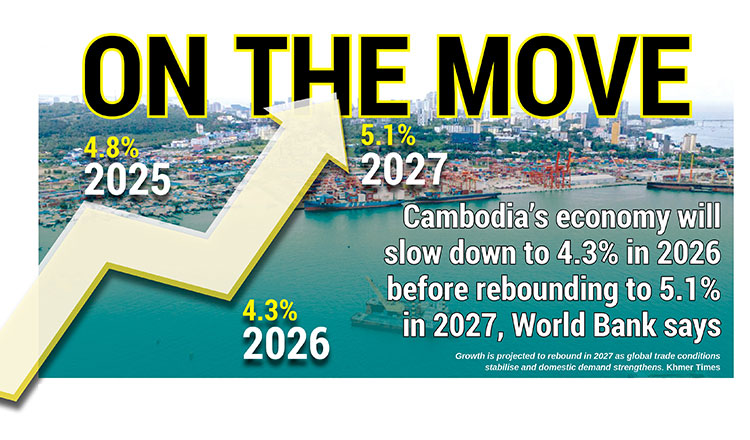
For Cambodia, AMRO maintained its gross domestic product (GDP) growth forecast at 4.2 percent this year and 4.9 percent for 2027. The projections are unchanged from the June 2026 Interim Update but represent a moderation from the estimated 5.3 percent growth recorded in 2025.
The latest forecasts place Cambodia broadly in line with the wider ASEAN region, which is expected to expand by 4.8 percent in both 2026 and 2027, suggesting the Kingdom remains on a stable growth path despite an increasingly uncertain global environment.
While the growth outlook remained unchanged, AMRO revised Cambodia’s inflation forecast upward. Headline inflation is now projected at 5.1 percent in 2026, up from the 4.5 percent forecast in the June update, while the 2027 projection has been raised to 2.8 percent from 2.4 percent.
AMRO Chief Economist Dong He said that the ASEAN+3 region has continued to demonstrate resilience despite mounting geopolitical and economic uncertainties.
He said, “ASEAN+3 has remained resilient, supported by firm domestic demand and its central role in global AI supply chains. The impact of the Middle East conflict has also been less severe than initially expected, although elevated energy and input costs continue to pose risks to inflation and industrial activity.”
“The wide range of plausible outcomes underscores the importance of continued vigilance and sound macroeconomic policies. Policymakers will need to respond flexibly to differing domestic conditions and rapidly evolving external risks, particularly the AI cycle and the Middle East conflict,” he added.
According to the report, rising energy-related costs, particularly electricity and transport, have driven much of the increase in regional headline inflation since the Middle East conflict escalated in late February. It also pointed to emerging food price pressures caused by higher fertiliser costs and adverse weather conditions.
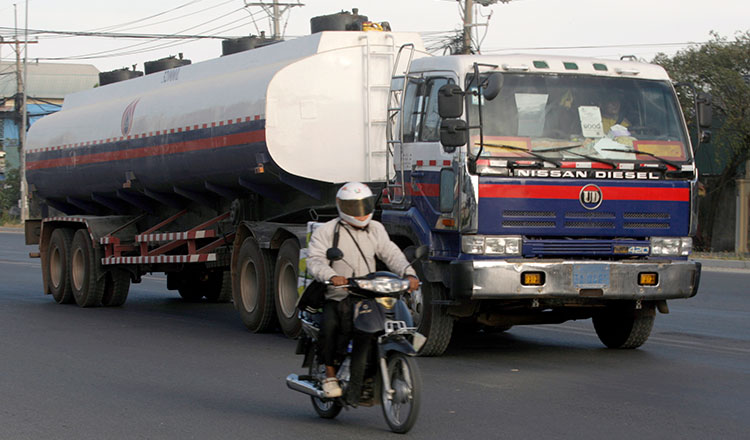
Cambodia is included in the regional fuel price averages, with gasoline and diesel prices incorporated into AMRO’s ASEAN+3 calculations alongside those of other member economies.
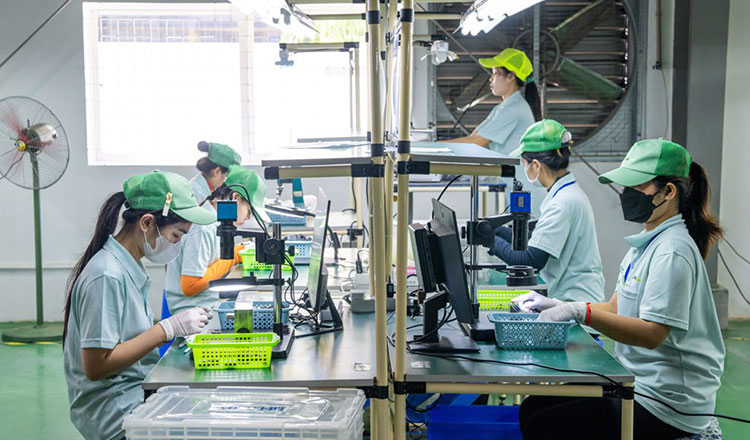
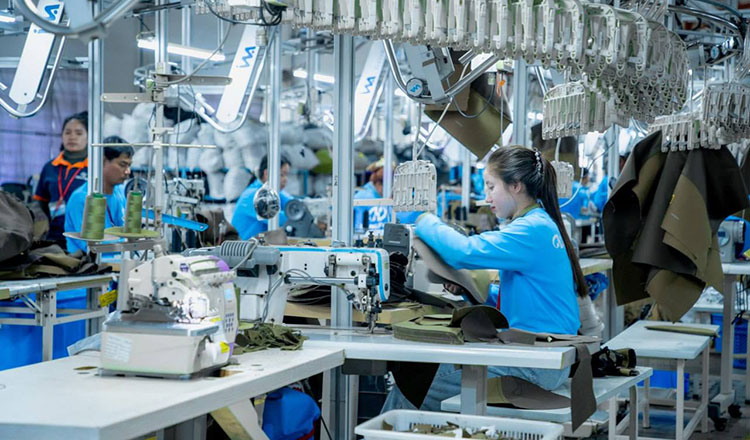
Despite higher production costs, manufacturing activity across the region has remained expansionary, while tourism continues to support economic growth. However, AMRO noted that Cambodia-specific high-frequency indicators, including detailed export and GDP contribution data, remain limited because of data availability constraints.
Looking ahead, AMRO identified the evolving Middle East conflict, uncertainty surrounding the AI-driven technology cycle, financial market volatility and the possibility of additional protectionist measures as the key near-term risks to the regional outlook.
Under an adverse scenario, a prolonged disruption to the Strait of Hormuz could reduce ASEAN+3 economic growth to 2.8 percent while pushing regional inflation to 4.6 percent in 2027, the report said.
It also warned that longer-term structural challenges, including geoeconomic fragmentation and climate-related risks, could weigh on the outlook for trade-dependent economies such as Cambodia.
Across the region, fiscal and monetary policy responses have varied according to domestic economic conditions. While some central banks have tightened monetary policy to contain inflation and support their currencies, others have maintained accommodative policies to sustain economic growth. Governments have also introduced measures such as energy subsidies and targeted support packages to cushion the impact of higher commodity prices.
AMRO noted that its latest forecasts are based on information available up to July 22 and 23, noting that uncertainty remains elevated and that future economic outcomes will depend largely on developments in global energy markets, technology demand and international trade policies.
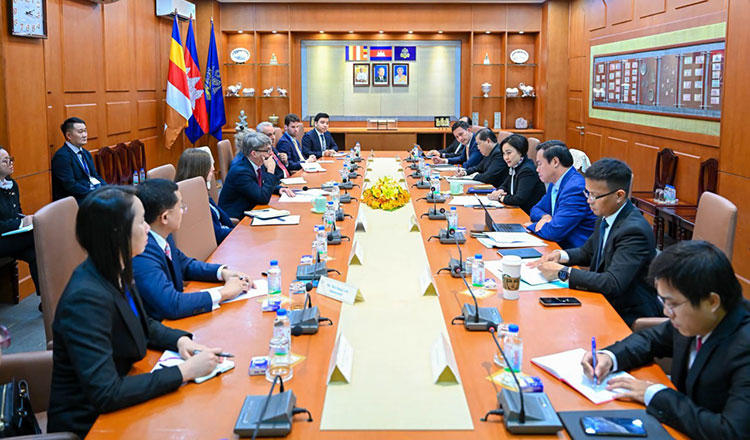
The latest projection is in line with the Royal Government’s assessment. During a meeting with International Monetary Fund Mission Chief for Cambodia Kenichiro Kashiwase in early July, Deputy Prime Minister and Minister of Economy and Finance Aun Pornmoniroth expressed confidence that Cambodia’s economy would achieve 4.2 percent growth in 2026.
Pornmoniroth noted that export-oriented industries, particularly non-garment manufacturing, have performed better than expected despite external uncertainties, providing a stronger foundation for economic expansion.
He also noted that the government has approved a comprehensive $1.24 billion intervention package to strengthening the resilience of Cambodia’s economy.
- 08:36 28/07/2026