Cambodia’s GFT exports earn $3.75 billion in Q1
Cambodia’s GFT exports earn $3.75 billion in Q1
The first-quarter figures underscore the enduring importance of the GFT sector to the Kingdom’s economy.
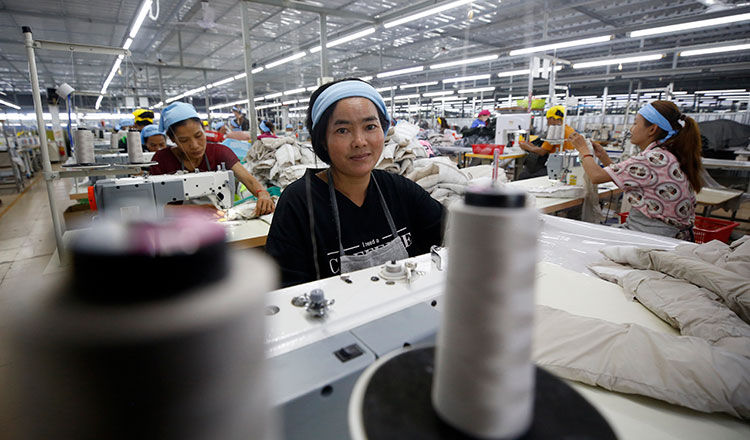
Despite rising geopolitical uncertainties, Cambodia’s garments, footwear and travel goods (GFT) sector continued to keep the country’s export economy steady, generating $3.75 billion in revenue in the first quarter (Q1) of 2026, according to newly released data from the General Department of Customs and Excise (GDCE).
The figure marks a 7.78 percent increase compared to the same period last year, signalling steady recovery and resilience in one of the Kingdom’s most critical industries.
Overall exports for the January-March period totalled $8.09 billion, with the GFT sector accounting for 46 percent of that. This highlights Cambodia’s continued reliance on labour-intensive manufacturing, particularly in textiles and footwear, as a primary driver of economic growth and foreign exchange earnings.
A closer breakdown of the data shows that knitted apparel remained the dominant export category within the sector, contributing $1.58 billion in shipments during the first three months of the year. Non-knitted garments followed with $1 billion, reinforcing Cambodia’s position as a key supplier of clothing products to major international markets, including the United States and the European Union.
Meanwhile, travel goods—a category that includes items such as luggage, backpacks, and handbags—generated $544 million in export revenue. Footwear exports were close behind at $516 million, reflecting sustained global demand and the country’s growing manufacturing capacity in these segments.
Notably, other made-up textile articles emerged as one of the fastest-growing sub-sectors. Exports in this category reached approximately $112 million, representing a sharp 61 percent increase compared to the same period last year. Analysts suggest this surge may indicate diversification within Cambodia’s textile industry, as manufacturers expand beyond traditional garment production into higher-value or niche textile goods.
Industry observers say the continued growth of the GFT sector is supported by a combination of factors, including stable demand from key export markets, competitive labour costs, and ongoing trade preferences under regional and international agreements. Cambodia’s participation in frameworks such as the Regional Comprehensive Economic Partnership (RCEP) has also helped facilitate market access and supply chain integration.
However, experts caution that the sector still faces structural challenges. Rising competition from neighbouring countries, evolving compliance requirements from international buyers, and pressure to improve labour conditions and environmental standards remain ongoing concerns. Additionally, global economic uncertainties—including fluctuating consumer demand and geopolitical tensions—could impact export performance in the coming quarters.
The Royal Government has been working to address some of these issues through policy reforms and investment in infrastructure, while also encouraging diversification into higher-value manufacturing sectors. Efforts to upskill the workforce and adopt more advanced production technologies are seen as crucial steps toward sustaining long-term growth.
Despite these challenges, the first-quarter figures underscore the enduring importance of the GFT sector to Cambodia’s economy. As the country continues to integrate into global supply chains, maintaining competitiveness while adapting to shifting market dynamics will be key to ensuring that the sector remains a cornerstone of national export performance.
- 08:00 20/04/2026