AMRO forecasts Cambodia to grow at 4.9%, surpassing ASEAN average
AMRO forecasts Cambodia to grow at 4.9%, surpassing ASEAN average
For the Kingdom, the outlook remains cautiously optimistic. While external risks persist, the country’s recent track record of resilience and its strategic policy direction position it well to sustain growth and navigate an increasingly uncertain global landscape.
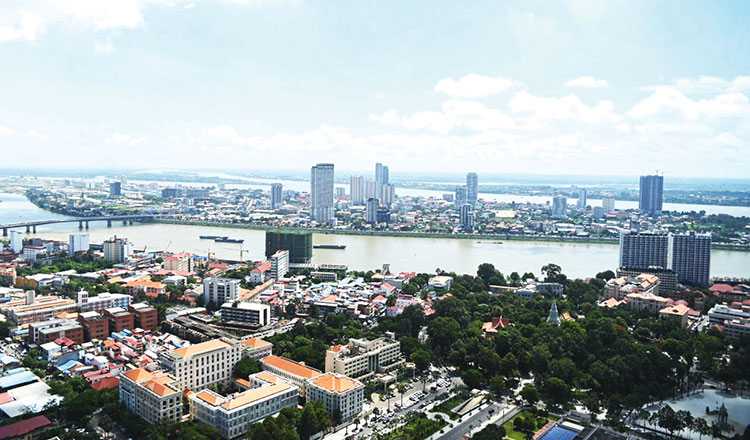
Cambodia’s economy is projected to grow by 4.9 percent in 2026, outpacing the broader ASEAN average despite mounting global uncertainties, according to the latest outlook released by the ASEAN+3 Macroeconomic Research Office (AMRO).
The forecast was unveiled during the ASEAN+3 Regional Economic Outlook (AREO) 2026 press conference yesterday in Singapore, where senior AMRO officials highlighted both the resilience of the region and the growing risks stemming from geopolitical tensions and economic disruptions.
The virtual presentation was chaired by Yasuto Watanabe, AMRO Director and CEO; Dong He, AMRO Chief Economist; and Allen NG, AMRO Group Head and Principal Economist, and moderated by Daisy Wong.
Watanabe opened the session by warning that the global environment remains highly volatile. He pointed to the ongoing conflict in the Middle East, now in its second month, as a major source of disruption to global energy markets. According to Watanabe, the situation underscores elevated policy uncertainty and its ripple effects across economies worldwide.
“These shocks are reaching the ASEAN+3 region rapidly,” he said, emphasising that this year’s AREO report—the 10th edition—comes at a particularly critical moment. He noted that an independent regional assessment is essential as policymakers navigate increasingly complex global dynamics.
Despite these challenges, Watanabe stressed that the ASEAN+3 region—which includes Southeast Asian nations along with China, Japan, and South Korea—enters this period of uncertainty from a position of strength. He attributed this resilience to years of sound policymaking and strong regional cooperation.
He also highlighted AMRO’s origins following the Asian financial crisis, which prompted the establishment of mechanisms for regional surveillance and financial stability. Among these is the Chiang Mai Initiative Multilateralization (CMIM), a $240 billion financial safety net designed to provide liquidity support in times of crisis.
AMRO officials noted that such frameworks continue to play a vital role in maintaining stability across the region.
Presenting the “AMRO Staff Baseline Estimates and Forecasts 2026-2027,” AMRO Group Head and Principal Economist Allen NG reported that ASEAN economies are expected to grow by 4.6 percent in 2026 and 4.8 percent in 2027. The broader ASEAN+3 region is forecast to expand by around 4.0 percent in both years.
Within this regional context, Cambodia stands out. The country’s economy is projected to grow by 4.9 percent in 2026, accompanied by an inflation rate of 2.9 percent. Growth is expected to accelerate further to 5.2 percent in 2027, with inflation easing to 2.5 percent. These figures place Cambodia fourth among regional performers, underscoring its relative economic strength.
Responding to questions from Khmer Times about Cambodia’s outlook and the factors that determine the country’s growth, AMRO Chief Economist Dong He credited the Kingdom’s effective management of external shocks in recent years. He noted that Cambodia performed strongly in 2025 despite significant disruptions caused by global tariff measures.
“The United States remains Cambodia’s largest export market, and last year’s growth outcome was quite strong,” Dong said, describing the performance as a notable achievement given the scale of external pressures.
Looking ahead, Dong emphasised that Cambodia’s ability to sustain growth will depend largely on how effectively it continues to manage external risks. While current threats appear less severe than the recent energy shock, vigilance remains essential.
Energy security, in particular, was highlighted as a key concern. As a net fuel importer, Cambodia is vulnerable to fluctuations in global oil and gas prices. Dong suggested that diversifying energy sources and strengthening infrastructure would be critical steps toward ensuring a stable and affordable energy supply.
“This is an important long-term policy goal,” he said, adding that such measures would also enhance domestic value creation from foreign direct investment and improve overall economic resilience.
The broader regional outlook, however, remains clouded by successive global shocks. Dong noted that sweeping tariffs imposed last year disrupted trade flows, weakened business confidence, and forced companies to reconsider supply chains. More recently, the escalation of conflict in the Middle East has triggered one of the most severe energy shocks in decades.
Inflation across the region has remained relatively low and stable, and external financial buffers have improved. However, Dong cautioned that strong fundamentals do not guarantee immunity from global pressures.
Rising energy prices, he explained, are particularly damaging for import-dependent economies. They worsen trade balances, reduce household purchasing power, and drive up costs across sectors, including food, services, and manufacturing.
As Asean+3 policymakers confront these overlapping challenges, AMRO officials underscored the importance of continued regional cooperation.
- 08:19 07/04/2026