Is Cambodia doing enough to hit 2050 high-income target?
Is Cambodia doing enough to hit 2050 high-income target?
For Cambodia, the road to becoming a high-income country by 2050 is dotted with formidable challenges. No one can deny that between 2000 and 2019, the Kingdom was among the fastest-growing economies globally, with over 7 percent of annual GDP growth, but then the economic expansion slowed down in recent years, especially after the COVID-19 pandemic. A widening chasm between national aspirations and economic realities has crept into the system. A recent AmCham Business Outlook 2026 Survey highlights those gaps in great detail. Khmer Times talks with an array of experts to find out what Cambodia should do. Cambodia’s GDP, according to them, would need to grow by more than 8 percent each year to stay on course. They also have reservations about what they term as “regulatory frictions” that are holding Cambodia back from achieving higher growth. While there’s unanimity among them that without bold reforms to reduce regulatory burdens and open up the economy, the country risks falling short of its high-income ambitions, the silver lining, however, is the committed leadership of the country that has shown a willingness to listen to private sector concerns, and remains open to new ideas, offering a foundation for progress in the years ahead
Cambodia must accelerate economic liberalisation and sustain strong long-term growth if it hopes to achieve its ambition of becoming a high-income country by 2050, according to new insights from experts and organisations such as the American Chamber of Commerce (AmCham) in Cambodia.
The Cambodian government has set an ambitious target of reaching high-income status—defined as a per capita income of nearly $14,000—within the next quarter century. However, Casey Barnett, the outgoing president of AmCham, has warned that current economic trends fall short of what is required to meet that goal.
“Unfortunately, Cambodia is not on track to achieve the required annual GDP growth rate of 6.4 percent for the purpose,” Barnett told Khmer Times recently. Based on his projections, the country would need to sustain even higher levels of expansion when population growth is taken into account. Assuming an annual population increase of around two percent, Cambodia’s GDP would need to grow by more than eight percent each year to stay on course.
Such figures highlight a widening gap between national aspirations and economic realities. While Cambodia was among the fastest-growing economies globally between 2000 and 2019 with over seven percent of annual GDP growth, the economic expansion has moderated in recent years, especially after the COVID-19 pandemic. During its earlier boom period, the country benefitted from a combination of favourable conditions—limited bureaucracy, strong inflows of foreign investment, macroeconomic stability supported by US dollarisation, and the peace that followed the end of decades of conflict in 1998.
Today, however, businesses say structural challenges are slowing momentum. According to the AmCham Business Outlook 2026 Survey, governance issues and high electricity costs are the most pressing concerns for the private sector. Among these, regulatory bottlenecks—particularly licensing requirements—stand out as a key obstacle to productivity and investment.
Companies report that obtaining licences, especially for importing and exporting goods, is both time-consuming and unpredictable. This issue is particularly acute in sectors such as agriculture and information and communications technology (ICT), where access to modern inputs and equipment is essential for competitiveness.
One frequently cited barrier is Sub-Decree 110, which mandates approval from the Ministry of Posts and Telecommunications for a wide range of ICT equipment, artificial intelligence technologies, and digital services. While internet usage has become widespread among Cambodian businesses, the process for importing ICT equipment remains cumbersome. In addition, Cambodia has lagged behind regional peers in rolling out advanced telecommunications infrastructure, including 5G networks.
Licensing constraints also affect long-term investment decisions. For example, draft regulations from the telecommunications ministry have proposed licensing periods of just eight years for data centres, despite the fact that such facilities typically have operational lifespans of 15 to 30 years. By contrast, countries such as the United States impose no licensing requirements on data centres, making them more attractive to investors.
Casey argues that these regulatory frictions are holding Cambodia back from achieving higher growth and discouraging both domestic entrepreneurs and foreign investors. “It seems that Cambodia is going in the opposite direction, introducing more and more licensing and regulation,” he said.
In fact, Casey is advocating for aggressive economic liberalisation, including the adoption of a “free port” model for Cambodia to achieve its High-Income Country goal. Under this approach, Cambodia would significantly reduce or eliminate customs duties and streamline licensing procedures for imports. Similar models have been successfully implemented in economies such as Hong Kong, Singapore, and Dubai.
These jurisdictions have leveraged open trade policies to attract investment, boost manufacturing, and enhance productivity across sectors. By lowering the cost of importing raw materials, machinery, and advanced technologies, a free port system could stimulate growth in industries ranging from electronics assembly and automotive parts to agriculture and agro-processing.
Casey estimates that such reforms could add between one and 1.8 percentage points to Cambodia’s annual GDP growth. Reduced logistics costs and faster supply chains would further improve the country’s competitiveness, while increased foreign direct investment could help Cambodia capture opportunities currently going to regional rivals like Vietnam and Thailand.
In the long term, proponents argue that the loss of customs revenue would be offset by higher tax revenues generated from increased economic activity, including income tax and value-added tax. Moreover, simplifying regulations could improve governance by reducing opportunities for informal practices and bringing more businesses into the formal economy.
Beyond trade, liberalisation could extend to other sectors, including energy production, telecommunications, and tourism, where excessive regulation continues to pose challenges. Lowering barriers in these industries could enhance efficiency, reduce costs, and support broader economic development.
Stephen Higgins, Managing Partner of Phnom Penh-based Mekong Strategic Capital, indicated that Cambodia needs to sustain roughly 6–6.5 percent real per-capita growth, which translates into about 7–7.5 per cent real GDP growth once population growth is included, on average, every year for nearly 25 years to achieve the targeted goal. “Not impossible, but very few countries have done it, and it’s going to require a massive reform agenda,” Higgins said.
Cambodia currently has a GNI per capita of about $2,550 and it needs to raise it to the World Bank high-income threshold of $13,935 by 2050 to achieve the goal, Higgins noted.
“As an aside, that is materially lower than a Korea-style 8–9 percent requirement but still requires maintaining near top-quartile emerging market growth for two decades while continuously moving up the value chain, rather than relying on factor accumulation alone,” he said.
Anthony Galliano, Group CEO of Cambodian Investment Management Holdings (CIM) and a veteran watching the Cambodian economy closely for a long time, has a different take on the subject.
He said that in the past two years, Cambodia’s Gross National Income (GNI) per capita has grown at a compounded rate of approximately eight percent. “To reach the goal of Upper-Middle-Income Country by 2030, I estimate a 10 percent growth rate in GNI is needed, and given the current economic environment, that aspirational target is likely to be delayed until 2031. The ambition to reach a High-Income Country is not a stretch goal by any means, provided that the most critical components of the Pentagonal Strategy and the Industrial Development Policy are successfully executed. In fact, and provided that, the government achieves its roadmap, earlier graduation is foreseeably possible,” he explained.
According to Anthony, countries that have successfully and rapidly moved from low to high income economies have achieved this by different paths. “There is the silver bullet whereby a country is blessed with natural resources, such as Qatar, Guyana, and UAE, and typically reinvests the proceeds into the economy. There is the transformative investment and policy approach, South Korea being a benchmark, whereby the country aggressively invests in human capital and education, supports the shift from light manufacturing to high-tech and high skilled manufacturing, implements policies to diversify exports, builds world-class infrastructure, and enacts vigorous market reforms.
“While in the past, Cambodia relied substantially on garment exports, tourism, construction, and agriculture, the government clearly is focusing on the big picture now, and is no longer beholden to an economic structure that is reliant on garments, short-term tourism, and low-value agriculture. A comprehensive transition towards electronics assembly and high-tech manufacturing is underway, as evidenced by a burgeoning auto sector. There is a shift from exporting raw commodities to domestic agro-processing, such as cashews, rubber, and rice, to keep more value within the country. Government reforms are improving transparency and reducing corruption to lower the cost of doing business and attracting higher-quality foreign investment,” he said.
In Anthony’s view, the pace of infrastructure development is nothing short of phenomenal, with new and modern airports, expressways, ports, and, in the future, the Funan Techo Canal. The government is investing in bridging the skills gap through STEM education and vocational training to create a competitive and highly skilled workforce.
Anthony struck a confident note, saying that the country is on the right trajectory to become a high-income country within the projected timeframe, given its visionary policies and pioneering leadership. “The world and particularly ASEAN is a competitive marketplace and Cambodia is transforming itself with solid and robust strategies for the decades to come,” he said.
Thong Mengdavid, Deputy Director of China-ASEAN Studies Centre at CamTech University, said that in recent years, a series of internal and external challenges has threatened Cambodia’s stated goal of achieving high-income status by 2050.
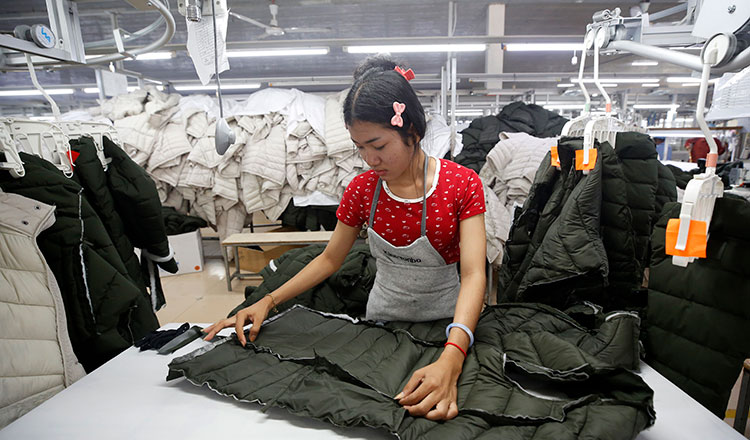
According to Mengdavid, Cambodia’s economy remains heavily dependent on labour-intensive industries such as garments, construction, and tourism—sectors that are increasingly under strain.
“Weakening global demand, shifting supply chains, and growing competition from other low-cost economies have reduced the effectiveness of these traditional growth drivers. At the same time, falling demand in the real estate sector and a slower-than-expected recovery in tourism have further dampened economic momentum,” Mengdavid said.
While noting that Cambodia maintained an average economic growth rate of around seven percent for nearly two decades before the COVID-19 pandemic, he agreed that Cambodia’s long-standing growth model is facing mounting pressure, raising concerns about the country’s ability to achieve its high-income ambitions by mid-century.
He also highlighted the rising frequency and unpredictability of external shocks affecting the country. These include regional tensions such as those along the Cambodia–Thailand border, as well as broader geopolitical developments like the Iran–US–Israel conflict and intensifying competition among major powers.
Such factors, he said, are contributing to slower growth and weakening Cambodia’s economic resilience. Without timely and effective policy responses, Mengdavid warned that Cambodia risks falling into the so-called middle-income trap—a situation where growth stagnates as low-cost advantages erode without sufficient gains in productivity or diversification.
To counter these risks, he urged the Cambodian government to accelerate industrial upgrading, invest in human capital, and modernise digital infrastructure. He also stressed the importance of diversifying economic drivers and strengthening resilience through balanced foreign policy engagement.
Maintaining strategic neutrality while deepening ties with global partners—including the United States, China, ASEAN, Japan, South Korea, the European Union, and Australia—will be key to enhancing Cambodia’s position within global supply chains, he added.
According to Vichet Lor, Vice-President of the Cambodia-Chinese Commerce Association (CCCA), 25 years is a long time and many developments can happen in between. “Caught between the competing interests of China and the United States, Cambodia must remain agile and adaptable in response to intensifying geopolitical and economic rivalry. Both internal and external challenges will require careful navigation in an increasingly volatile global environment,” he said.
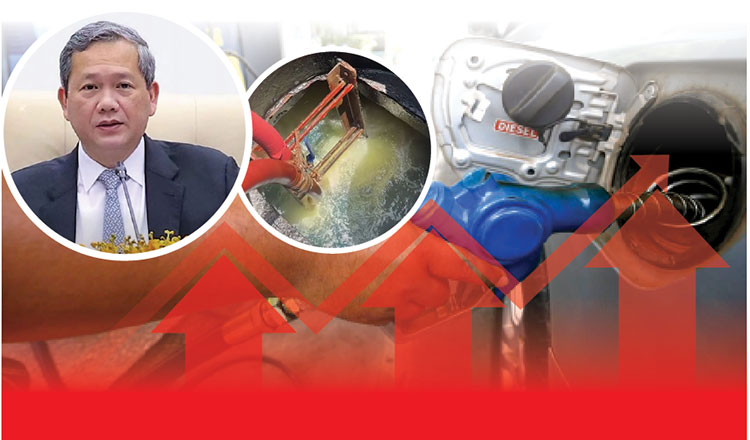
According to him, rising energy costs, partly driven by conflicts such as the Middle East war, could increase the cost of doing business, deter foreign investment, and contribute to inflation. “This would disproportionately affect low-income citizens, who make up a large share of the population. To address this, Cambodia should assess the true cost of doing business across sectors, identify inefficiencies, and implement measures to keep energy prices competitive,” Vichet said.
“Looking ahead, Cambodia’s economic strategy should focus on strengthening its competitiveness within ASEAN by investing in infrastructure, improving logistics, and streamlining export and customs processes. A key advantage lies in its young population, with a median age of 27, offering a flexible and cost-effective workforce capable of supporting long-term growth and adapting to the digital economy. Additionally, Cambodia should position itself to benefit from expanding consumer markets in China and India, which are expected to dominate by 2030,” he added.
As Cambodia looks toward its 2050 target, the message from economic experts and business community is clear: without bold reforms to reduce regulatory burdens and open up the economy, the country risks falling short of its high-income ambitions. The silver lining, however, is the committed leadership of the country that has shown a willingness to listen to private sector concerns, respond to long-standing challenges, and remain open to new ideas—offering a foundation for progress in the years ahead.
- 07:58 06/04/2026