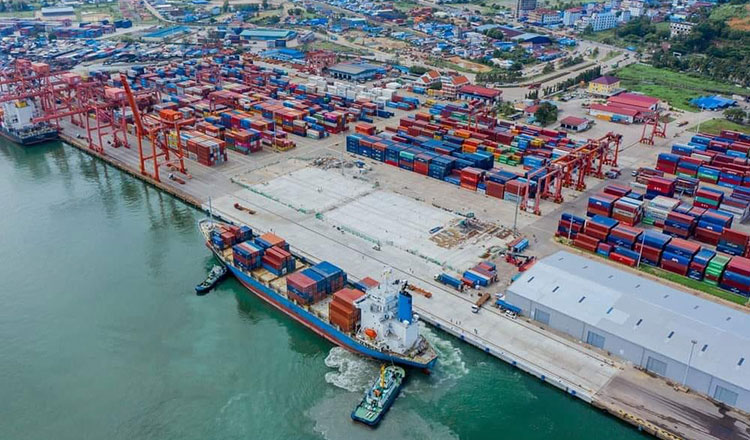
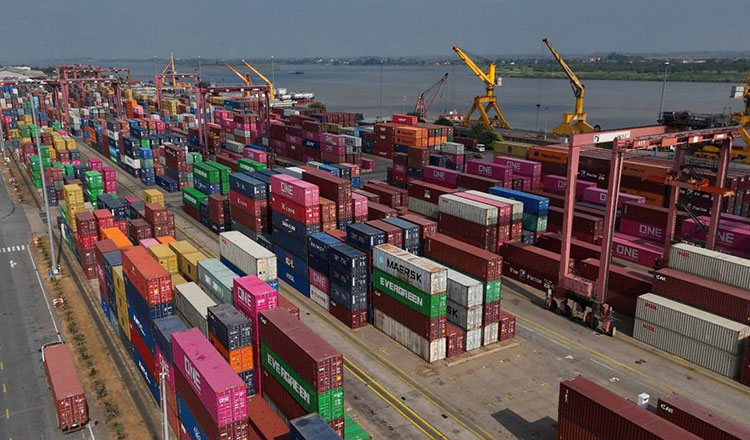
GFT exports earn $1.49B in January, rising by 12.8%
GFT exports earn $1.49B in January, rising by 12.8%
Despite structural challenges and global uncertainty, the GFT sector remains the backbone of the country’s economy and a key driver of industrial development.
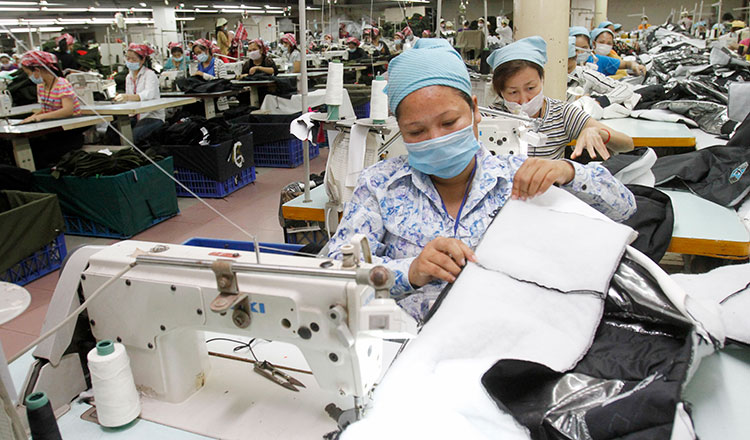
Cambodia’s garments, footwear and travel goods (GFT) sector began 2026 on a strong footing, generating nearly $1.49 billion in export earnings in January, a rise of 12.8 percent compared to January 2025, according to the trade data released by the General Department of Customs and Excise (GDCE) on Tuesday. The sector accounted for 51 percent of Cambodia’s total exports in January this year.
The figures highlight the sector’s resilience amid a still uneven global recovery and reinforce its central role in supporting employment, foreign exchange inflows, and industrial growth.
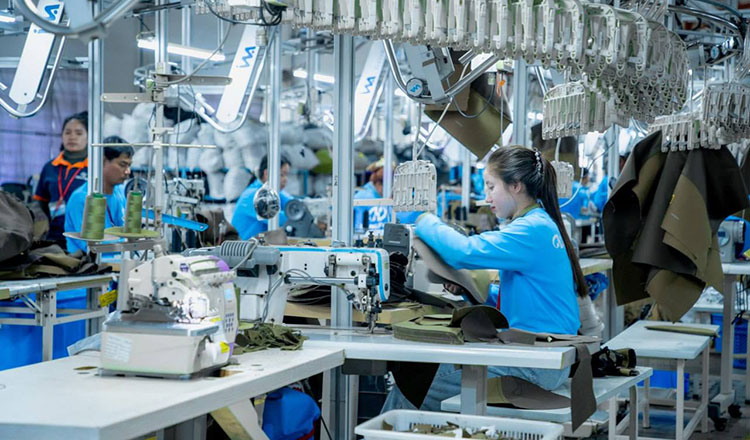
Garment exports continued to be the mainstay of the sector, with knitted apparel contributing more than $640 million, followed by non-knitted garments at $410 million. Together, apparel exports alone accounted for over $1.05 billion, reflecting steady demand from key markets such as the United States, the European Union, Japan and the United Kingdom. Improved order visibility from Western retailers and partial inventory normalisation have supported shipment volumes compared with the volatility seen in previous years.
Footwear and travel goods also remained strong performers. Footwear exports reached $196 million, while leather goods and travel articles added another $201 million. These segments have benefited from Cambodia’s gradual move up the value chain, with factories increasingly producing branded and higher-margin items rather than basic contract manufacturing. The category of other made-up textile articles, though smaller in scale, contributed $41.5 million.
Within the sector, exports of travel goods and leather articles showed the strongest growth this January with 66 percent year-on-year, reflecting Cambodia’s rising role in global luggage and bag supply chains. Footwear exports grew 16.9 percent year-on-year, supported by diversification beyond basic footwear.
Garment exports grew more moderately with knitted garments showing a rise of 5.7 percent, non-knitted garments 8.3 percent and other made-up textile articles 41.7 percent (though smaller in absolute value, showed strong momentum).
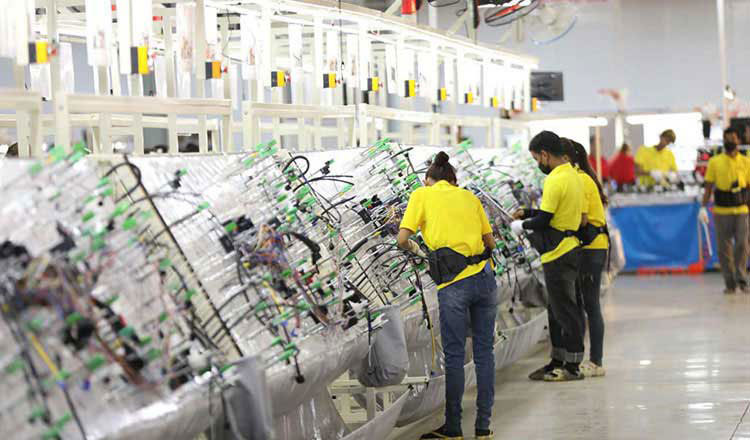
The GFT sector employs around 750,000 workers, predominantly women, making it not only an economic pillar but also the cornerstone of social stability. Wage growth, compliance with international labour standards and preferential market access under schemes such as the EU’s Everything But Arms (EBA) arrangement continue to shape competitiveness. While Cambodia lost partial EBA preferences in recent years, exporters have adapted by diversifying markets and improving productivity.
Economist Duch Darin told Khmer Times that the sharp rise in GFT exports is indicative of the ongoing strength and agility present within Cambodia’s primary manufacturing sector. “Political stability, open trade policies, strengthening of infrastructure and a young and efficient labour force all make Cambodia an attractive manufacturing base amid uncertainties across the globe,” Darin said.
He added that GFT exports constituting 51 percent of total exports underscores its importance in labour-intensive employment, foreign currency earnings and inclusive growth, especially for female workers. “This performance is the result of capacity enhancement in the industry, forward integration of its value chains and incremental widening of products base and market,” Darin observed.
Looking ahead, industry stakeholders, however, caution that risks remain. Rising energy costs, regional competition from Vietnam and Bangladesh, and evolving sustainability requirements from global buyers could pressure margins. However, ongoing investments in logistics, renewable energy use in factories, and skills upgrading are expected to support medium-term growth.
Overall, the GFT export performance in January 2026 sends a clear signal: despite structural challenges and global uncertainty, Cambodia’s GFT sector remains the backbone of the country’s economy and a key driver of industrial development in the months ahead.
- 09:37 12/02/2026