US remains Cambodia’s largest export market as trade surges
US remains Cambodia’s largest export market as trade surges
The strong growth reflects the continued resilience of Cambodia’s export-driven manufacturing sector, particularly amid global economic uncertainty and shifting supply chains.
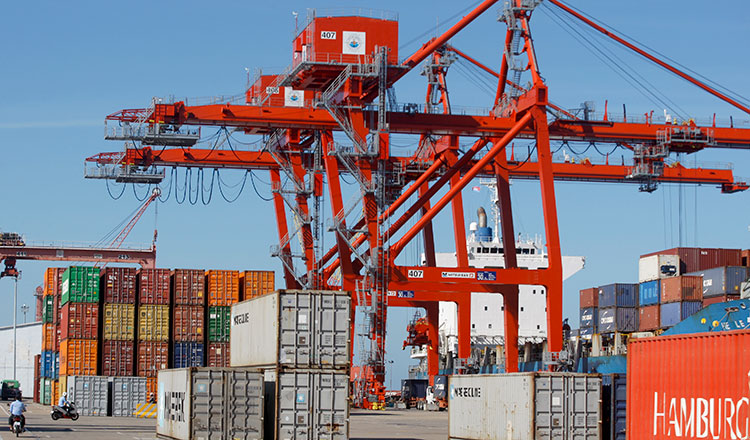
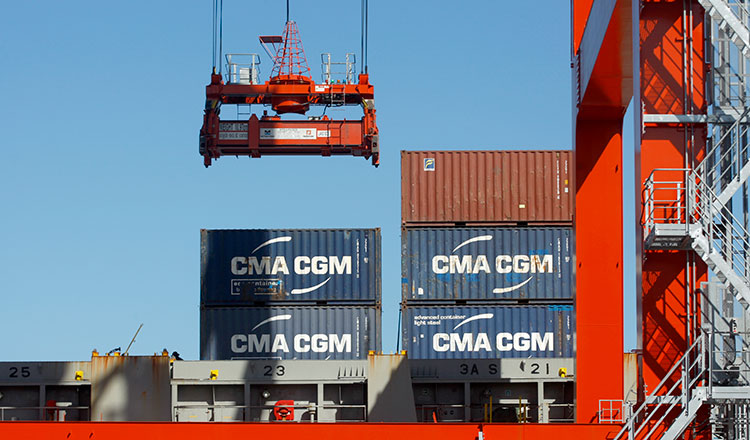
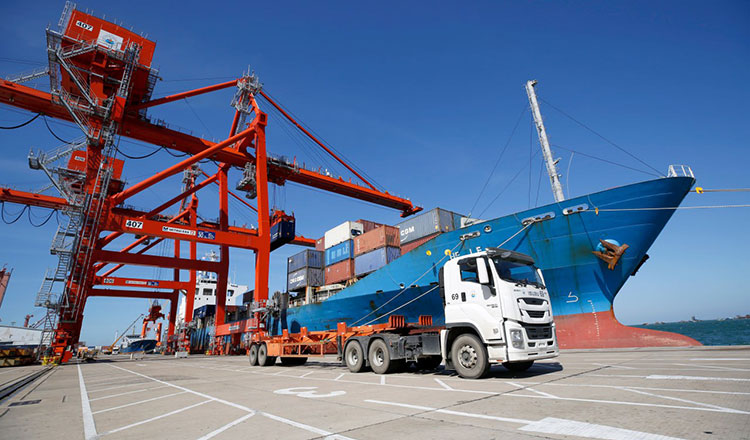
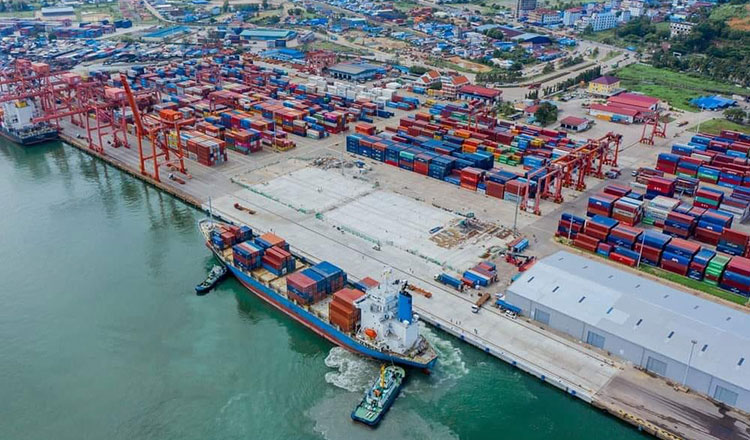
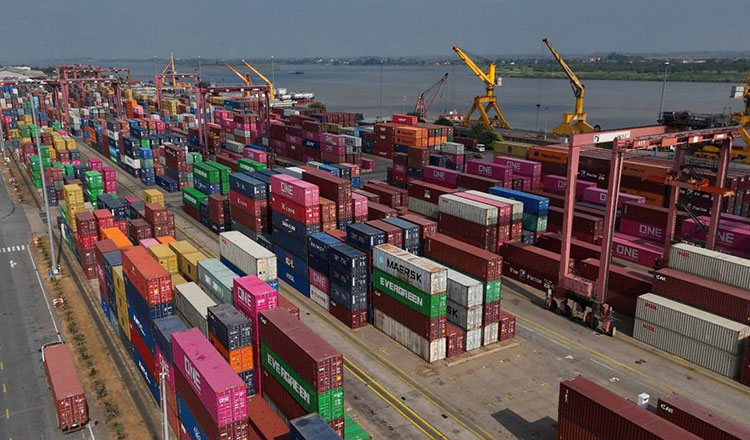
The United States remained Cambodia’s largest export market in January 2026, as the Kingdom’s shipments to the American market soared sharply, according to the latest data released by the General Department of Customs and Excise of Cambodia (GDCE) on Tuesday.
Cambodia exported $1.28 billion worth of goods to the US during the month, while bilateral trade between the two countries reached $1.32 billion, representing a 48 percent increase compared with the same period last year.
Exports to the US climbed 47.6 percent year-on-year, while imports from the US amounted to $38.84 million, up 63.5 percent from January 2025, the GDCE data showed.
The report confirmed that the US remained Cambodia’s top export destination, followed by Vietnam, Japan, China and Canada. The strong growth reflects the continued resilience of Cambodia’s export-driven manufacturing sector, particularly amid global economic uncertainty and shifting supply chains.
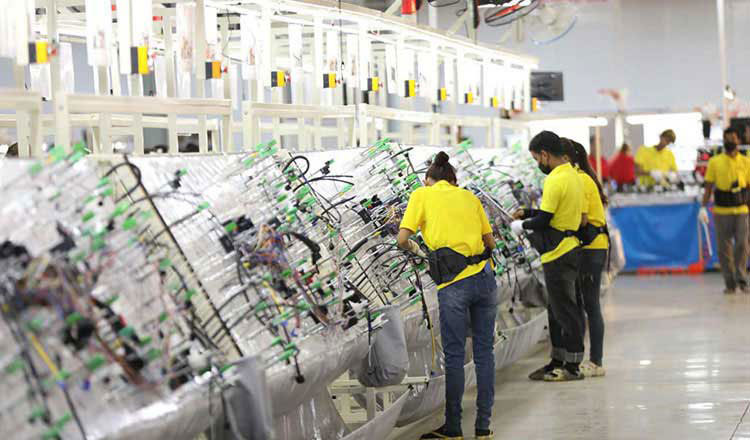
Cambodian exports to the American market are largely dominated by garments, footwear, travel goods and other manufactured products, which continue to benefit from steady consumer demand.
These sectors play a crucial role in supporting employment, foreign exchange earnings and overall economic growth.
Trade analysts say the latest figures underline the strategic importance of the US market for Cambodia, as exporters seek to maintain competitiveness and diversify products while navigating a challenging global trade environment.
Anthony Galliano, Group CEO of Cambodian Investment Management Holdings and Vice-President of the American Chamber of Commerce in Cambodia (AmCham Cambodia), described the current momentum as the result of a “symbiotic trade relationship” between the two countries.
“Cambodia and the United States are currently benefiting from a symbiotic trade relationship bolstered by a confluence of favourable factors,” Anthony told Khmer Times.
He pointed to the robust performance of the US economy as a central driver. The United States real GDP reached approximately $30.6 trillion in the third quarter of 2025, recording a strong 4.4 percent annualised growth rate, following a 3.8 percent expansion in the second quarter.
In 2025, US retail sales grew at an annual rate of 3.7 percent, reaching approximately $5.45 trillion. Within that, the garment sector expanded by roughly 3 percent, while travel goods increased at an estimated 8 percent year-on-year.
“With export concentration of approximately 45 percent in the world’s largest consumer market and economy, and the US as a developed economy growing faster than its peers, Cambodia benefited from the demand equation,” Anthony said.
He added that Cambodia’s competitive advantages have further strengthened its position. Preferential tariff rates and competitive product pricing have supported exporters, particularly when compared with competitors such as China, which faces an effective tariff rate of around 32 percent on garments.
“With reduced tariffs relative to competitors, diversification of exports that now include rubber tyres and other agricultural products, and the government’s initiatives to improve productivity, logistics and compliance with international standards, Cambodia is benefitting from a perfect storm,” he noted.
The US market plays a pivotal role in Cambodia’s manufacturing sector, not only in terms of export value but also employment, investment flows and long-term industrial development.
Anthony acknowledged that the high concentration of exports to a single market presents structural risks. “Substantial concentration and dependency of the Kingdom’s exports with the United States, while deeply concerning, has been a great benefit given the unique size, demand and growth of the US economy and market,” he said.
The bilateral trade relationship has weathered policy shifts in recent years. The expiration of the Generalized System of Preferences in 2020 posed challenges, followed by the imposition — and subsequent reduction — of tariffs in 2025 on certain Cambodian exports.
“Bilateral trade between the nations has survived these hurdles and thrived,” he said.
Anthony stressed that, at least in the short term, the United States will remain Cambodia’s most important export market.
“Undoubtedly, the US market is, and will be in at least the short term, the Kingdom’s most important export market, until the reliance on low-complexity manufacturing diminishes and higher-skilled manufacturing opens new opportunities in products and subsequently access to wider markets,” he added.
Despite the strong figures, exporters face a complex external environment shaped by evolving trade policies, geopolitical tensions and shifting global supply chains.
“The greatest risk is uncertainty of application of trade policy by the current US administration, which can shift as a consequence of geopolitical issues rather than strictly trade matters,” Anthony said.
He noted that Cambodia was the first country to enter into a trade agreement with the new US administration, placing the Kingdom in a relatively favourable position. He also observed that the US has little incentive to reshore production of goods that Cambodia manufactures, particularly labour-intensive consumer products.
- 09:35 12/02/2026