Cambodia makes strong start to 2026 as trade surges 19% in Jan
Cambodia makes strong start to 2026 as trade surges 19% in Jan
Economists say the January figures offer encouraging signs for the Kingdom’s economic outlook in 2026, following years of uncertainty caused by the pandemic and global economic headwinds, besides the border conflict with Thailand in the second half of 2025.
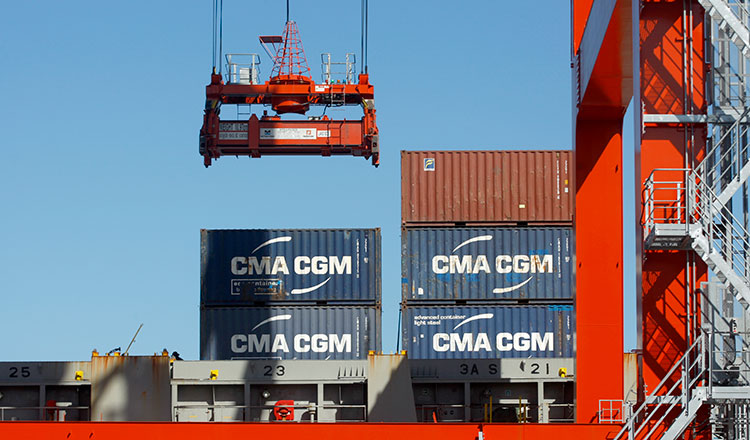
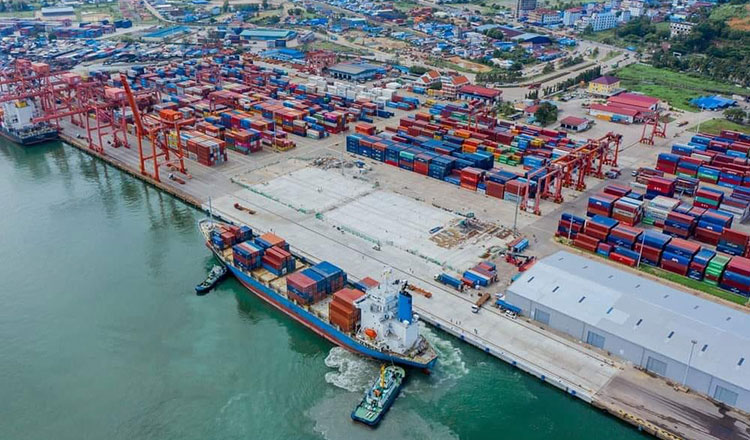
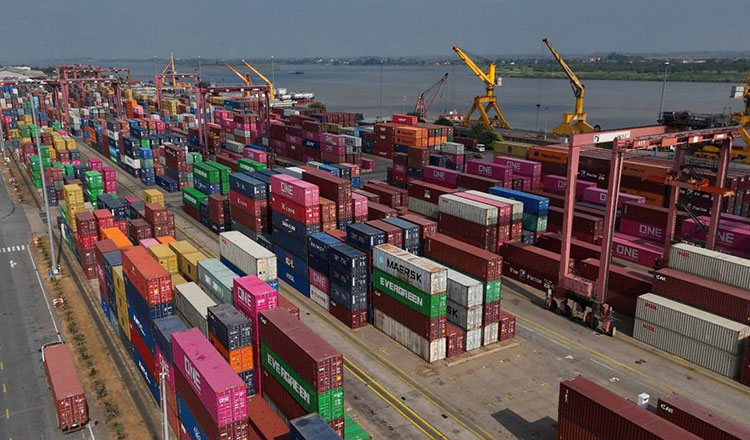
Cambodia has kicked off the New Year with a robust expansion in international trade, underpinned by strong export growth and rising demand in key overseas markets, according to official data released yesterday.
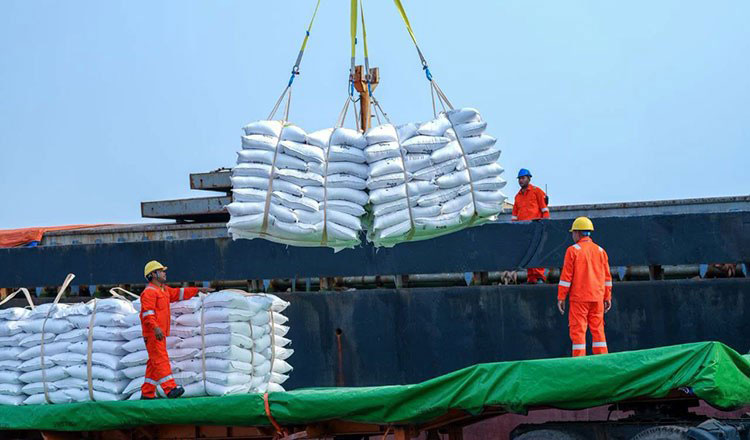
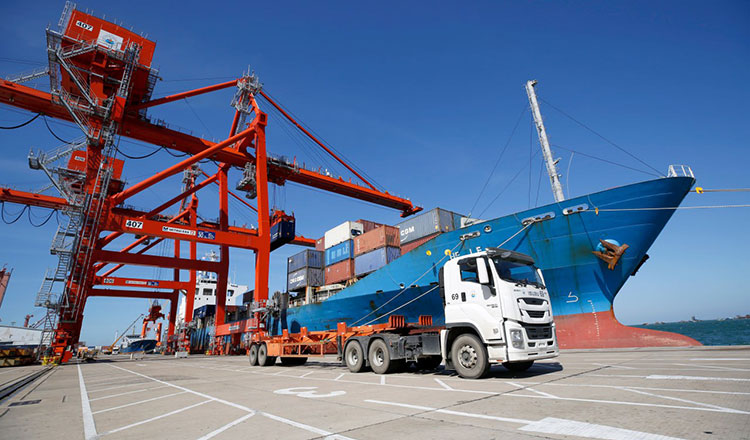
Trade figures from the General Department of Customs and Excise (GDCE) show that Cambodia’s total international trade crossed $6 billion in January 2026, marking a 19.1 percent increase compared with the same month last year. Exports rose sharply by 26.6 percent to $2.91 billion, while imports climbed 12.8 percent to $3.1 billion, reflecting sustained economic momentum and growing commercial activity.
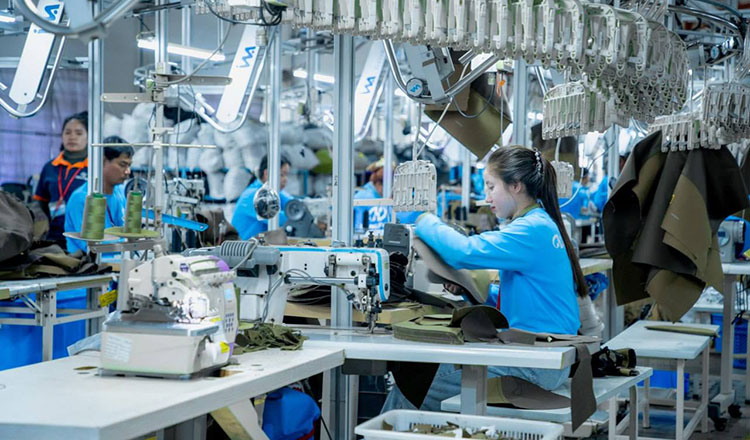
The United States continued to dominate as Cambodia’s largest export destination, accounting for 43.9 percent of total exports. Shipments to the US were valued at approximately $1.28 billion in January, highlighting the country’s continued reliance on the American market, particularly for garments, footwear, travel goods and other manufactured products.
Vietnam ranked as Cambodia’s second-largest export market, absorbing 11.6 percent of total exports, or about $337 million. Japan followed with a six percent share, valued at $176 million, while China accounted for 5.6 percent, or roughly $164 million.
Notably, exports to China recorded the fastest growth among major markets, surging by 59.3 percent compared with January 2025. Exports to the US also posted a strong increase of 47.6 percent year-on-year, while shipments to Vietnam rose by 21.1 percent and exports to Japan by 16.6 percent.
Trade officials attributed the sharp rise in exports to a combination of recovering global demand, improved supply chain conditions and Cambodia’s expanding network of trade agreements. In recent years, Cambodia has benefited from preferential market access under schemes such as the Regional Comprehensive Economic Partnership (RCEP) and bilateral free trade agreements with China and South Korea, which have helped diversify export destinations beyond traditional markets.
On the import side, China remained Cambodia’s largest source of goods, supplying $1.74 billion worth of products in January, equivalent to 56.1 percent of total imports. Imports from China increased by 19.9 percent year-on-year, reflecting Cambodia’s heavy dependence on Chinese raw materials, machinery, construction materials and consumer goods.
Vietnam was the second-largest source market, with imports valued at $382 million. However, this represented a 2.5 percent decline compared with January 2025, suggesting a slight slowdown in cross-border trade with its neighbour at the start of the year.
Singapore emerged as a notable outlier among import partners, with shipments valued at $166 million—an extraordinary jump of 252 percent year-on-year. The surge points to rising demand for Singaporean fuel, chemicals, electronics and other high-value goods, as well as Cambodia’s growing role as a regional trade and logistics hub.
Economists say the January figures offer encouraging signs for Cambodia’s economic outlook in 2026, following years of uncertainty caused by the pandemic and global economic headwinds besides the border conflict with Thailand in the second half of 2025.
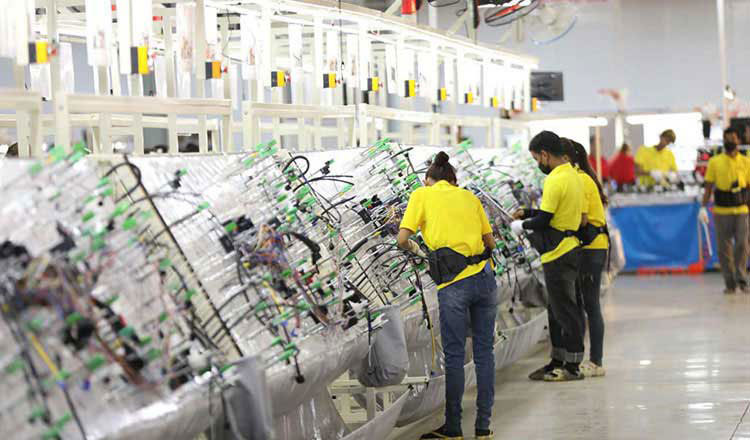
Cambodian economist Duch Darin told Khmer Times that the surge in trade in January 2026 can be explained by a mix of cyclical and structural considerations. “On the export front, the strong growth reflects robust demand from major markets such as the US and EU, improved competitiveness of goods manufactured in Cambodia, as well as trade preferences and supply-chain diversification resulting from global firms seeking reliable production hubs.
“Imports rose due to strong domestic economic activity, including increased demand for machinery and raw materials required for production. Taken together, these developments indicate robust growth in both external demand and domestic investment and underscore Cambodia’s growing embeddedness in value chains at the regional and global levels,” Darin said.
However, analysts also caution that the country’s widening trade deficit—driven by imports outpacing exports in absolute terms—remains a structural challenge. Cambodia continues to rely heavily on imported inputs for production, making it vulnerable to external price shocks and currency fluctuations.
- 08:12 11/02/2026