Cambodia eyes new growth path as 2029 LDC graduation nears
Cambodia eyes new growth path as 2029 LDC graduation nears
Cambodia’s impending LDC graduation is viewed differently by different people, who can be best described as those who see glass half full or glass half empty. While there cannot be any dispute that the UN’s LDC did help Cambodia overcome some of its worse phase, but it’s also time for the Kingdom to wriggle out of the bracketed list of nations that benefit from duty-free channels. The nation is now self-sufficient and has made rapid advances in so many parameters that it should exit with its head held high. The question is whether Cambodia is ready? In the Pentagonal Strategy – Phase I, economic diversification and market expansion have been elevated to top-tier national priorities. The government is working towards a smooth transition strategy with international partners to drastically trim administrative red tape, bolster digital customs processes, and improve trade facilitation. As one senior government official tells Khmer Times, LDC graduation means we are playing by new rules, and our response must be proactive market proliferation. Of course, preparing for the 2029 graduation requires a multi-faceted approach, including legal and institutional reforms, strengthening productive capacity, and facilitating export diversification. The immediate road to post-2029 could be bumpy, but that should not deter Cambodia from becoming a self-reliant country
For three decades, Cambodia’s economic engine has run on a simple, highly effective formula, including importing fabrics, leveraging an affordable local workforce to stitch them into garments, and shipping them duty-free to shopping malls in the western countries. This export-led pipeline, heavily protected by preferential trade arrangements, transformed a post-conflict nation into one of the world’s fastest-growing economies.
However, the year 2029 is set for Cambodia to officially graduate from the United Nations’ Least Developed Country (LDC) category. Means that the expiration of the vital preferential trade schemes that have fueled Cambodia’s historic export growth.
Most notably, the European Union’s Everything But Arms (EBA) initiative and similar Generalised System of Preferences (GSP) programs in countries like Canada and the UK will expire, replacing duty-free channels with standard Most-Favoured-Nation (MFN) tariffs.
With only a few years left in its transitional window, Cambodia is seeking to achieve sustainable growth of exports with free trade agreements and upgrade the existing trade preference schemes, such as GSP to GSP Plus, which requires major reforms and sustained efforts to meet the program’s requirements.
To secure long-term, sustainable economic growth, Cambodia has rapidly expanded its export markets and transitioned its industrial base toward high-value sectors. The journey ahead represents a high-stakes balance of immense structural challenges and golden opportunities for economic maturity.
Loss of LDC status
The loss of LDC status hits the very core of Cambodia’s current industrial identity—garment, footwear, and travel goods (GFT) and agriculture, according to a joint policy brief in late 2024 titled “Cambodia’s Graduation from Least Developed Country (LDC) Status: Preparedness and Potential Economic and Social Impacts” by the Ministry of Planning and the United Nations Development Programme (UNDP).
According to the report, estimates are that the country’s GDP growth could slow by 0.5 to 1.5 percentage points, potentially leading to about 165,000 job losses, particularly in the garment sector, which heavily relies on women workers.
Additionally, around 432,000 people could be pushed into poverty if timely measures are not implemented, the report stated.
However, the report stated, with strategic interventions, Cambodia can mitigate these negative impacts and benefit from graduation, citing that by focusing on sectors such as garments, rice milling and bicycles, the country can maintain its competitive edge and sustain economic growth.
Because Cambodia currently lacks strong backward linkages (domestic supply industries that feed raw materials into factories), its reliance on imported raw materials presents a major operational bottleneck. If a factory must pay standard import duties on Chinese yarn and then face high export tariffs because it fails the new local content rules, its competitive edge evaporates.
The government is treating the 2029 deadline not as an economic cliff, but as a catalyst for overdue structural evolution. Under Prime Minister Hun Manet’s Pentagonal Strategy – Phase I, economic diversification and market expansion have been elevated to top-tier national priorities.
New pillars of growth
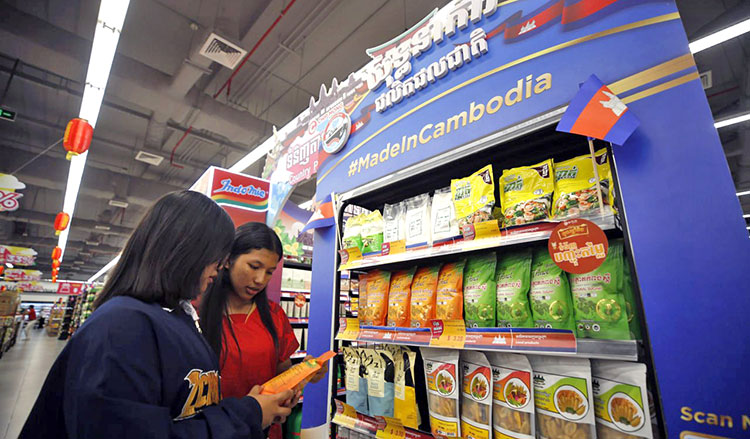
The Ministry of Commerce (MoC) is leading this defence through a number of bilateral and regional Free Trade Agreements (FTAs). By moving away from an over-reliance on the EU and US markets, which collectively absorb nearly a third of total Cambodian exports, the Kingdom is looking to diversify markets.
A senior MoC official has emphasised that the strategy relies on commercial negotiation, citing that the Regional Comprehensive Economic Partnership (RCEP), alongside bilateral agreements with China (CCFTA) and South Korea (CKFTA), are functioning as the new pillars of growth.
“Graduation means we are playing by new rules, and our response must be proactive market proliferation,” Penn Sovicheat, Secretary of State and MoC Spokesman, told Khmer Times.
The MoC is actively pursuing and implementing trade pacts with the United Arab Emirates and exploring markets across Latin America, Africa, and the Middle East.
Additionally, the ministry is working closely with international partners to implement a Smooth Transition Strategy (STS) that focuses heavily on cutting administrative red tape, digitalising customs processes, and improving trade facilitation so our logistical speed offsets the loss of tax exemptions.”
Lim Heng, Vice-President of the Chamber of Commerce, viewed the year 2029 of exiting LDC status as a source of national pride, and the private sector is fully preparing for the eventual phase-out of preferential trade benefits.
“Exit LDC status will raise Cambodia’s standing on the international stage, allowing the country to compete with many nations globally,” Heng told Khmer Times.
“It signals to global institutional investors that Cambodia is a stable, middle-income destination with reliable legal frameworks,” he added.
While Cambodia may lose some preferential trade benefits such as GSP and EBA, Heng encouraged manufacturers and stakeholders to strive for better diversification and improvement in the quantity and quality of their products and services, to ensure that Cambodia’s growth continues post-LDC transition.
“Free trade agreements, regional trade agreements, and trade schemes are huge markets for Cambodia. It is the catalyst in attracting new investment. So, Cambodia has to secure more trade agreements with other markets to make itself a potential destination for investment,” Heng said.
CCC’s vice president also suggested that Cambodia needs to transition from basic assembly to high-potential, complex manufacturing sectors, specifically electronics and automotive components.
Cambodia’s exports of electrical equipment and electronic components saw significant growth in 2025 as the country is moving beyond garment manufacturing to electronics and automotive parts.
Figures from the Ministry of Commerce showed that the Kingdom exported electronic equipment and parts valued at $924 million in 2025, up 35.7 percent from $681 million in 2024.
“The growth in electronics and auto parts showed that the country’s path forward lies in machinery and electronics assembly, such as wiring and semiconductor components. These sectors require higher margins and build deeper industrial roots,” Heng said.
Opening new trade doors
As Cambodia’s impending LDC graduation is the ultimate indicator of its success development success, the relevant ministry must continue opening geopolitical trade doors, the private sector must innovate to absorb compliance shocks, and structural reforms must lower the costs of power and logistics.
Ky Sereyvath, an economic researcher at the Royal Academy of Cambodia, suggests that the government, through relevant ministries and institutes, has to facilitate local producers and entrepreneurs to register formally to make the good ecosystem for them in producing quality and standard products for the domestic market and exports.
“The private sector cannot guarantee product quality without the government’s involvement. Licenses are a measurement metric, but do not let these licenses and measurements become a trap for them, causing fear and discouragement in applying for licenses. This is a challenge that needs to be addressed, and how to encourage easy registration,” Sereyvath said in an event held on May 29 at the Royal Academy of Cambodia.
Cambodia has been formulating legal and institutional reforms and diversification, which are of critical importance for strategic planning as Cambodia prepares to graduate from its Least Developed Country (LDC) status.
Regarding the concerns, the Ministry of Commerce is actively working on trade policies to respond to these changes.
“The Ministry of Commerce has been formulating trade policies to respond to the gradual loss of trade preferences, legal flexibilities, and financing programs, which are important contributors to Cambodia’s trade and economic development,” its Minister Cham Nimul has recently said.
The minister stressed that preparing for the 2029 graduation requires a multi-faceted approach, including legal and institutional reforms, strengthening productive capacity, and facilitating export diversification.
“Preparing for graduation from least developed country status requires legal and institutional reforms, strengthening of productive capacity, facilitation of export diversification, and continued deepening of trade and economic integration into regional and global markets,” Nimul said.
The World Trade Organization (WTO)’s dispute settlement system remains functionally impaired, and major economies are increasingly resorting to unilateral measures, tariffs, export controls, and industrial policies that bypass or directly challenge multilateral disciplines.
Supply chains that were built on the logic of efficiency and comparative advantage are now being reorganised by geopolitical factors, with friend-shoring, near-shoring, and decoupling reshaping the flow of global production.
Tariff barriers that many had assumed were features of the past are re-emerging in new and more disruptive forms, often framed in national security terms.
Cambodia has achieved a great deal in the field of international trade over the past three decades. From a largely agrarian economy emerging from conflict and isolation, we have become an increasingly open and trade-oriented country, participating in the ASEAN Free Trade Area (AFTA), the ASEAN-led framework agreements with dialogue partners, the Regional Comprehensive Economic Partnership (RCEP), and bilateral frameworks that have expanded our market access and deepened our integration into regional and global value chains.
The garments, footwear, and travel goods (GFT) industries have employed over a million Cambodian workers and generated a lot of export revenue. More recently, the agricultural exports, rice, cashew nuts, cassava, and fresh produce, have found growing markets across the region and beyond.
Cambodia exported $15.5 billion worth of GFT products in 2025, a year-on-year growth of 15.7 percent.
The garment, footwear, and travel goods industry is Cambodia’s largest foreign exchange earner, accounting for approximately 50 percent of the Kingdom’s total export value, according to the report.
The sector currently consists of more than 1,500 factories and branches, employing over 900,000 workers, mostly women, according to the Ministry of Labor and Vocational Training.
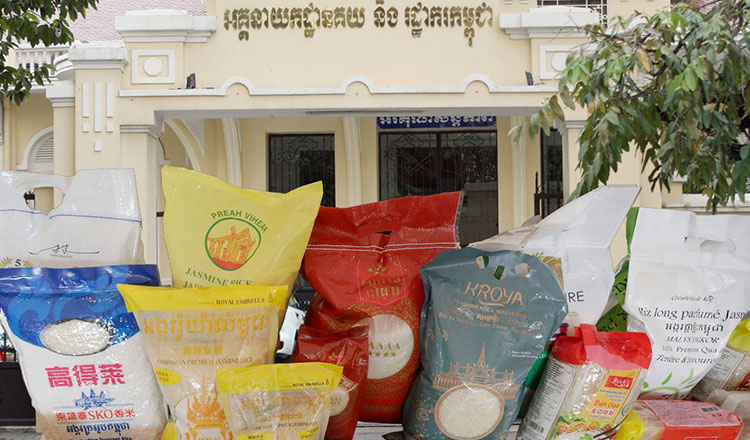
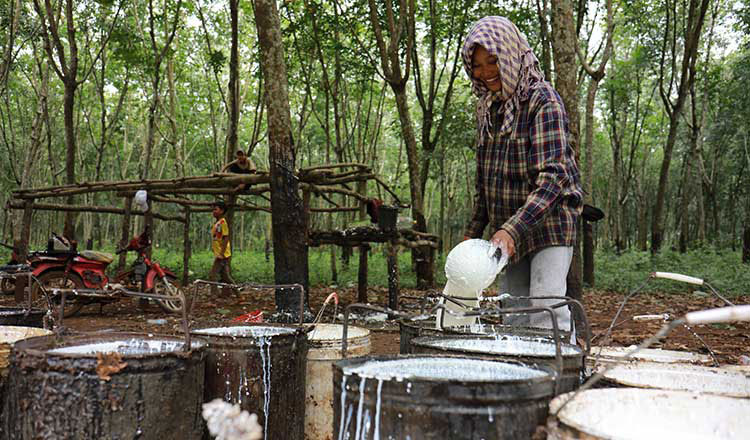
Additionally, in 2025, Cambodia’s agricultural exports reached $6.46 billion in revenue, a 7.3 percent increase from 2024. The country shipped 14.9 million tonnes of produce to 90 international markets. Key drivers included rice, rubber, cassava, mangoes, bananas, peppercorn, cashew nuts, longans, and durians.
CP-TPP mantra
Cambodia’s export base remains concentrated. The country’s preferential access to major markets, including the generalised system of preferences benefits Cambodia has long relied upon, is not permanent and is subject to the sovereign trade policy decisions of the trading partners, said Sok Siphana, Senior Minister in charge of Special Missions.
“As we graduate from Least-Developed Country (LDC) status, which remains on the near horizon of 2029, the preferential arrangements that have supported our export growth will diminish. We must replace them with negotiated, legally binding, and reciprocal frameworks. The CP-TPP is our answer,” Siphana said at a National Consultation Workshop on “Cambodia’s Trade Resilience and Competitiveness for the Comprehensive and Progressive Agreement for Trans-Pacific Partnership (CP-TPP)” held on May 22.
The CP-TPP is not just any free trade agreement; it offers Cambodia preferential access to some of the world’s most dynamic markets, with twelve current members and a thirteenth soon to join, while covering the full architecture of modern economic domains, including goods, services, investment, intellectual property, and digital trade.
Membership would also send a strong signal to investors that Cambodia is committed to a rules-based, high-standard investment environment. But the agreement is very demanding because it is comprehensive, it requires legislative gap assessments, regulatory reform, deep technical expertise, and sustained whole-of-government coordination.
“As global trade is under strain from weakened multilateralism and geopolitical shifts, positioning the CP-TPP as a (Cambodia’s) key instrument for diversification, reform, and preparation for LDC graduation in 2029,” Siphana said.
The government has elevated the Fact-Finding Mission on CP-TPP accession into a formal Negotiating Working Group. With this directive, Cambodia has crossed an important political threshold.
In a moment of unusual turbulence in the global trading system, small open economies like Cambodia cannot afford to stand still.
“We must be strategic, we must be proactive, and we must pursue every opportunity to diversify our trade relationships, deepen our integration into rules-based frameworks, and build the domestic institutional capacity to compete. The CP-TPP, in this context, is not just a trade agreement, but a new source of growth that Cambodia seeks,” Siphana said.
Looking forward, Cambodia has to successfully use this countdown to deepen its domestic supply chains and upgrade its workforce skills. The year 2029 will be remembered as the moment the Kingdom trains and asserts itself as a resilient, diversified powerhouse on the regional and global stages.
- 08:23 01/06/2026