Low labour costs slow automation in Cambodia’s garment sector, WB says
Low labour costs slow automation in Cambodia’s garment sector, WB says
Rather than blaming infrastructure deficits or a skills gap, the report highlights a purely economic decision in which firms decline to automate because advanced equipment is financially unviable compared to low local wages.
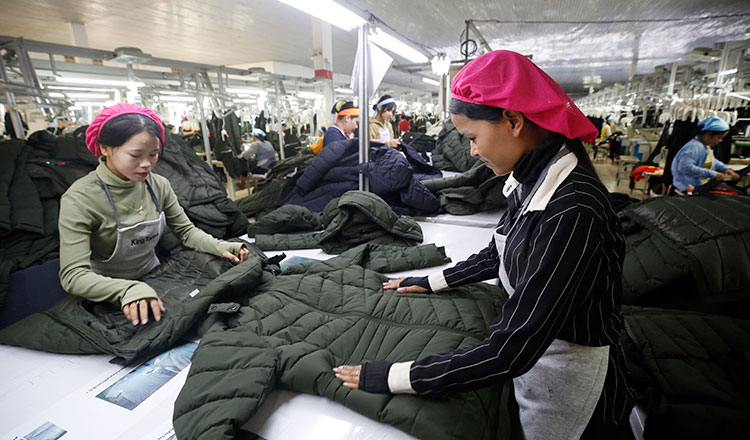
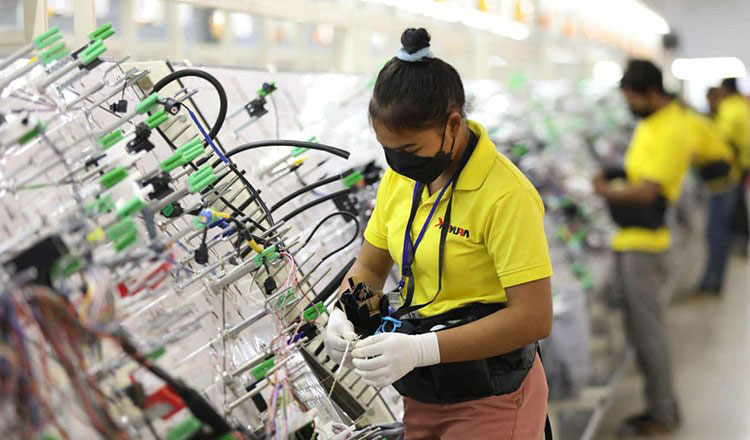
Low labour costs in Cambodia make automated cutting and sewing equipment less appealing to garment manufacturers, as technology remains expensive compared to local wages, according to the World Bank.
The finding appeared in the World Development Report 2026, titled “The Promise of Artificial Intelligence”, posted on the World Bank Group Publication official Facebook page on Tuesday.
The report examined how developing economies can benefit from artificial intelligence (AI) by adopting existing technologies, adapting them to local needs, improving productivity and addressing barriers such as skills shortages, infrastructure gaps and limited access to quality data.
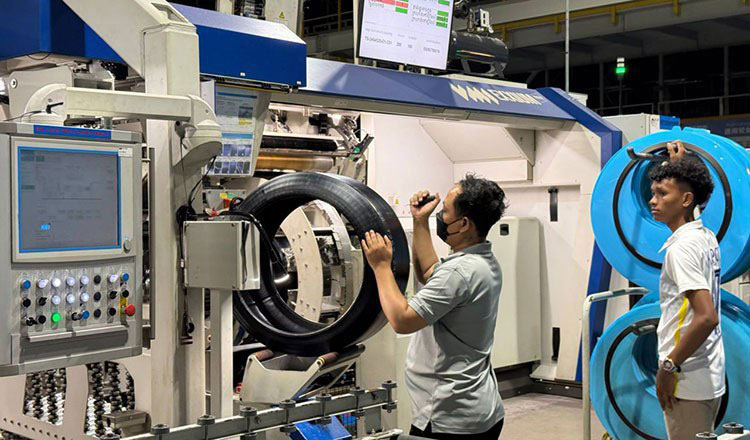
Discussing the factors required to make AI productive, the World Bank noted that automated cutting and sewing equipment has existed for decades but remains uncommon in countries such as Bangladesh, Cambodia and Vietnam.
The report explained that the limited use of such equipment is not necessarily due to a lack of skills or infrastructure. Instead, firms may choose not to adopt the technology because its cost is relatively high compared with local labour costs.
The finding illustrated how economic considerations influence technology adoption, as businesses weigh the potential productivity gains against the costs of investing in new equipment.
For manufacturers, the availability of advanced technology alone does not guarantee adoption if the financial benefits do not justify the investment.
The report recommends that developing economies prioritise adopting existing AI technologies and adapting them to local needs rather than focusing primarily on developing advanced AI systems from scratch.
For Cambodia, this approach could involve using commercially available tools and specialised AI applications suited to local economic conditions, languages and institutional needs.
Such an approach could allow businesses and public institutions to explore practical applications without having to develop expensive, advanced systems independently.
However, effective AI adoption also requires reliable electricity, internet connectivity, digital skills and quality data. Limited access to these resources could slow adoption and prevent businesses and communities from benefiting fully.
The availability of appropriate skills and infrastructure is therefore important alongside the affordability and suitability of the technology. For businesses, the report highlighted the importance of assessing whether new technologies can improve productivity enough to justify their costs.
The economic case for automation may differ across industries and firms, depending on labour costs, investment requirements and the tasks that technology can perform.
Cambodia was among 12 lower-middle-income economies that responded to the World Bank’s AI and Data for Better Governance Survey. The survey examined AI use, barriers and governance across digital agencies and public-sector areas including healthcare, education, taxation, public finance, civil service and procurement.
The Cambodia Academy of Digital Technology and Cambodia’s Digital Government Committee were also acknowledged among the organisations consulted or providing input to the report.
However, the report does not provide detailed data on Cambodia’s AI adoption rate or assess its economic impact, leaving unclear how widely the technology is used by local businesses and public institutions.
On September 30, the National Council for Minimum Wage voted to maintain the monthly minimum wage for Cambodia’s garment, footwear, travel goods and bag workers at $210 for 2027.
However, Prime Minister Hun Manet subsequently approved an additional $2 per month, raising the minimum wage to $212 for next year, while maintaining the temporary $2.50 monthly allowance for workers’ transportation and accommodation.
- 07:53 22/10/2026