Agri-product exports maintain strong growth momentum
Agri-product exports maintain strong growth momentum
Booming commodity growth reinforces agriculture’s export role, paving the way for domestic processing and value addition.

Cambodia’s agricultural exports recorded strong growth in key commodities like cashew nuts, milled rice, rubber, and tropical fruits during the first nine months of 2026, driven by strengthened value chains and expanded export opportunities.
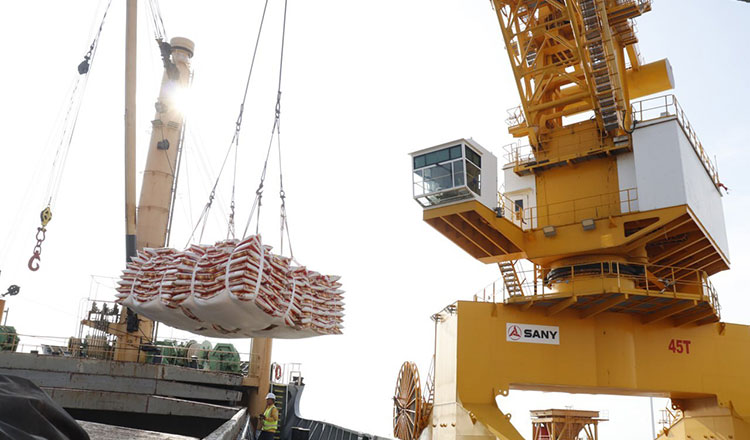
According to Ministry of Commerce data released Monday, Cambodia’s milled rice export revenues rose 25.4% year-on-year to $496 million during the first nine months, up from $396 million in the same period last year.
Cashew nut exports generated $1,177 million, a 47% increase from $801 million, while rubber exports reached $455 million, up 25.8% year-on-year, the report read.
Cassava exports maintained a steady momentum with a total of $531 million in exports, an increase of 3.4% from $513 million in the corresponding period of 2025.
Similarly, banana exports also rose significantly, generating $180.33 million, compared with $132.8 million a year earlier.
Other agricultural and agro-industrial products exported included fresh mangoes, pepper, longan, sugar, corn and fisheries products.
China, ASEAN nations, EU countries, Japan, South Korea and the United Arab Emirates are the major markets for Cambodia’s agricultural items.
The figures underscore the vital role of agriculture in Cambodia’s export economy, with strong performance across key commodities creating opportunities to scale up domestic processing, enhance quality, and boost value addition before reaching international markets.
Minister of Agriculture, Forestry and Fisheries Dith Tina said cooperation among government institutions, the private sector and agricultural communities was essential to strengthening agricultural value chains and accelerating the sector’s development.
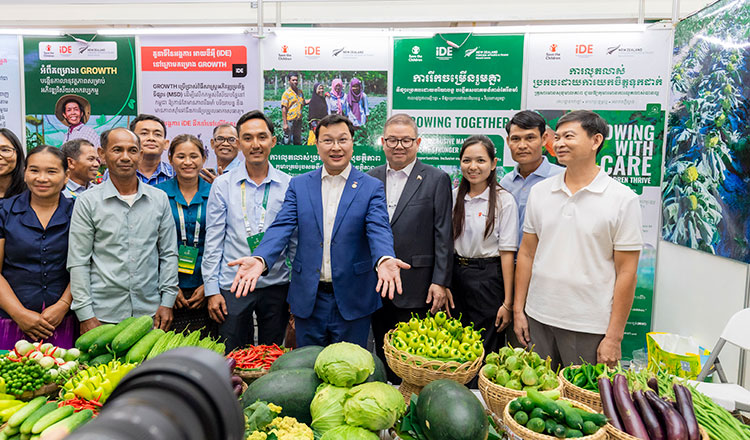
Speaking at the closing ceremony of the second Cambodia Agriculture Forum and Expo in Phnom Penh on Sunday, Tina stressed that closer collaboration would help create a more favourable investment environment and build a stronger agricultural ecosystem.
“Close collaboration and participation in Cambodia’s agricultural sector are an important factor and bring many benefits in finding opportunities for farmers, promoting agricultural technology and modernisation, entrepreneurship, and increasing value-added to ensure food security, improve people’s livelihoods, and support national economic growth,” he said.
The minister called on private-sector players and other stakeholders to maintain close engagement with agricultural communities, establish supply contracts with farmers and invest in agricultural processing and cold-chain logistics.
He also encouraged financial institutions and business operators to develop flexible financing packages and offer low-interest loans suited to the needs of agricultural producers, while strengthening value chains and improving access to domestic and international markets.
Tina further urged farmers to organise themselves into modern agricultural communities to reduce production costs, improve efficiency and gain greater benefits from collective production and marketing.
Agriculture continues to be one of the four key pillars of the Cambodian economy.
The government’s Pentagonal Strategy-Phase I prioritises the transition from household-based production to commercial farming, with a clear focus on increasing farmers’ incomes through high-value agro-processing.
- 07:45 27/10/2026