

How Cambodia transformed into a major global rice basket
How Cambodia transformed into a major global rice basket
Cambodia’s historic milestone of exporting one million tonnes of rice calls for celebration. For a country once heavily dependent on food imports and foreign aid in the 1980s, achieving a production surplus by the early 2000s is an incredible feat. This is the story that Khmer Times tracks this week. Much of the credit belongs to the government for introducing sweeping agricultural reforms in 1989. This modernisation boosted productivity, lifting yields from a meagre 1.4 tonnes per hectare to between 3.1 and 3.5 tonnes per hectare. Additionally, increased rural credit, private investment and technological advancements helped push production to its highest surplus levels since 1995-1996. While producing sufficient paddy is only one part of the process, exporters must also secure financing, process rice to consistent standards, transport it competitively and establish reliable relationships with overseas buyers. Needless to say, the rice industry’s expansion has depended not only on agricultural production but also on coordination between government institutions responsible for agriculture, trade, finance and rural development. As it turned out, it took years of careful execution to realise the one-million-tonne target first set as a government policy back in 2010
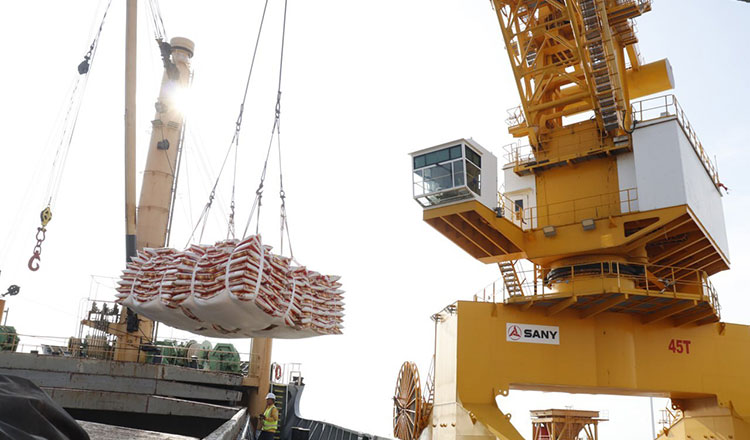
Following decades of civil war and Khmer Rouge destruction, Cambodia relied heavily on food imports and foreign aid throughout the 1980s. However, through sweeping agricultural reforms, the return of displaced farmers, and the re-introduction of traditional seed varieties, the nation achieved full rice self-sufficiency by the mid-1990s and established a reliable annual surplus by the early 2000s.
To maximise its “white gold” economic potential, the government launched the ambitious “Paddy Rice and Milled Rice Export Policy” in 2010. Today, Cambodia has become one of the world’s top rice exporters, shipping tonnes of milled and paddy rice annually to major international markets including China, the European Union, the Philippines and other ASEAN nations.
Hitting historic milestone
Cambodia has officially achieved its long-held national ambition of exporting one million tonnes of milled rice annually, surpassing the landmark target in October 2026. This milestone crowns 16 years of strategic efforts to transform the Kingdom from a primary paddy producer into a highly competitive exporter of processed agricultural products.
As an agrarian nation, Cambodia dedicates one-third of its total land area to agriculture, with rice serving as both the primary crop and the national staple food.
Following major economic reforms in 1989, Cambodian rice production expanded dramatically. Driven by landmine clearance, improved rural security, and the reclamation of unused or deforested land, planted areas surged from 1.9 million hectares in 1990-1991 to over 4 million hectares by 2025.
Concurrently, agricultural modernisation boosted productivity, lifting yields from a meager 1.4 tonnes per hectare to between 3.1 and 3.5 tonnes per hectare over the same period.
The increase in yield was due to many factors: favourable weather conditions, an increase in the availability of rural credit and private investment, technology improvements, the use of chemical fertilisers and other inputs and new high-yielding rice varieties. The combination of expansion of planted areas and the increase in yields has boosted production to the highest surplus levels since 1995-1996.
Cambodia’s one-million-tonne target emerged from a government policy introduced in 2010 to expand formal milled rice exports and retain more value from the country’s agricultural production.
At the time, much of Cambodia’s surplus paddy was sold to neighbouring countries for processing, limiting the amount of value-added activity, employment and export revenue retained domestically.
The policy sought to change that model by encouraging investment in rice mills, improving access to finance, expanding storage and drying facilities and developing a stronger export industry capable of competing in international markets.
Overcoming hurdles
The government initially aimed to reach one million tonnes of milled rice exports by 2015. However, the sector faced persistent constraints, including limited working capital, inadequate processing and storage capacity, high electricity and transportation costs, and difficulties meeting international quality requirements.
A World Bank rice-sector review documented the country’s progress in developing its milling industry and expanding exports, while highlighting the importance of improving processing, packaging, marketing and food-safety certification to strengthen Cambodia’s position in international markets.
The gap between the original deadline and the eventual achievement illustrates the complexity of building an export-oriented agricultural industry.
Producing sufficient paddy is only one part of the process; exporters must also secure financing, process rice to consistent standards, transport it competitively and establish reliable relationships with overseas buyers.
The rice industry’s expansion has depended not only on agricultural production but also on coordination between government institutions responsible for agriculture, trade, finance and rural development.
The Ministry of Agriculture, Forestry and Fisheries (MAFF) has played a central role in supporting agricultural production, improving product quality and strengthening links between producers and export markets. The Ministry of Commerce (MoC) has also worked with the private sector to promote Cambodian rice abroad, expand market access and develop export diversification strategies.
The government’s rice export agenda has increasingly focused on strengthening the entire value chain rather than simply increasing the amount of rice shipped overseas.
One persistent challenge has been access to working capital. Rice millers and exporters need substantial funds to purchase paddy during harvest periods, when farmers seek immediate payment and processing facilities must secure sufficient raw materials for subsequent export orders.
Strategic financing from the Ministry of Economy and Finance (MEF), the Agriculture and Rural Development Bank (ARDB) and credit-guarantee mechanisms provides critical support to the sector. This targeted funding empowered millers to purchase paddy directly from farmers, expand storage stocks, and sustain production capacity while preparing rice for international export.
Strategic pillars
The Cambodia Rice Federation (CRF), which oversees the rice sector in the country, has also identified market diversification, financial facilitation and brand development as central pillars of its strategy.
These priorities reflect the need to address several interconnected constraints. Even when overseas demand is strong, exporters may struggle to fulfil orders if they cannot finance paddy purchases, maintain adequate inventories or ship products at competitive prices.
Today, Cambodian rice production stands as a modernised, export-oriented powerhouse. Despite ongoing climate change challenges – including unpredictable droughts and severe flooding – the sector continues to scale new heights and prove its resilience.
In mid-October, the MAFF announced that Cambodia exported 1.01 million tonnes of milled rice as of October 19, officially surpassing the historic one-million-tonne target originally established under the government’s 2010 rice export policy.
The achievement marks a historic milestone for the country’s agricultural sector, which has spent more than a decade expanding milling capacity, improving product quality, securing export markets and strengthening cooperation between public institutions and private businesses.
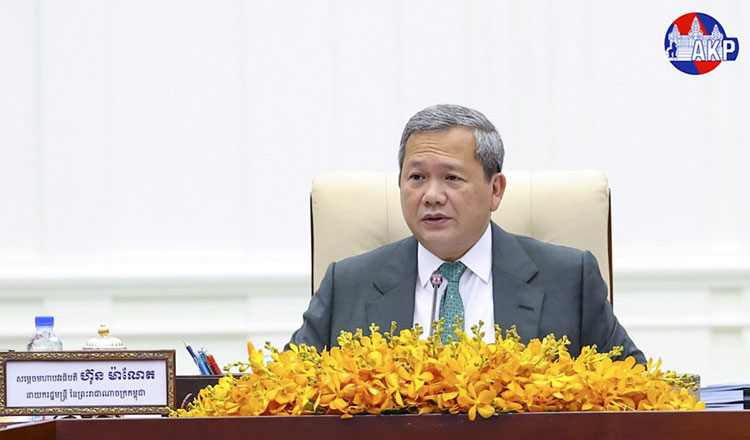
Prime Minister Hun Manet hailed the achievement, describing it as a moment of national pride.
“The official volume of Cambodia’s rice exports jumped to 1.01 million tonnes, successfully breaking last year’s record and a remarkable achievement for the nation and the agricultural sector as a whole,” the premier said following the announcement.
The milestone represents more than a simple increase in export volume; it reflects the deep transformation of Cambodia’s rice industry. This structural shift is driven by strategic investments in processing, government-backed financing, aggressive market diversification and the growing international prestige of Cambodian rice.
The achievement also came during Cambodia’s main harvest period, when demand for paddy from millers and exporters is particularly important for maintaining supply and supporting farm-gate prices.
Milestone, not endpoint
For the private sector, crossing the one-million-tonne threshold is an important achievement, but industry representatives view it as a foundation for further growth rather than an end point.
Lay Chhun Hour stated that government policy and the practical mechanisms introduced by relevant ministries have helped the sector move towards the target.
The historic achievements in the rice industry are the result of the close cooperation of many factors and support from the government, specifically the policy to export one million tonnes of rice, which has been promoted by Cambodian leaders.
Additionally, direct support came from the MEF, which provided credit through the ARDB to fund paddy purchases from local farmers and construct essential warehouses and drying facilities.
Furthermore, the Credit Guarantee Corporation of Cambodia provided supplementary funding to boost paddy purchasing capacity during the peak harvest season, according to the CRF president.
“The milestone reflects a gradual transformation of the rice industry, driven by investment in processing, government-backed financing, market diversification and growing international recognition of Cambodian rice,” he told Khmer Times.
The European Union remains an important destination for Cambodia’s premium fragrant varieties, while China and several Asian markets provide opportunities for a wider range of products.
According to the CRF, the European Union remains Cambodia’s largest market, importing approximately 300,000 to 340,000 tonnes of rice annually.
China stands as the second-largest market, importing 200,000 to 230,000 tonnes of rice annually, while the Philippines has emerged as a promising new market with projected exports of 200,000 tonnes or more.
Cambodia’s rice exports include premium fragrant rice, long-grain white rice, broken rice, organic rice and parboiled rice. However, fragrant rice continues to account for the largest share of overseas shipments.
Diversifying the product mix is important because international buyers have different preferences and price requirements.
Premium fragrant rice can help Cambodia strengthen its reputation and pursue higher-value market segments, while white and other rice varieties provide opportunities to serve larger or more price-sensitive markets.
Cambodia’s famed Phka Romdoul rice, marketed under the Malys Angkor brand, has once again claimed the title of the World’s Best Rice, marking the seventh time the country has received this recognition.
The MoC hailed this latest achievement as a milestone for Cambodia’s agricultural reputation, extending its gratitude to the farmers, millers and exporters whose collective efforts continue to elevate the country’s flagship crop to international acclaim.
It may be recalled that Phka Romdoul – known for its soft texture and distinct floral aroma – previously earned the title of the world’s best rice in 2012, 2013, 2014, 2018, 2022 and 2024.
Targeting new markets
Ministry of Commerce urged businesses and relevant stakeholders to continue implementing Cambodia’s Rice Export Market Expansion and Diversification Strategy 2025-2030, with an emphasis on quality, food safety, packaging and international competitiveness.
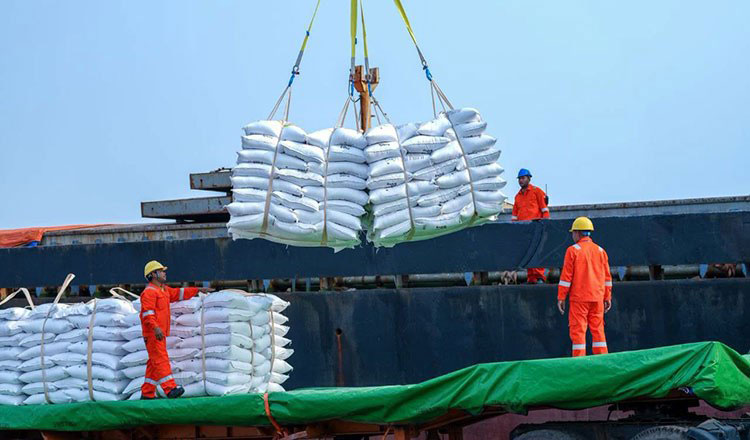
In October, Cambodian exporter Signature Rice began shipping rice directly to the Philippines by vessel from Kampot Port, opening a new route for larger shipments to the market.
The sea transport would make it easier to deliver larger volumes in a single shipment and help improve competitiveness compared with container-based transport. The approach would make deliveries more efficient while supporting consistent quality.
The development illustrates how market access and logistics improvements can reinforce each other: stronger demand creates opportunities for exporters, while more efficient shipping can make Cambodian rice more attractive to buyers.
Despite the record achievement, climate change and increasingly uncertain weather conditions remain major concerns for Cambodia’s rice industry.
Chhun Hour of CRF warned that unusually dry conditions associated with El Niño could affect planting schedules, harvests and paddy supplies. His comments come as drought had affected rice-growing areas in several provinces, while some millers reported lower paddy purchases.
The concern extends beyond the immediate export season. If lower yields or water shortages reduce supplies, millers could face higher raw-material costs, potentially pushing up export prices and weakening competitiveness.
Financing remains a constraint for some rice actors, CRF’s Chhun Hour said, citing issues with collateral requirements, short-term loans and small loan sizes.
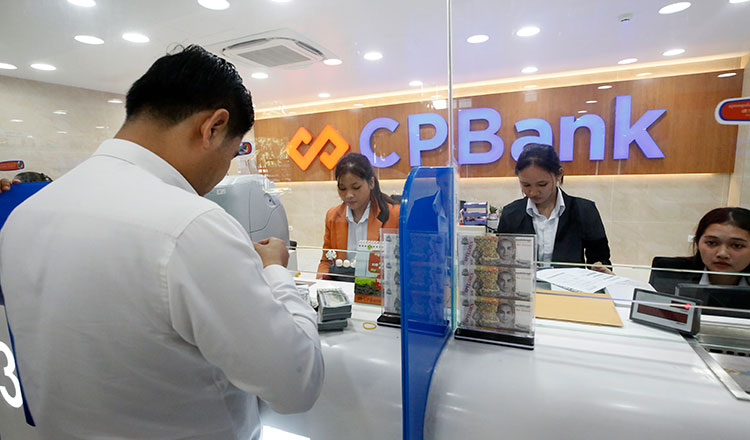
Cambodia’s rice industry requires about $600 million in financing each year to sustain production, processing and exports, said Kao Thach, Delegate of the Royal Government of Cambodia in charge as Chief Executive of ARDB.
The ARDB has prepared and disbursed over $200 million in working capital each year, focusing on farmers, millers and exporters along the rice value chain with aims at strengthening competitiveness in international markets.
“Expanding financing sources is essential to increase value-added production and improve Cambodia’s position in global rice markets. Currently, many private banks and financial institutions are participating in providing financing to the agricultural sector,” he said.
Under the ‘White Gold’ policy, the one-million-tonne milestone has now been reached and is considered a starting point for the next phase of Cambodia’s rice export development.
CRF stated that the goal of exporting 1 million tonnes of rice is not just for one year, but to create long-term sustainability and stability.
To secure these achievements, the CRF will continue expanding warehousing and drying infrastructure to ensure sufficient paddy purchasing capacity from local farmers. Moving forward, the Federation aims to maintain export stability while driving a minimum 5% annual export growth, ultimately positioning Cambodia as one of the world’s top four or five largest international rice exporters.
- 07:54 26/10/2026