Cambodia adds 7,458 enterprises in three years, workforce reaches 2.31 million
Cambodia adds 7,458 enterprises in three years, workforce reaches 2.31 million
New data reveals expanding business and industrial growth across key economic sectors.
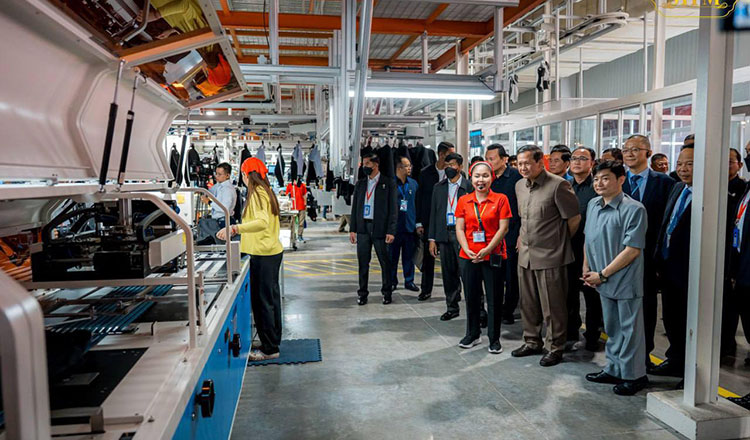
Cambodia’s registered business and industrial base expanded nearly 18.5% in three years, with 7,458 new enterprises, companies and factories, bringing the total to 47,758 and employing approximately 2.31 million workers, according to the Ministry of Labour and Vocational Training (MLVT).
Figures from the MLVT show that the number of registered establishments rose from approximately 40,300 to 47,758.
MLVT spokesperson Sun Mesa said yesterday that growth should be assessed not only by the number of new establishments but also by their contribution to investment, production, employment and household incomes.
“When we say that more than 7,000 enterprises and factories have been added in just three years, we should not look only at the number of establishments,” Mesa said.
“Behind those numbers are investment decisions, production activities, jobs, incomes for families and new opportunities for Cambodian workers.”
The expansion has contributed to a large employment base across the agriculture, industry and services sectors.
Mesa said Cambodia’s workforce remains an important factor in attracting investment, while the government continues to strengthen technical and vocational education and training, employment services and cooperation between training institutions and employers.
“Our competitive advantage cannot depend only on labour costs,” he added.
“Cambodia must increasingly compete through the quality, skills, productivity and adaptability of our workforce.”
The approach aligns with the Pentagonal Strategy – Phase I, which identifies human capital development, employment, private-sector development, economic diversification and competitiveness as key priorities.
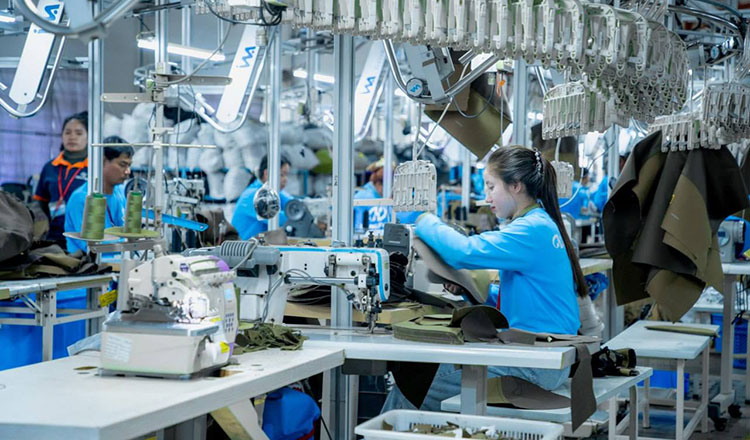
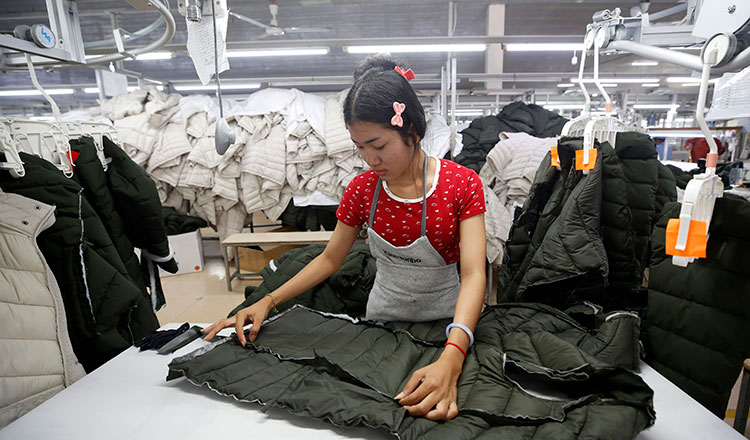
Recent developments in the garment, footwear and travel goods sector also indicate continued industrial activity. As of July 2026, 169 enterprises had opened, while 15 had closed, resulting in a net increase of 154 enterprises and adding about 92,428 workers associated with those changes.
Mesa said Cambodia must remain mindful of external risks while recognising positive developments in the labour market.
“We should neither ignore global challenges nor underestimate Cambodia’s progress,” he said.
“The global economy remains uncertain, and Cambodia is an open economy connected to international markets. But when more businesses continue to open, factories continue to recruit, and workers continue to find employment, these are concrete signs of economic resilience.”
Looking ahead, Cambodia aims to move beyond increasing the number of factories and attract more investment in higher-value manufacturing, including electronics, electrical equipment, automotive components and machinery.
Mesa said this transition requires investment and skills development to advance together.
“The real success is not simply having more factories,” he added.
“Our ambition is to have more competitive factories, more productive enterprises, more skilled workers and better-quality jobs. Our task now is to transform this momentum into higher productivity, better jobs, better incomes and stronger competitiveness for Cambodia over the long term.”
National Labour Union of Cambodia President Sam Soeun welcomed the increase in employment opportunities and investment, saying it reflects the strength of Cambodia’s labour sector.
He said the country’s firm stance against illegal labour practices has helped strengthen its reputation as a responsible manufacturing destination.
Soeun pointed to the 2024–2028 Decent Work Country Programme, stating its implementation provides a foundation for attracting investment and creating quality employment opportunities by strengthening labour standards and boosting investor confidence.
Speaking at a high-level forum at the Organisation for Economic Co-operation and Development in February, Minister of Labour and Vocational Training Heng Sour said that the garment, footwear and travel goods (GFT) sector remains a primary economic pillar for Cambodia, driving growth and poverty reduction.
He noted that the country’s success is anchored in enforcing legal protections for human rights and the environment across the production chain.
“Compliance with labour and environmental standards should not be viewed as a burden,” Sour said.
“Rather, it is an opportunity to enhance Cambodia’s competitiveness and deepen its integration into global supply chains.”
The GFT industry is Cambodia’s largest source of foreign currency, representing approximately 50% of total exports.
Official reports show a strong growth phase for the industry, with Cambodia exporting $15.5 billion worth of garments, footwear and travel goods in 2025 – a 15.7% rise compared to the previous year.
- 07:51 08/09/2026