Why Cambodia is becoming too expensive for average families
Why Cambodia is becoming too expensive for average families
Everybody loves to hate inflation. It is universally disliked for a simple reason: it erodes purchasing power. While some economists may argue its merits or offer complex theories, any average family can instantly list how inflation hits their daily life. It drives up grocery bills, spikes transportation and energy costs, and shrinks the savings meant for education or healthcare. This is why the National Institute of Statistics’ July 2026 data serves as a wake-up call: Cambodia’s inflation rate has reached 5.5 percent. For a nation still classified as a least developed country, the rising cost of living is not merely a statistic in an economic communique. It is a harsh reality reflected in what families must pay for basic necessities. Yet, the 5.5 percent figure fails to capture the full story of how expensive life has become for ordinary Cambodian households. Families who spend the majority of their income on food and essentials feel these price hikes far more acutely than wealthier households. According to the World Bank, even a 10 percent increase in fuel prices can push the poverty rate up by 1.4 percentage points. For those living on the edge of their monthly budgets, inflation forces agonising choices. In fact, there is no relief for their struggle until the government steps in with concrete measures to contain it
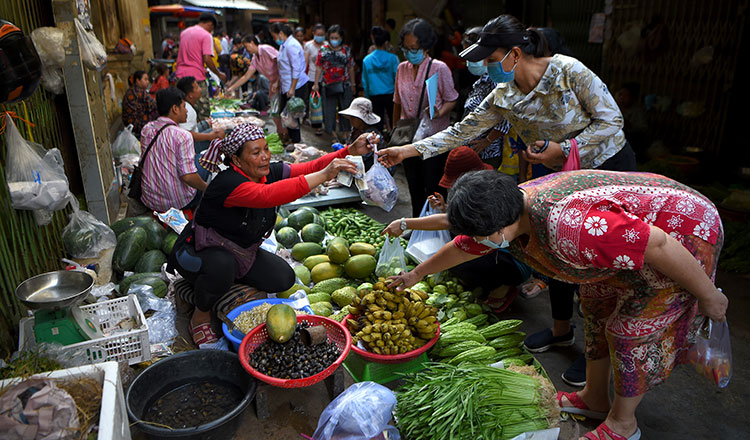
For Cambodian families, the rising cost of living is not simply a figure reported in an economic bulletin. It is reflected in the amount of money they need to spend on food, transportation, household necessities and other everyday expenses.
Cambodia’s inflation rate reached 5.5 percent in July 2026, according to the National Institute of Statistics (NIS), signalling continued pressure on consumer prices. But the figure does not mean every product became 5.5 percent more expensive or that every household experienced the same increase in expenses.
The NIS’s monthly Consumer Price Index (CPI) data for recent months provide a broader picture of price movements. Changes in essential goods and services can gradually put pressure on family budgets, particularly when increases occur in areas where households spend a large share of their income.
Food prices can directly affect grocery bills, while transportation and energy costs add to the expense of travelling to work, school or markets. Higher prices for other necessities can further reduce the money families have available for savings, education, healthcare or discretionary spending.
This is why the headline inflation rate needs to be viewed carefully. The national inflation rate is calculated from a broad basket of goods and services designed to represent household consumption, but individual families have different spending patterns.
A household that spends much of its income on food, transportation and utilities may feel price increases much more strongly than one that spends relatively less on those necessities.
In other words, 5.5 percent is an important national indicator, but it does not tell the entire story of how expensive life feels for Cambodian families.
Why are prices rising?
Every price hike on daily essentials reflects a complex web of factors that originate far beyond the domestic consumer. Local retail prices are dictated not just by market demand, but by structural pressures across global production networks, transportation logistics, and import supply chains.
One important factor is energy. Changes in fuel and other energy costs can affect the wider economy because energy is needed to produce and transport goods and provide services. When energy becomes more expensive, those costs can move through supply chains and eventually reach consumers.
Food prices are another major source of pressure. Changes can be influenced by domestic supply, weather conditions, agricultural production and transportation costs. Because food represents a significant part of household spending, even moderate increases can have a noticeable impact on family budgets.
Transportation also plays an important role. Higher fuel and operating costs can increase the cost of moving people and goods. Even households that do not directly purchase large amounts of fuel can feel the impact because transportation costs are incorporated into the final prices of many products.
Cambodia’s reliance on imported goods and inputs can add another layer of pressure. When international prices rise or imported products become more expensive, those increases can eventually be reflected in domestic prices.
These factors do not necessarily push every price upward at the same time. Instead, they interact across the economy. An increase in one cost can put pressure on another, creating a chain that eventually reaches household spending.
Numbers vs. reality
A 5.5 percent inflation rate is just a national average, it doesn’t mean every Cambodian family pays exactly 5.5 percent more for everything. Grasping this gap between the official data and real-world spending is key to understanding the current cost-of-living crisis.
The headline inflation rate is based on the Consumer Price Index (CPI), which measures changes in the prices of a broad basket of goods and services consumed by households. The basket includes categories such as food and non-alcoholic beverages, housing and utilities, transport, health, education, restaurants and other goods and services.
The problem for individual families is that their own spending patterns may look very different from the national average.
Consider two households with the same monthly income. One may spend a large portion of its budget on food, transportation and utilities, while another may spend relatively more on education, recreation or other goods and services. If food and transportation prices rise sharply, the first household will feel a much greater financial impact.
This is why inflation is an average, while the cost of living is personal.
The difference becomes particularly important for lower-income households. Families with limited incomes generally have less flexibility to change what they buy because much of their budget is already committed to necessities. They cannot easily stop buying food, eliminate transportation or postpone essential household expenses simply because prices have increased.
For a higher-income household, an increase in the price of essential goods may represent a relatively small share of total income. For a lower-income family, the same increase can take away money that would otherwise be used for savings, education, healthcare or other needs.
The CPI therefore remains an essential tool for measuring inflation across the economy, but it should not be interpreted as a precise measure of the financial experience of every household.
Low-income households
Rising prices do not affect every Cambodian household in the same way. The burden is generally heavier for families with lower and more limited incomes because a larger proportion of their monthly earnings is already committed to essential needs such as food, transportation, housing and utilities.
For these households, there is less room to adjust when prices rise. A family may postpone buying clothing, reduce entertainment spending or delay other non-essential purchases, but it cannot easily reduce the amount of food it needs or stop paying for transportation to work and school.
Recent analysis by the World Bank has highlighted this vulnerability in Cambodia, noting that inflationary pressures driven by food and transport prices can disproportionately threaten poverty reduction because food accounts for a high share of consumption among vulnerable households. The World Bank has also estimated that a 10 percent increase in fuel prices could increase the poverty rate by 1.4 percentage points.
Workers can also feel the pressure when their incomes do not rise at the same pace as the prices of goods and services they regularly purchase. Even if a worker receives the same salary as before, that income buys fewer goods when prices increase. The result is a decline in real purchasing power.
For families living close to the limits of their monthly budgets, this can lead to difficult choices. They may reduce spending on nutritious food, postpone healthcare or education expenses, draw down savings or borrow money to cover essential costs.
The impact can also differ between urban and rural households because families face different prices, transportation needs, employment opportunities and sources of income. A household that relies heavily on daily wages or informal activities may have fewer financial buffers than one with stable earnings and savings.
When prices rise, one of the most important questions for households is whether their income is rising quickly enough to keep up. A higher salary can help families manage increased expenses, but an increase in nominal income does not automatically mean their purchasing power has improved.
The key distinction is between nominal income and real income. Nominal income is the amount of money a person earns, while real income reflects what that money can actually buy after taking changes in prices into account.
If a worker receives a 4 percent increase in pay while the prices of the goods and services that the household regularly purchases rise by 6 percent, the worker may earn more in cash but still be able to afford less than before.
This becomes particularly important when price increases are concentrated in essential goods. Families cannot simply stop buying food, paying for transportation or using electricity because these costs have increased. As a result, even a household whose income remains stable can experience a decline in living standards when essential expenses consume a larger share of its budget.
The issue also raises a broader question about wage policy. Raising wages can strengthen household purchasing power when increases are sustainable and supported by productivity growth.
However, wage increases alone cannot permanently solve the problem if the underlying costs of essential goods and services continue to rise.
Easing household strain
Chey Tech, a socio-economic development researcher, said Cambodia’s cost-of-living challenge goes beyond inflation, pointing to the relatively high cost of essential goods and services compared with household income. He highlighted several areas, including passport fees, electricity, transportation and accommodation. According to his comparison, Cambodian consumers pay around 720 to 740 riel per kilowatt-hour for electricity, compared with about 200 to 300 riel in Laos.
He also referred to Cambodia’s GDP per capita of around $2,500 in 2025, arguing that when prices are compared with income levels across ASEAN, Cambodian households face relatively high costs despite lower income levels. Transportation and accommodation, he added, can also place significant pressure on household budgets.
Tech said the government has an important role in addressing these pressures, including reviewing and managing taxes and other costs that contribute to the final prices paid by consumers. He also pointed to inflation, saying it had previously been around 2 percent but had risen to about 5.6 percent amid various economic pressures, including border-related disruptions and changes affecting fuel prices.
Looking beyond short-term price pressures, Tech said Cambodia’s planned graduation from the Least Developed Country category in December 2029 should be accompanied by stronger efforts to raise incomes and living standards.
He raised critical concerns over Cambodia’s path to high-income development amid a low-wage environment. Achieving the country’s 2050 economic ambitions, he argued, hinges on structural transformation—specifically through accelerating industrial depth, enhancing export competitiveness, and boosting productivity to secure long-term household income growth
Tech went on to add that the cost-of-living challenge is also closely connected to the health of Cambodia’s small and medium-sized enterprises (SMEs), which make up the overwhelming majority of businesses in the country and provide employment for millions of people.
SMEs endure strain
According to figures from the Ministry of Planning, SMEs accounted for around 99.7 percent of enterprises in Cambodia in 2022, highlighting their importance to employment and economic activity. SMEs also provide livelihoods for around 7 million people, while women play a significant role in leading and managing businesses.
However, Cambodian SMEs continue to face several challenges that can make it difficult to expand and remain competitive. One issue is competition from imported products, including concerns over informal imports and tax compliance, which can make it harder for domestic businesses operating within the formal system to compete on equal terms.
SMEs also face limitations in innovation, digital adoption, knowledge and skills, which can restrict their ability to improve productivity and respond to changing market conditions. At the same time, high operating costs remain a major concern. Electricity and transportation expenses can increase production and distribution costs, while businesses may also face additional expenses related to administrative procedures, licensing and export requirements.
These challenges matter not only to businesses but also to households. When SMEs face higher production and operating costs, they may have less capacity to hire workers, increase wages, invest in new technology or reduce the prices of their products. This can create a link between business costs and the wider cost of living.
Access to finance is another challenge. Cambodia has specialised financial institutions, including SME-focused financing program and the Agricultural and Rural Development Bank, but access to affordable credit remains important for businesses seeking to expand. If borrowing costs remain similar to those offered through conventional commercial banking, smaller businesses may still find it difficult to obtain financing on terms that support investment and productivity improvements.
For Cambodia, strengthening SMEs therefore goes beyond supporting individual businesses. A stronger SME sector can contribute to job creation, higher productivity, better wages, stronger domestic production and more competitive exports. In turn, these improvements can help raise household incomes and reduce the pressure created by rising living costs.
Hong Vannak, a prominent Cambodian economist and business researcher at the Royal Academy of Cambodia, said Cambodia’s inflationary pressures have been influenced by a combination of external shocks and domestic economic conditions.
He noted that the global economy has been affected by conflicts and geopolitical tensions, which have pushed up the prices of oil and other commodities imported from Western countries and other international markets. The COVID-19 pandemic also caused significant economic disruption, affecting businesses, employment and household incomes.
More recently, tensions and conflict between Cambodia and Thailand have added further uncertainty to economic activity, while higher transportation costs have contributed to increases in the prices of goods and services.
Vannak also pointed to rising prices of fuel and gold as additional pressures on the economy. As Cambodia relies heavily on imports to meet domestic demand, increases in international prices and import costs can eventually be passed on to consumers, contributing to higher inflation.
At the same time, he said the impact of rising prices becomes more serious when people’s incomes do not increase at the same pace. When the cost of living rises while household income remains low, people have less purchasing power and face greater financial pressure.
The decline in tourism can also affect household incomes, particularly for people and businesses that depend heavily on tourists. This can have a wider impact on SMEs, as weaker consumer demand can reduce their revenues and make it more difficult for them to maintain their operations.
He added that the impact can be different for people with higher incomes, who may have greater capacity to absorb rising prices. Similarly, governments with sufficient financial resources have more room to respond to economic shocks and support affected sectors and households.
Looking ahead, Vannak said that maintaining economic stability requires a careful balance between income and expenditure. Policymakers need to study how people’s incomes are changing compared with their living costs and ensure that economic policies support sustainable income growth while keeping inflation under control.
- 08:10 07/09/2026