Garment sector to remain Cambodia’s biggest job generator
Garment sector to remain Cambodia’s biggest job generator
Beyond manufacturing, Heng Sour identifies the services sector as another major source of employment, particularly tourism, hospitality, retail, and banking.
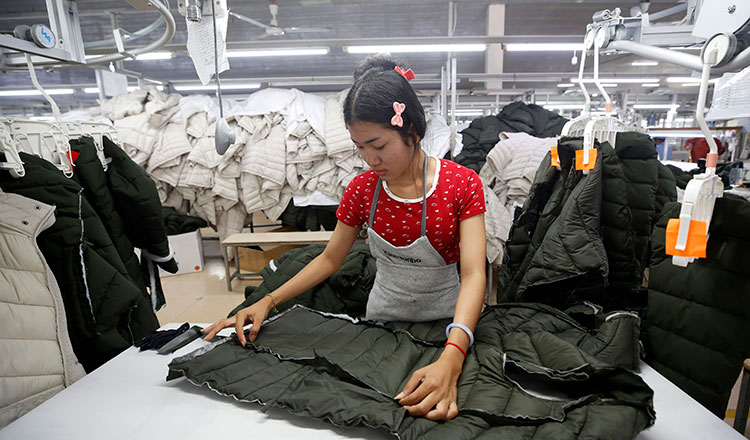
Cambodia’s textile, garment, footwear and travel-goods industries are expected to remain the country’s largest sources of employment over the next three years, Labour and Vocational Training Minister (MLVT) Heng Sour said.
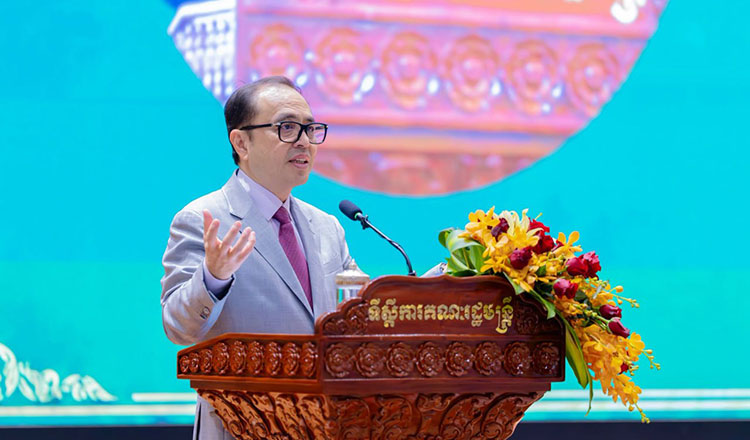
Sour made the remarks on Monday in the ministry’s podcast on “Preparing after high school graduation to meet labour market demands.” The programme also featured the Royal University of Phnom Penh Rector Chet Chealy and Westline Education Group Director-General and Young Entrepreneurs Association of Cambodia President Pech Bolen.
The minister said the forecast was based on research and statistical data compiled from various sources, including the World Economic Forum, regional labour-market projections, interviews with employers currently investing and operating in Cambodia, as well as newly approved investment projects by the Council for the Development of Cambodia (CDC).
“We see that from now until the next three years, employment in textiles, garments, footwear and travel goods will continue to account for the largest share of jobs,” Sour said.
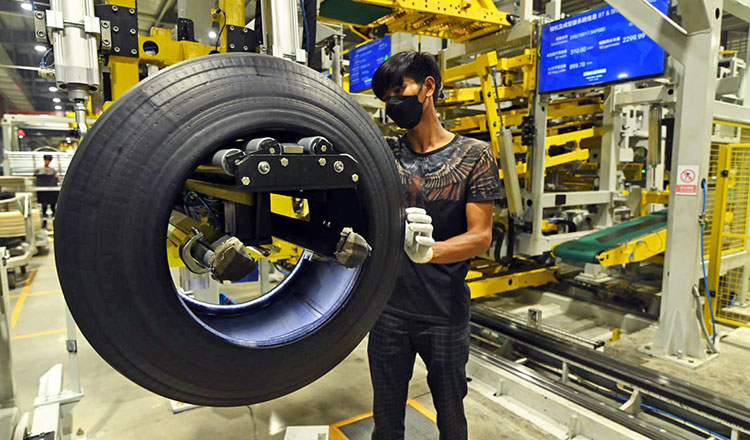
He noted that the sector’s labour demand extends beyond production workers, with growing needs for technical skills such as automotive mechanics, automation and mechatronics to operate and maintain machinery and equipment in garment factories.
Beyond manufacturing, Sour identified the services sector as another major source of employment, particularly tourism, restaurants and beverage businesses, retail and trade, finance and banking.
Meanwhile, labour demand in agriculture is expected to decline over the next three years due to the increasing use of technology and mechanisation. The minister stressed that this does not mean agriculture will become less important to the economy. Rather, technological advances are allowing the sector to maintain output while requiring fewer workers.
“Overall, Cambodia is estimated to have the capacity to create between 300,000 and 360,000 jobs annually. These jobs could absorb both young people entering the labour market and university graduates,” the minister emphasised.
At the same time, the minister highlighted that based on the Ministry’s assessment over the next four or five years the industrial structure and the level of skills demanded by the labour market are expected to change. Although the sectors may remain largely the same, the level of skills required will be higher.
“Therefore, the major sectors we have today and over the next five years may remain important sectors. We expect the garment sector to continue to be a leading employer, but the skill requirements over the next five years will be different from those of today. In the future, the sector will need technicians, programmers and workers capable of managing automated production lines to help ensure the sector’s sustainability and maintain its important role in our economy,” he said.
Chealy also said Cambodia’s labour market continues to have strong potential and is expanding, with demand remaining high for a wide range of skills, including in the garment sector and other industries. However, the evolution of the labour market is increasingly requiring workers and young people to possess higher-level and more complex skills, particularly as information technology (IT) and automation become more widely used in the workplace.
“For young people who have just completed Grade 12, choosing a field of study should not be based solely on which skills are currently popular or which sectors offer the most jobs. They should carefully consider what they are passionate about, what they are good at and what they want to become in the future. Choosing a field of study should be a long-term decision because the skills they acquire will form the foundation of their careers and working lives,” he said.
He added that another important point is that no skill is inherently bad or without a future, as long as learners master it well and have the ability to apply it in practice. As Cambodia’s labour market continues to grow, opportunities remain available for skilled workers. However, competition will require them to develop deeper expertise and demonstrate genuine practical capabilities.
“Therefore, before choosing a field of study, young people need to understand themselves clearly—what they are good at, what they are passionate about and where they want to go. They should then work hard to master the skills they have chosen and develop genuine practical expertise in order to meet the increasingly complex demands of the labour market,” said Chealy.
Meanwhile, Bolen said the gap between skills and labour-market demand is a challenge faced by countries around the world, as economic and social conditions continue to change. This gap can broadly be divided into two areas: a skills gap and a labour-force gap.
He explained that the skills gap arises from technological advances and new business requirements, while education systems cannot always adapt 100 percent quickly enough to meet those changing demands. The labour-force gap, meanwhile, is caused by the movement of people and workers from one region to another.
As a result, many countries use reskilling and upskilling programmes to address the skills gaps that emerge continuously.
“To reduce this gap, there must be close cooperation between educational institutions, vocational training providers and the private sector. The education sector needs to understand the actual requirements of the labour market, while businesses need to provide information and input on the skills they require,” he said.
At the same time, small and medium-sized enterprises (SMEs) also have an important role to play, Bolen said, adding that large companies generally have business plans and a clearer understanding of their workforce requirements, but many SMEs still lack clear three- to five-year strategic plans. Therefore, entrepreneurs also need additional training to better understand the economy, develop business plans and identify the skills their businesses will require.
According to a report from the General Department of Customs and Excise, Cambodia’s garment, textile, footwear and travel goods industry recorded a 6.2 percent increase in exports during the first half of 2026.
- 16:59 02/09/2026