Automation drives central Việt Nam's power sector transformation
Automation drives central Việt Nam's power sector transformation
The application of GIS substations, SCADA/DMS, remote control equipment, autonomous robots, the Internet of Things and artificial intelligence reflects EVN's broader shift towards automation, connectivity and intelligent monitoring.
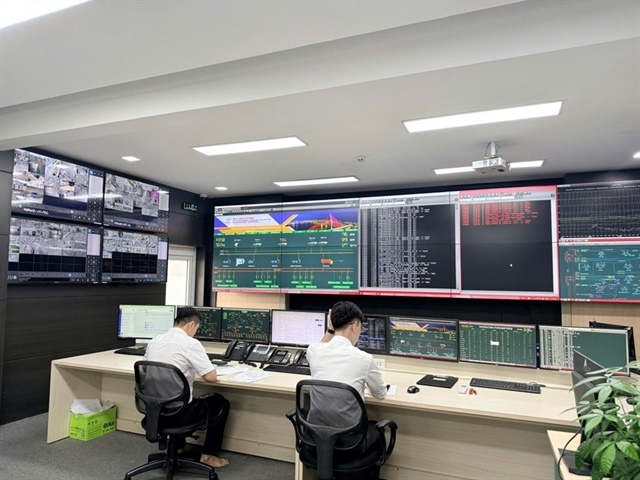
A control centre at Danang Power Company. — VNA/VNS Photo |
Automation, remote control technologies and smart monitoring systems are reshaping electricity operations in central Việt Nam, helping power companies reduce outage response times, improve labour productivity and prepare grid infrastructure for new economic growth centres.
The technological shift is part of efforts by Vietnam Electricity (EVN) and its subsidiaries to carry out Politburo Resolution 57-NQ/TW on breakthroughs in science, technology, innovation and national digital transformation.
Across Đà Nẵng, Quảng Trị and Huế, member companies of Central Power Corporation (EVNCPC) are deploying unmanned substations, supervisory control and data acquisition (SCADA), distribution management systems (DMS), remote control equipment and intelligent inspection technologies.
In Đà Nẵng, rapid urbanisation has increased pressure on land available for electricity infrastructure, while power companies are also required to streamline operations and improve labour productivity.
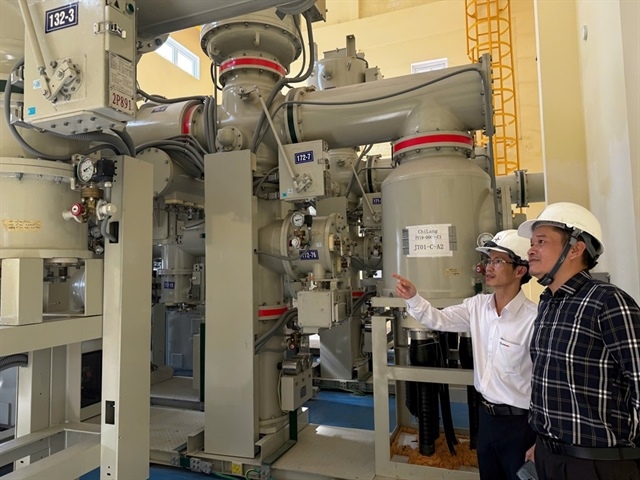
Danang Power Company has responded by expanding its network of unmanned 110kV substations. Its Chi Lăng facility, EVNCPC's first gas-insulated switchgear (GIS) substation in the city, occupies only about 1,700sq.m, less than half the area required for a conventional substation.
Phạm Tấn Vũ, deputy head of Da Nang High-Voltage Grid Enterprise, said the GIS facility uses SF6 gas-insulated switchgear, allowing the company to address space constraints in densely populated urban areas while reducing on-site staffing requirements.
With remote operation, each team can now safely manage between five and seven substations, helping optimise staffing.
Automation is also changing how distribution networks respond to faults.
In Quảng Trị, electricity demand increased by more than 30 per cent during this year's peak summer months, placing significant pressure on grid operations.
"Before 2016, all switching operations and fault verification had to be carried out manually and depended entirely on field staff, so travelling and handling incidents took a great deal of time," said Trang Hiếu Tân, deputy head of the dispatch room at Quang Tri Power Company.
The deployment of remote control and automation systems has significantly shortened that process.
"Thanks to the integration of SCADA and DMS, when a grid fault occurs, the system automatically issues an alert, enabling us to quickly locate and handle it within about five minutes," engineer Hồ Thanh Bình said. "This minimises outage duration and improves the reliability of electricity supply for customers."
Similar technologies are being deployed in Huế, where remotely controlled equipment allows operators to isolate faulty sections and restore electricity to unaffected customers more quickly.
A control centre at Danang Power Company. — VNA/VNS Photo |
Technology goes with infrastructure investment
Technology is being combined with infrastructure investment as electricity companies prepare for new sources of demand.
Danang Power Company currently serves around 900,000 customers despite 72 per cent of the city's area being mountainous.
According to Võ Văn Phương, head of the company's Technical Department, the utility is investing in key projects, including the Phong Nam, Đông Giang, Đông Nối and Tây Phước 110kV substations.
The investments are intended to support emerging economic infrastructure, including Đà Nẵng's International Financial Centre and Liên Chiểu port.
Grid inspection and maintenance are also becoming more technology-intensive. Đà Nẵng is using diagnostic technologies, thermal cameras, partial discharge measuring equipment and drones while expanding live-line maintenance teams capable of carrying out repairs without interrupting electricity supply.
In Huế, digitalisation is moving a step further, with research into autonomous robots for unmanned substations.
Hồ Đức Phương, deputy head of the dispatch room at Hue Power Company, said the robot system can conduct scheduled inspections autonomously or be controlled remotely and on-site.
Its intelligent monitoring functions are designed to identify equipment abnormalities, including overheating at joints and electrical contacts. When an abnormality is detected, the robot automatically sends an alert to the control centre, allowing dispatchers to respond quickly and maintain stable electricity supply.
The project is expected to be evaluated by EVN at the end of August before being put into practical operation at substations.
Across EVN, the technological push also includes mechanisms to encourage research and development, cooperation between the electricity group, scientists and educational institutions, and efforts to domestically develop new electrical equipment.
- 07:42 10/09/2026