Cambodia to roll out SME strategy 2026-2030
Cambodia to roll out SME strategy 2026-2030
The framework features one vision, three core objectives, four strategic pillars, and 12 key measures to support SMEs across their entire life cycle, from creation and registration to growth, restructuring, and closure.
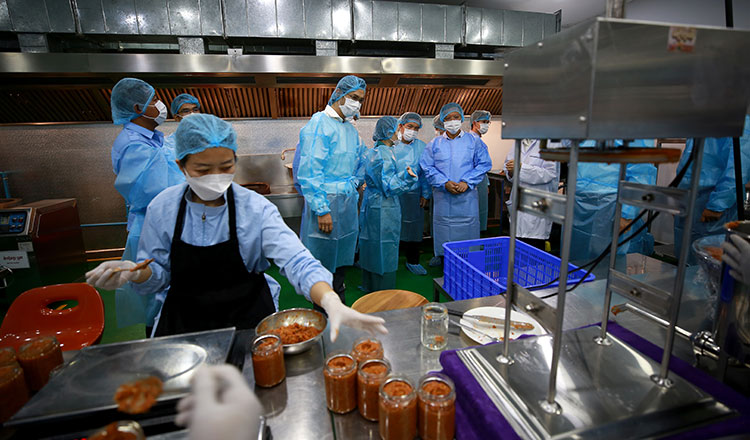
Cambodia will soon launch its National SME Development Strategy 2026-2030 to reinforce businesses through every stage of growth, from launch to eventual exit.
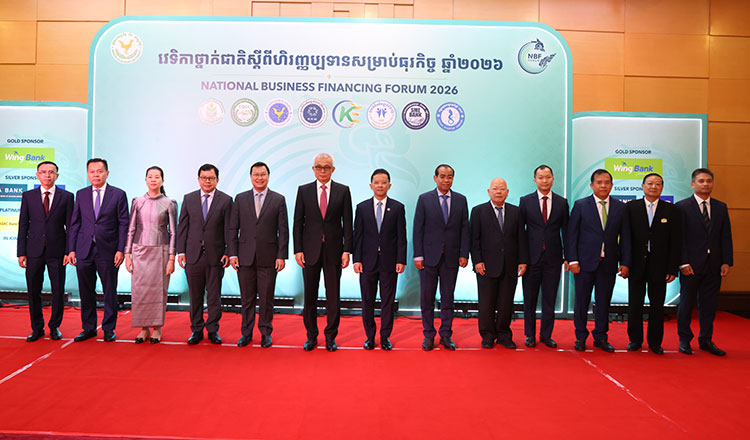
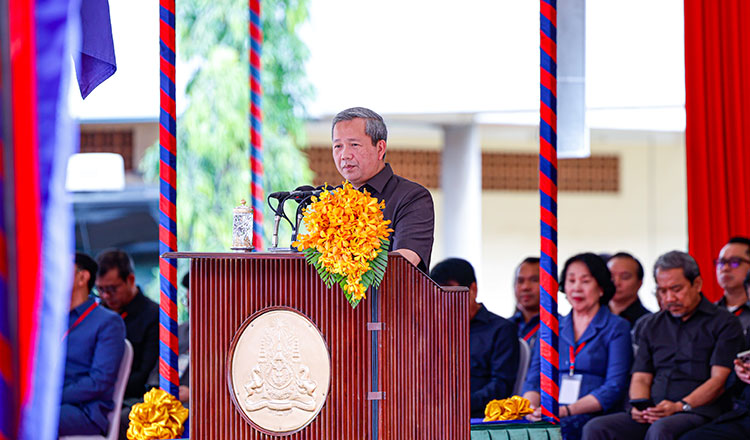
Speaking at the National Business Finance (NBF) Forum 2026 on July 31, Secretary of State at the Ministry of Industry, Science, Technology and Innovation (MISTI) Heng Sokkung said that Prime Minister Hun Manet signed the national SME strategy on July 10, paving the way for its implementation.
Taking part in a panel discussion, he said the strategy is designed to provide a comprehensive policy framework to improve the competitiveness and resilience of Cambodia’s SME sector, widely regarded as the backbone of the country’s economy.
According to Sokkung, the strategy includes one vision, three core objectives, four strategic pillars and 12 key measures designed to support SMEs throughout their life cycle—from business creation and registration to growth, and even mechanisms to address business closure or restructuring.
“The main objective of the strategy is to support SMEs at every stage of their life cycle, including establishment, registration, growth and, when businesses face difficulties or cease operations, ensuring there are appropriate support mechanisms,” he said.
“As part of this effort, Samdech Thipadei Hun Manet is committed to streamlining the SME registration process. The reform will begin with a pilot project for soap manufacturing enterprises, aiming to reduce registration processing time to six days for businesses with existing production lines, while registration procedures for newly established manufacturers will be introduced progressively,” Sokkung emphasised.
The government also plans to establish three new mechanisms to improve implementation and coordination, including a high-level task force led directly by the Prime Minister to oversee SME reforms, a dedicated coordination unit to ensure the registration system operates smoothly and a one-stop service centre, similar to the Council for the Development of Cambodia (CDC), to process all SME registration applications, both in person and online, eliminating the need for businesses to register separately with multiple ministries.
In addition, the government is considering developing a real-time mobile application that would allow the Prime Minister to directly monitor the progress of SME registrations.
According to Sokkung, SME registrations increased by about 40 percent during the first six months of 2026. He added that SME sales, which had risen by only 5-8 percent before border disruptions, consumer boycotts and the recent wave of patriotic support for locally made products, have now increased between 35 and 45 percent.
He highlighted that following the official launch of the strategy, the government plans to issue two sub-decrees. The first will redefine the classification of SMEs, while the second will introduce investment incentives for SMEs similar to those currently available to foreign direct investment (FDI) projects, including tax and other investment benefits.
These measures, he said, are intended to strengthen the resilience and competitiveness of Cambodian SMEs and position them as a key pillar of the country’s industrial development, particularly as Cambodia prepares to graduate from Least Developed Country (LDC) status in 2029.
Meanwhile, President of the Federation of Associations for Small and Medium Enterprises of Cambodia (FASMEC) Te Tangpor said SMEs continue to face numerous challenges, including overlapping administrative procedures among government institutions. He called on relevant ministries to further simplify documentation and registration processes.
SME owners themselves must become more actively engaged in improving their businesses. Based on nationwide seminars organised by FASMEC, many business owners send employees to participate instead of attending personally, limiting the effectiveness of capacity-building efforts, he said.
Speaking to Khmer Times yesterday, policy analyst at the Royal Academy of Cambodia Sam Seun said the government’s new national SME strategy is a positive step that could encourage more domestic businesses to formalise and expand production.
“It is a very positive move by the government to introduce this national strategy to simplify the registration process for small and medium-sized enterprises in Cambodia, because the country needs to place greater emphasis on strengthening its domestic production capacity,” he said.
Seun noted that local entrepreneurs and manufacturers have long faced cumbersome registration procedures, which have discouraged many businesses from operating formally.
“In the past, we have seen that local entrepreneurs and manufacturers faced significant difficulties because business registration procedures were complicated and, in some cases, involved unofficial payments. These challenges discouraged many domestic producers. If the government succeeds in simplifying business registration and other administrative procedures, it will encourage more local entrepreneurs to produce and expand the range of goods manufactured in Cambodia,” he added.
He added that stronger domestic production would create more jobs and increase the supply of locally made products, reducing Cambodia’s dependence on foreign investors to generate employment and manufacturing capacity.
Seun stressed that the government should ensure the reforms are implemented effectively and consistently, rather than remaining temporary initiatives.
- 06:56 05/08/2026