Southeast Asia's energy transition enters a new phase
Southeast Asia's energy transition enters a new phase
Investment in energy generation is accelerating across Southeast Asia, but building more generation alone will not be enough.
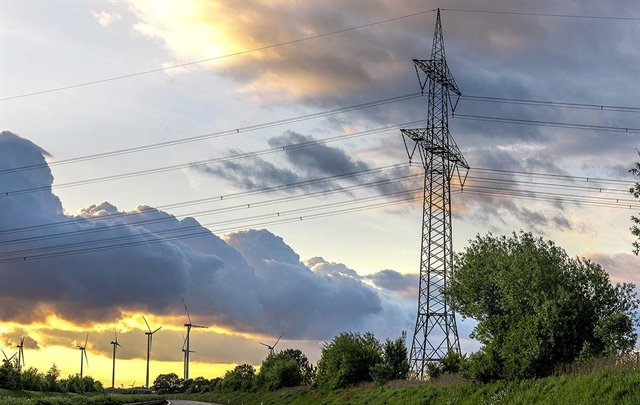
Photo: baodautu.vn |
As industrial growth, urbanisation and the rapid rise of data centres push electricity demand higher, the real challenge lies in moving, storing and stabilising that power – and in building the cross-border connections that will allow countries to share it.
On June 30, complex project delivery consultancy TBH published a new report, “Connecting Southeast Asia’s Energy Future,” examines the energy transition underway across six major markets – Malaysia, Thailand, Indonesia, Vietnam, the Philippines and Singapore. It sets out why generation, transmission, storage and cross-border connectivity need to be planned together, and what is required to turn the region’s growing ambitions into deliverable outcomes.
Ali Nami, director and energy lead at TBH, said, “Southeast Asia's energy transition is entering a new phase. Many countries are making significant investments in generation capacity, but the focus is increasingly shifting towards transmission, storage and connectivity. The ability to coordinate these investments and translate them into reliable outcomes will play a major role in shaping the region's long-term energy future.”
According to the report, Vietnam has emerged as one of Southeast Asia’s fastest-growing energy markets, driven by manufacturing expansion, industrial growth and sustained foreign investment. The country has rapidly expanded renewable generation capacity over recent years. This pace of development has increased pressure on transmission networks, grid capability and broader infrastructure planning, particularly as industrial electricity demand continues to accelerate.
Vietnam increasingly illustrates the importance of aligning renewable expansion with long-term investment in transmission, storage and network resilience. The market highlights how quickly energy demand profiles can evolve when industrial growth, manufacturing activity and generation investment accelerate simultaneously.
Malaysia is increasingly a major hub for data centre investment – particularly in Johor and Greater Kuala Lumpur – putting new pressure on grid reliability and long-term planning. Thailand is expanding solar and other renewables, including floating solar, while balancing the needs of an established industrial economy with affordability and energy security.
Indonesia faces some of the most complex delivery challenges in the region, requiring major investment in generation, transmission and storage across a vast island network. The Philippines is focused on strengthening energy resilience and modernising its network, with offshore wind emerging as a long-term opportunity.
Singapore, with limited domestic renewable resources and rising demand from digital infrastructure, is increasingly positioning itself as a regional hub for low-carbon electricity imports, financing and cross-border energy connectivity – a role that is helping to accelerate broader regional conversations around transmission and power trading.
Michael Tan, country manager – Malaysia at TBH, said, “Electricity demand is increasing rapidly across the region, driven by industrial growth and the expansion of digital infrastructure. Ensuring energy systems can support that growth will require careful planning, coordinated investment and a long-term view of future demand.”
As more solar and wind capacity comes online across Southeast Asia, managing the stability of power networks is becoming as important as building new generation. Keeping supply and demand in balance and ensuring the grid can handle rapid fluctuations in output are emerging as critical challenges alongside the push to add capacity.
Storage is identified as a critical piece of the puzzle, not just to support renewables, but to manage peak demand, improve reliability and keep power flowing steadily as grids become more complex.
The report examines the growing momentum behind regional energy integration, including the ASEAN Power Grid concept and the ASEAN Plan of Action for Energy Cooperation 2026-2030. Greater cross-border connectivity, the report argues, has the potential to support more efficient power distribution, stronger network resilience and improved energy security, particularly where countries have different renewable resources, demand profiles and domestic generation capacity.
Singapore and Malaysia are identified as likely early movers in regional interconnection, given their infrastructure networks, institutional capability and existing roles in regional energy and digital markets. Indonesia’s scale and proximity to Singapore also give it growing strategic relevance within broader discussions about cross-border power flows.
The next phase of the energy transition will be defined as much by delivery as by investment. As energy projects grow larger and more interconnected, some of the greatest challenges arise at the points where different projects, funding streams and regulatory systems meet, and where delays in one area can hold back progress across many others.
Transmission upgrades, grid modernisation, storage and cross-border interconnection are the likely areas of future investment. Each brings distinct challenges around financing, regulatory alignment and stakeholder coordination, and none can be treated in isolation from the others.
- 17:58 06/07/2026