Cambodia’s microfinance loan portfolio tops $6 billion in 2025
Cambodia’s microfinance loan portfolio tops $6 billion in 2025
Even as the economy continues to recover and diversify, the microfinance sector is expected to remain a vital source of financing for households and small businesses, contributing to inclusive and sustainable economic development.

The Cambodia Microfinance Association (CMA) reported that the outstanding loan portfolio exceeded $6 billion last year, while deposits at Microfinance Deposit-Taking Institutions (MDIs) neared $3 billion, with women accounting for 61 percent of its 1.53 million borrowers.
According to the CMA’s 2025 Annual Report released yesterday, the total outstanding loan portfolio reached $5.99 billion, representing an increase of over 15 percent from 2024.
Deposits at the country’s four licensed MDIs rose 17.6 percent to $2.99 billion, reflecting continued public confidence in Cambodia’s regulated microfinance sector despite domestic and global economic uncertainties.
The report showed that the industry served 1.53 million active borrowers and 2.21 million depositors through a nationwide network of 950 offices with 22,531 employees.
Women remained the dominant borrowers, accounting for 61 percent of total clients, underscoring the sector’s important role in promoting financial inclusion and supporting female-led businesses and household livelihoods across the Kingdom.
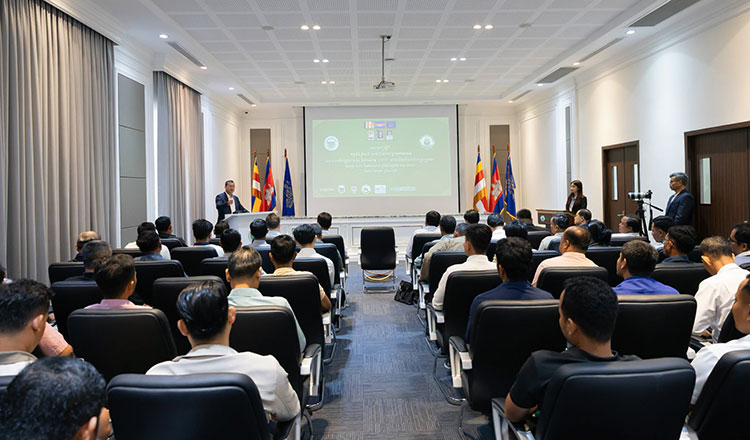
Former CMA Chairwoman Dith Nita described 2025 as a milestone year for the industry, saying it successfully balanced sustainable growth with a stronger commitment to improving the financial well-being of Cambodians.
“The year 2025 has been a defining period of the sector, a year where we balanced the pursuit of sustainable growth with a deepened commitment to the financial well-being of the Cambodian people,” she said.
Nita noted that the sector continued to demonstrate resilience while adapting to an increasingly challenging operating environment, noting that microfinance institutions remain committed to providing responsible financial services to households and small businesses, helping sustain economic activity in both urban and rural areas.
“Our commitment to the National Financial Inclusion Strategy (NFIS) 2029-2025 has reached a pivotal milestone. The sector has successfully diversified its footprint across the Cambodian economy, driving growth in agriculture, manufacturing, trade, commerce, construction, transportation and services,” she added.
According to the report, access to finance through microfinance institutions has enabled many micro, small and medium-sized enterprises (MSMEs), farmers and self-employed entrepreneurs to expand their businesses, generate employment and improve household incomes, reinforcing the sector’s contribution to Cambodia’s broader economic development.
By the end of 2025, riel-denominated loans reached an equivalent of $1.4 billion, accounting for 23.3 percent of the total loan portfolio, while riel deposits rose to $393 million, representing 13.1 percent of total deposits, underscoring gradual but sustained financial de-dollarisation efforts, the report added.
The figures reflected ongoing efforts by the National Bank of Cambodia (NBC) and financial institutions to strengthen the use of the riel, promote confidence in the local currency, and gradually reduce reliance on foreign currencies in the economy.
Although the number of branches increased by only four percent and staffing expanded by six percent, loan and deposit growth significantly outpaced physical expansion, indicating greater adoption of digital financial services and improved operational efficiency.
CMA noted that member institutions have continued investing in digital banking, electronic payments and financial technology to improve customer convenience and expand access to financial services, particularly in rural communities.
Beyond its financial performance, CMA has expanded financial literacy programmes, promoted greater compliance with its Code of Conduct (CoC), and encouraged member institutions to integrate Environmental, Social and Governance (ESG) principles into their operations.
The association also deepened collaboration with regulators and development partners to enhance risk management, responsible lending and digital innovation, supporting the sector’s long-term sustainability.
However, CMA acknowledged that the industry faces several emerging challenges, citing global economic uncertainty, geopolitical tensions, the slowdown in Cambodia’s property market, rising portfolio at risk (PAR), and the economic impact of the Cambodia-Thailand border situation as factors that could affect borrowers’ repayment capacity and increase credit risk.
The association said that member institutions are continuing to strengthen credit risk management, enhance internal controls and improve data-driven assessments while maintaining responsible lending practices to ensure financial stability and protect borrowers across different economic sectors.
To reinforce consumer confidence, the association said it has intensified implementation of its Code of Conduct and expanded financial literacy initiatives to encourage responsible borrowing.
CMA also continued to operate the Financial Consumer Protection Centre, which provides an independent mechanism for resolving customer complaints and promoting fair treatment of borrowers.
The centre played an increasingly important role in safeguarding consumer rights, improving dispute resolution and strengthening public confidence in Cambodia’s regulated microfinance industry.
Looking ahead, the association expected the sector to benefit from Cambodia’s accelerating digital transformation, wider adoption of the NBC’s Bakong payment ecosystem and expanding cross-border QR payment connectivity.
However, CMA stressed that sustaining growth will require continued improvements in risk management, consumer protection, responsible finance and support for productive sectors of the economy.
The report showed that maintaining prudent lending standards while embracing innovation will be critical to ensuring the sector remains resilient amid an increasingly uncertain global environment.
- 09:19 06/07/2026